


Gain access to personalized product screening, the best pricing, rewards, and more!
Create An Account, Or Sign In.
Most Effective Products
Dicamba
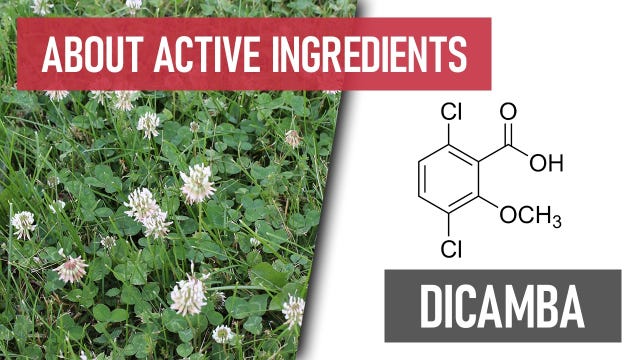
Dicamba is a selective herbicide active ingredient known for killing broad-leafed weeds (as opposed to grass family plants). It is commonly used in conjunction with other herbicides, such as Glyphosate, and according to the National Pesticide Information Center, it is currently found in about 1,100 herbicide products.
Solutions Pest & Lawn has several products in our herbicide inventory that contain Dicamba. We highly recommend these products to our customers who work in the agricultural industry for controlling various invasive weeds. On this page, you can learn some interesting facts about Dicamba, its mode of action, and its benefits. You can also access this page to shop our entire line of dicamba-based products.
What is Dicamba?
Dicamba is a selective benzoic acid herbicide that was registered with the EPA in 1967. It is a broad-spectrum herbicide that specifically targets broadleaf invasive weeds. Dicamba is versatile and is usually formulated with other active herbicide ingredients like 2,4-D, MCPP, and MCPA.
In its natural form, Dicamba is a white-to-brown crystalline solid. Dicamba can be soluble in water, and it boils at 200 degrees Celsius. Dicamba has a variety of acid and salt formulations. It is commercially available in liquids, liquid concentrates, wettable powders, granules, water-dispersible granules, and sprays.
Dicamba can be used as a pre-emergent and a post-emergent herbicide for broadleaf weeds. When combined with other herbicides, it is used to control weeds in pastures, rangelands, and non-crop areas (fence rows, roadways).
How Does Dicamba Work?
Mode of Action
The mode of action of Dicamba is that it mimics the natural plant hormone auxin. Auxins, found in all living plants in the kingdom, regulate the amount, type, and direction of plant growth and are mostly found at the tips of plant roots and shoots. Dicamba enters plants treated through the leaves and roots and replaces natural auxins at binding sites.
This interference leads to abnormal growth patterns in the weed. The chemical builds up in the plant's growing points and causes the targeted plant to begin growing rapidly. When applied at a sufficient concentration, the plant outgrows its nutrient supplies and dies.
Benefits of Dicamba
Dicamba is an excellent herbicide active ingredient because it helps control weeds that have developed resistance to other herbicide modes of action (such as Glyphosate). Dicamba can also remain active in the soil where it has been applied for up to 14 days.
Dicamba is best used to selectively treat stubborn invasive weeds. Make sure to check the label, though, for details on what it can successfully treat.
Drawbacks of Dicamba
While Dicamba is effective, there are cases where some desired vegetation will have a low tolerance for the active ingredient. Certain weeds may also be resistant to Dicamba.
Do not use Dicamba for weeds that are not specifically labeled to be controlled by the active ingredient.
Is Dicamba Safe?
Dicamba is safe to use when applied according to the label directions and as long as you wear the proper safety gear and equipment before handling the active ingredient.
What To Expect
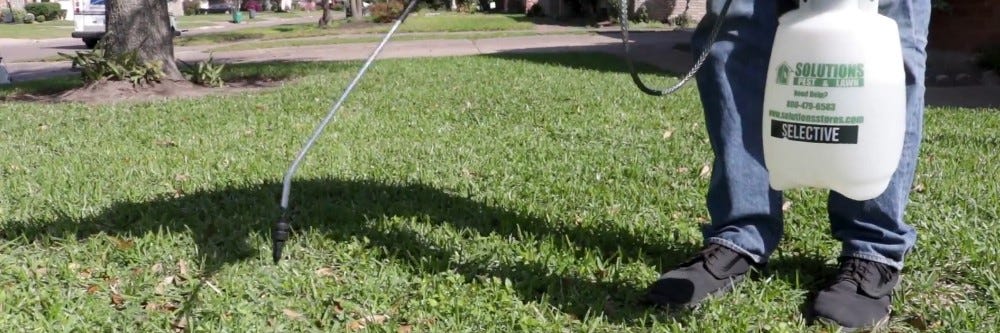
Use Dicamba as a selective spot treatment for any emerging weeds you don’t want growing on your property, especially ones resistant to Glyphosate. Use a coarse nozzle to help lessen spray drift. On average, it should take 2 to 3 weeks for the Dicamba to take effect and kill the target weed. Repeated applications may sometimes be needed when the weed is particularly persistent.
Featured Products
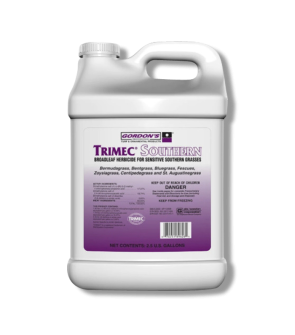
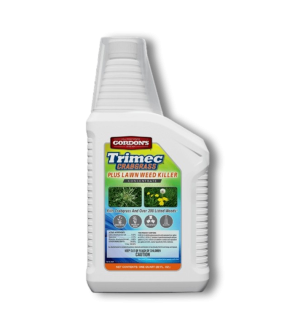
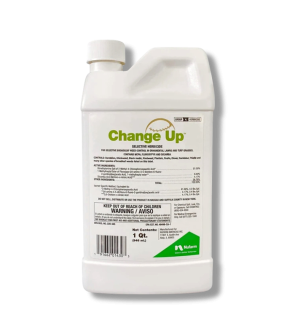
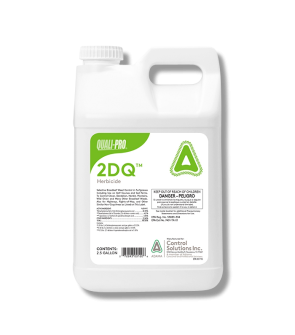
Dicamba Plus 2,4-D Herbicide - Dicamba + 2,4-D Herbicide (the generic version of the popular brand Weedmaster) by Alligare LLC is a selective post-emergent herbicide used for controlling a wide spectrum of annual, biennial, and perennial broadleaf weeds and brush in grass forages and selected row crops.
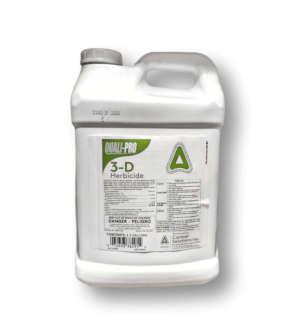
3-D Herbicide Triplet Alternative- 3-D Broadleaf Herbicide from Quali-Pro (generic Triplet) with Dicamba, 2,4-D, and Mecoprop-P can be used to control clover, dandelions, henbit, and many other broadleaf weeds in non-residential lawns.