



Gain access to personalized product screening, the best pricing, rewards, and more!
Create An Account, Or Sign In.
Most Effective Products
Corn Speedwell Control: How to Get Rid of Corn Speedwell
This page is a general DIY guide for controlling corn speedwell. Using the recommended products and methods, you will get rid of corn speedwell. Follow this DIY article and use the recommended products, and we guarantee complete control of corn speedwell.
Corn speedwell, a persistent winter weed, thrives throughout most of the United States, making it a nuisance for homeowners and landscapers alike. It goes by several other names such as common speedwell, field speedwell, speedwell, wall speedwell, rock speedwell, or Veronica arvensis.
Often overlooked because of it's small, delicate leaves and tiny flowers, corn speedwell can silently take over areas, reducing the aesthetic and health of turf. It's ability to survive through the winter months makes it particularly troublesome for property owners hoping for a lush spring lawn.
This winter weed is more than just an eyesore. Corn speedwell competes aggressively with desirable plants, stealing vital nutrients, sunlight, and water. It's fast-growing nature allows it to form dense patches, crowding out desirable foliage and weakening grass and ornamental plants.
This plant's tiny, sky-blue flowers might seem harmless and aesthetically pleasing, but this weed's persistence and adaptability make it a real threat to lawns and gardens across the United States. Corn speedwell is a winter weed that demands attention, and our products and expert tips in this article can help control and prevent its spread to keep your lawn healthy and vibrant.
Identification
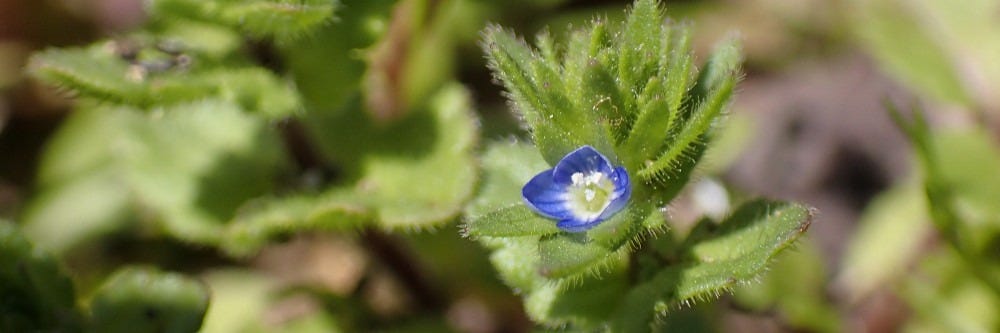
Before carrying out a treatment program, you will need to be certain that you are dealing with corn speedwell and not some other weed. Careless identification can lead to the use of the wrong treatment methods, which can be a waste of time and money. Here are some key features to help you recognize corn speedwell:
- Corn speedwell is a small winter annual weed that typically grows 2 to 8 inches tall. It's slender, light green stems often branch near the base and grow along the ground in a prostrate fashion before turning at the tips, while the upper portion are mostly unbranched. The entire plant is covered with soft, fine hairs, which are denser at the growing tips.
- When this plant sprouts, the lower leaves are opposite, oval to round, 3/8 to 3/4 inch long, hairy, and yellowish-green to green, with shallowly toothed margins and short petioles. As the plant matures, these lower leaves often wither. The upper leaves are smaller, narrower, pointed, alternate, and mostly toothless.
- A single light blue to violet colored flower will develop on the axils of the middle to upper leaves near the stem tips. Each flower is small, typically 1/8 inch across, tubular with 4 petal-like lobes, and often has dark stripes or faint veins and sometimes a white throat. The base of each flower has a leaf-like bract.
- Following flowering, corn speedwell produces heart-shaped seed capsules about 1/8 inch long and wide, flattened with fine hairs along the edges. Each capsule is two-celled and contains numerous tiny yellow or golden seeds with a darker central germ like the yolk of an egg.
Use the description and image above to help you properly identify corn speedwell on your property. If you are not totally sure, contact us and send us a photo of your weed. We will identify it for you and suggest treatment options.
Inspection
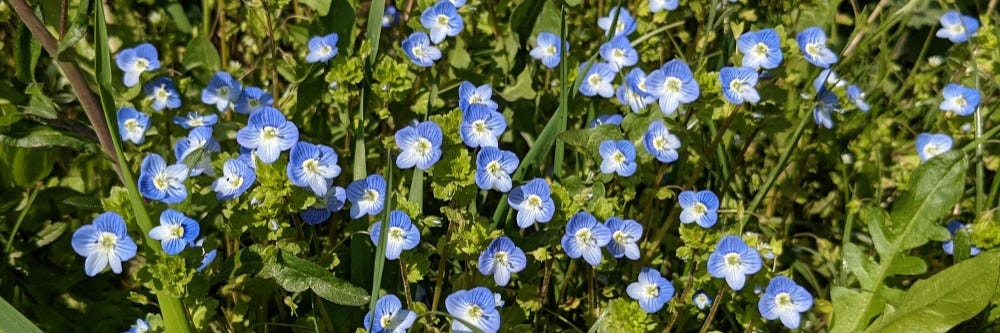
After you have confirmed that you are dealing with corn speedwell, you can proceed with the inspection. During this phase, you will locate areas where corn speedwell are thriving and observe the conditions that allow it to grow. This information will help you know where to focus your herbicide application.
Where to Inspect
Corn speedwell grows best in open, disturbed habitats with moist to dry medium soils such as sandy, loamy, or rocky ground. It can also grow in full sun to partial shade, flowering most successfully in sunny locations, and is often found where turf is thin or disturbed.
Common sites to find this wildflower are cultivated farmland, gardens, ornamental landscapes, lawns with thin turf, roadsides, forests, streambanks, prairies, savannahs, glades, fields, railroads, waste ground, arable fields, crops, and other sites where regular disturbance creates open ground.
What to Look For
Corn speedwell is a winter annual weed that begins germinating in cool, moist soil from mid-fall through early spring when soil temperatures are 50 to 60 degrees Fahrenheit.
It grows during the cooler fall and winter months and dies back as temperatures rise in late spring and summer. Although corn speedwell requires cool conditions to germinate, its active growth can occur in moderate temperatures, usually between 50 to 90 degrees Fahrenheit.
During this period of active growth, look for corn speedwell as a low-growing, spreading plant with hairy stems and rounded to oval leaves arranged opposite of each other.
Small, deep blue to violet flowers appear in early spring, which open around midday for a short period before the petals quickly fall off, allowing it to go to seed soon after blooming.
Seedlings and young plants are easier to spot in thin turf, gardens, lawns, and other sites where they form large, dense mats before flowering.
Treatment
Before proceeding with control, you will need to wear the proper personal protective equipment (PPE) when mixing and applying herbicides.
Post-emergent herbicides should be applied in the spring and fall when corn speedwell plants are actively growing, as this is the most effective time to control them.
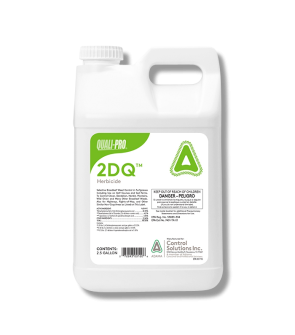
We recommend using a selective, post-emergent herbicide like 2DQ Herbicide, which is labeled to kill speedwell. Avoid broadcast and small spot treatment applications with this product when temperatures exceed 90 degrees Fahrenheit, as turf injury may occur.
Step 1: Apply 2DQ Herbicide
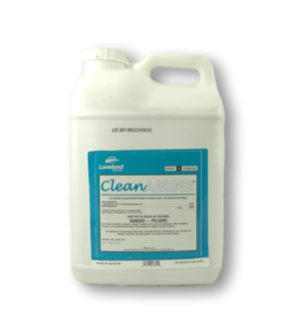
 2DQ Herbicide is a selective, post-emergent herbicide used to control a broad-spectrum of broadleaf weeds in warm-seasoned and cool-seasoned turfgrass.
Determine how much herbicide to use by measuring the square footage of the treatment area. Find the square footage by measuring the treatment area's length and width in feet, then multiplying them together (length X width = square footage).
For cool-seasoned turf, mix 0.75 to 1.1 fl. oz. of 2DQ Herbicide per 1 to 4 gallons of water per 1,000 sq. ft.
For warm-seasoned turf, use 0.37 to 0.9 fl. oz. of product per 1 to 4 gallons of water per 1,000 sq. ft.
Properties with a mix of cool-seasoned and warm-seasoned turf, apply 0.037 to 0.55 fl. oz. of product per 1 gallon of water per 1,000 sq. ft.
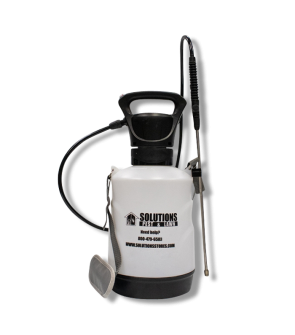
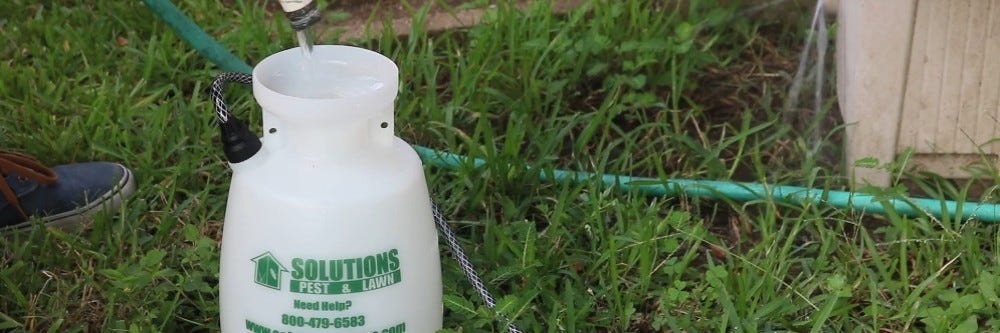
You will need to mix with water in a handheld pump sprayer or backpack sprayer.
To mix, pour in half the amount of water and add the proper amount of product. Next, pour in the remaining half of the water and close the tank lid. Once closed, agitate the sprayer until the solution is thoroughly mixed.
Adjust your sprayer nozzle to deliver a fine, coarse spray pattern. Spray the top and bottom of the weed leaves until wet, but not to the point of runoff.
Do not allow people or pets to enter the treated area until 48 hours have passed after application.
Step 2: If Needed, Retreat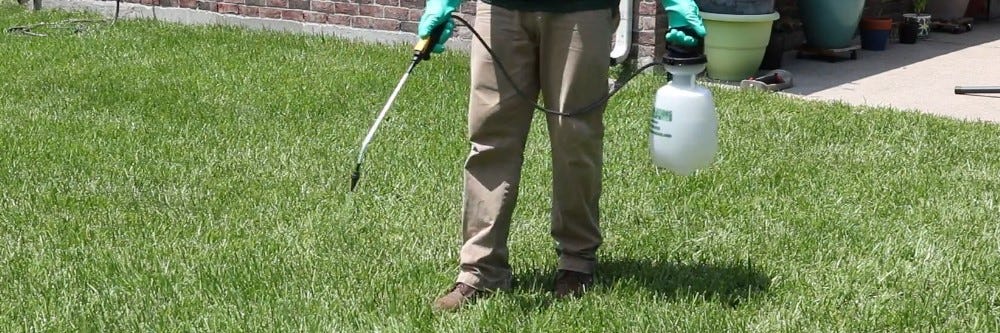 If some weeds remain or new growth appears after the initial application, a second treatment may be necessary to achieve complete control.
A second application of 2DQ Herbicide may be made 30 days after the first application.
Do not make more than two applications per year.
Prevention
 After removing corn speedwell, it’s important to take steps to prevent them from coming back. Here are some measures you can use to keep corn speedwell away:
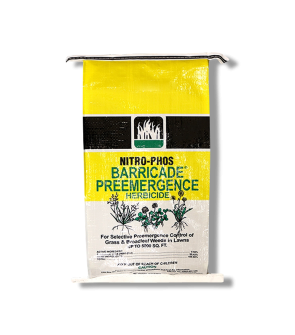
- To prevent corn speedwell, pre-emergent herbicides should be applied before the seeds germinate, which is typically in late summer to early fall. Barricade Pre-Emergent Herbicide is an effective granular pre-emergent herbicide used to prevent the germination of many grassy and broadleaf weeds in lawns, ornamental landscapes, and wildflower plantings. Depending on your turf, apply 1.5 to 4 pounds of Barricade Pre-Emergent Herbicide per 1,000 sq. ft. Adjust your spread to the proper calibration. Spread the granules evenly over the soil surface. After application, water the granules with 0.5 inches of irrigation. An additional application can be made after 6 months for year-round control.
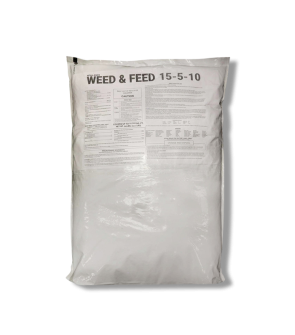
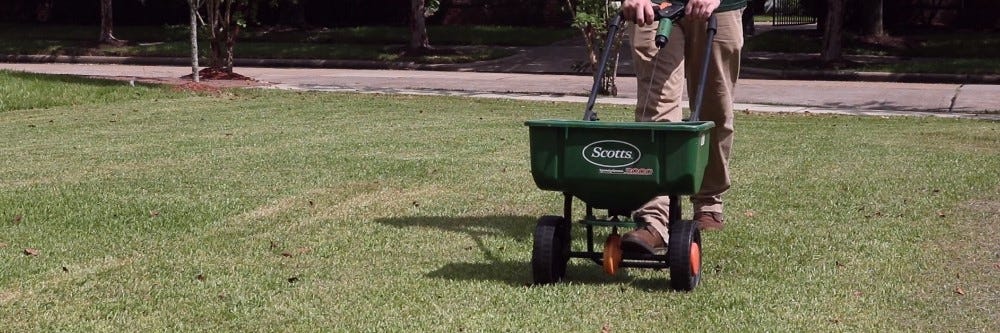
- After applying the pre-emergent, maintain healthy turf by fertilizing with Solutions 15-5-10 Weed & Feed Fertilizer with Trimec, which provides essential nutrients to turf while also controlling existing weeds like speedwell. This combination helps reduce competition from weeds, keeping your lawn thick and healthy. For most applications, apply 3.2 to 4 pounds of Solutions 15-5-10 Weed & Feed Fertilizer with Trimec per 1,000 sq. ft. You will need a push or broadcast spreader to make applications. Mow your lawn to normal height 1 to 2 days before application. Spread your fertilizer evenly across the treatment area by using a push spreader. Start by broadcasting half of the granules in a pattern perpendicular to your initial direction to ensure full coverage around the edges of the lawn. Then, walk back and forth across the center of the yard to cover the remaining area, making sure the entire lawn receives an even application. One to two days after applying the fertilizer, thoroughly water the treated area to help activate the product and ensure it reaches the soil.
- Maintain a healthy, dense lawn by mowing regularly, trimming overgrown shrubs and tree branches to reduce shade, and removing leaf litter and debris. Follow a proper watering schedule to give your grass enough moisture to develop strong roots without promoting weed growth most grasses need about 1 inch of water per week. Water once in the morning to allow the water to soak into the soil before it can evaporate in the sun.
Key Takeaways
What is Corn Speedwell
- Corn speedwell is a common winter annual broadleaf weed with tiny blue to violet flowers that create low, branching mats.
How to Get Rid of Corn Speedwell
- Corn speedwell can be eliminated with 2DQ Herbicide. Best to make applications during the spring and fall, before flowering and when it is actively growing.
Preventing Corn Speedwell Reinfestation
- Apply Barricade Pre-Emergent Herbicide in late summer to early fall, before corn speedwell seeds begin to germinate. Support turf health by fertilizing with Solutions 15-5-10 Weed & Feed with Trimec, mowing regularly, removing debris, trimming overgrown foliage, and providing about 1 inch of water per week in the early morning. These steps help to stop new corn speedwell growth and maintain a dense, healthy lawn.