



Gain access to personalized product screening, the best pricing, rewards, and more!
Create An Account, Or Sign In.
Most Effective Products
Skunk Control: How to Get Rid of Skunks
This article contains information and suggestions to help decrease the presence of skunks within your property. By following these methods and using the recommended products, you can get control of your skunk problem. While following these guidelines, Local and State Laws are still present and must be followed. It is recommended that the homeowner visit their local animal control office or state website to visit the proper rules and regulations associated with the control of skunks.
Skunks are attracted to areas that provide a constant food source, such as leaving pet food out, eggs (from farms), and an available water source. To determine if you have a skunk visiting your home or business, you will first notice a strong odor. Skunks spray a robust sulfuric odor from their rear to protect themselves against predators or people. The next sign of skunks is property damage, such as uprooted turf. Skunks are omnivores, and their diets consist of grubs, insects, and plants, resulting in grass uprooting.
It is not uncommon to see skunks during the day, but their activity is mainly at night. If you do not see a skunk during the day, it is most likely in a tight crawl space under a porch, pile of wood, or residence.
If you see the signs listed above, you may have a skunk issue. As a home or business owner, these creatures are not ideal for your property. Following this how-to guide can help to rapidly control or deter skunks from your residence.
Identification
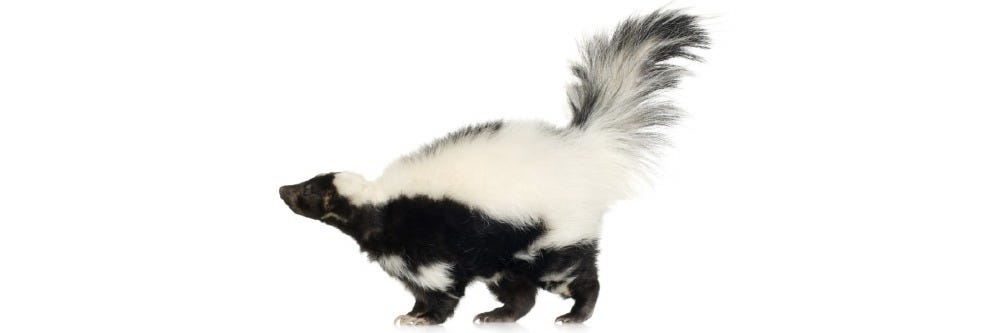
Before treatment, you will want to determine if the damage and activity are from a skunk. Identifying skunk activity will help you choose the correct bait and trap placement for a successful capture. Luckily, skunks are easy to identify not only by their looks but also by their odor.
- The color and marking of a skunk is black and white striped fur and tail.
- The size of an adult skunk can range between 20"-30" inches long.
- Adult skunks typically weigh between 6-10 Ibs.
- Skunks are nocturnal and defensive creatures that protect themselves by spraying their enemies with a strong chemical odor from their rear.
- Skunks are omnivores and will occasionally dig or uproot plants and roots for insects, grubs, and vegetables for food.
Refer to the attached image and identifications to determine if the pest is a skunk. If it is still not clear, contact us, and one of our professionals will assist you with proper identification.
Inspection
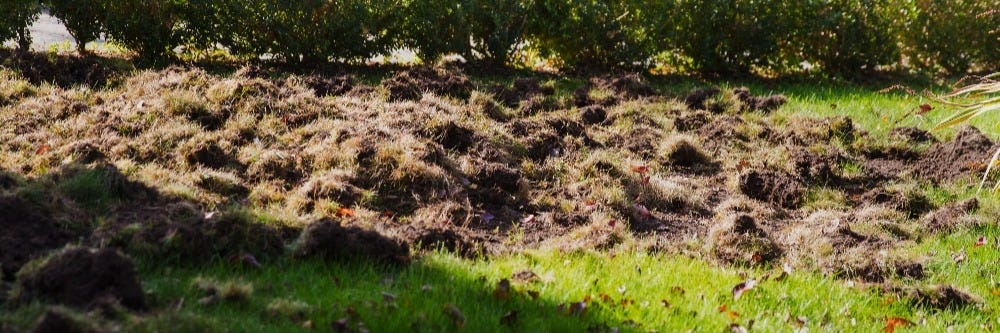
Once you have properly identified your pest animal as a skunk, the next thing to do is inspect where they have been active or frequently visited. Discovering where the skunk is most frequently visiting will help determine which area to treat.
Where to Inspect
Skunks are nocturnal species, which means they are active at night and will generally not be seen. During the day, skunks will usually shelter in a tight crawl space or den to burrow or hide until dusk or nightfall. Openings under porches, sheds, homes, and piles of wood or hay make ideal living arrangements for skunks.
Keep in mind that skunks can potentially spray you from up to 10 feet away, so if you do encounter one, it is best to keep your distance until the skunk wanders away.
What to Look For
Because skunks actively forage at night, most signs of their activity will be seen during the day. Skunks are scavengers, so their damage to your property will be the most obvious sign. Skunks tear through turf grass, digging down to the soil in search of insect pests, such as grubs. When they do this, they leave behind visible clumps of grass, large patches of turf damage, or even holes.
Other signs that you have skunk activity are knocked-over trash cans or garbage spread around the property. You may also notice the distinctive odor that Skunks emit when threatened.
Treatment
Once you have confirmed skunk activity, you can proceed with the following treatment. Effective skunk control involves utilizing baiting and trapping for an active problem and repelling to prevent skunks from coming back.
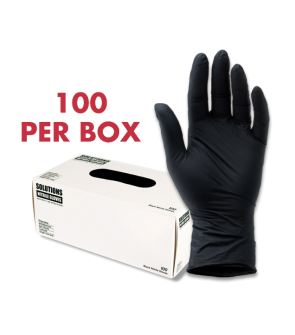
You should always wear protective personal equipment (PPE) when dealing with pests such as skunks. To trap a skunk, you will need to know that they are hunters who depend on smell. Your scent is very important to mask with gloves while you set traps or bait. This will help hide your scent and not deter the skunk from visiting the trap or bait laid out for it.
Step 1: Remove Food Sources around Property

If other food sources, such as pet food or open garbage containers, are available, a skunk will be less likely to visit your trap. Since you will be baiting your trap, it is important to remove as many competing food sources as possible.
First, secure the lid on your outside garbage cans, dispose of leftover pet food or corn left out in farm pens, and secure eggs or poultry (chickens, ducks, and geese) from wandering the yard. Skunks are omnivores and may even attack animals smaller than them.
Step 2: Place the Trap
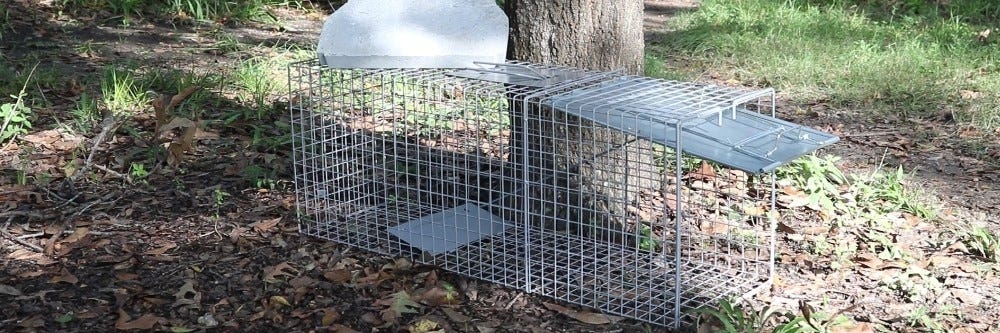
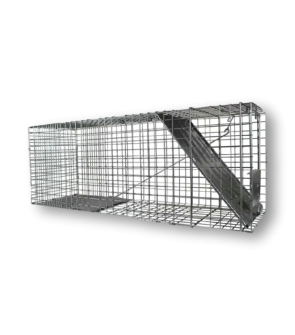
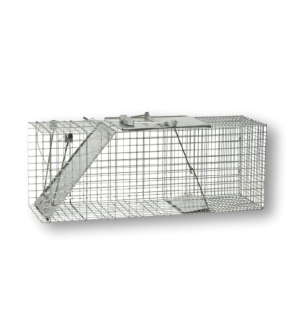
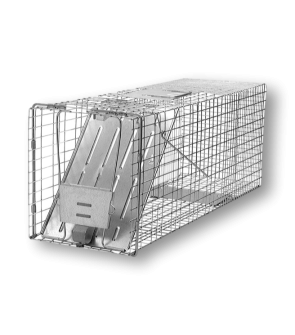
After removing all available food sources from the property and determining the areas most often visited, you can set the trap. A large Solutions Humane Live Trap would be best to help maintain some distance between you and the skunk. Before you begin setting the trap, make sure to wear gloves and other personal protective equipment (PPE) to help mask your scent.
It is best to place the trap in the pattern of the skunks' walkways. A skunk will be less likely to visit a trap placed in the middle of an open field. Putting the trap against the side of a building or near the entrance of openings such as a porch will help increase the skunk's chances of visiting the trap.
For live trapping a larger animal like a skunk, you may need to weigh your trap down or secure it by tying it to a tree or fence post. Once trapped, a skunk may be able to tip the trap.
It's important to note that you will want to place your trap in an area that sees shade or is not in constant, direct sunlight. A trapped animal can die within a few hours if left too long in the sun without escape.
Step 3: Bait and Set the Trap
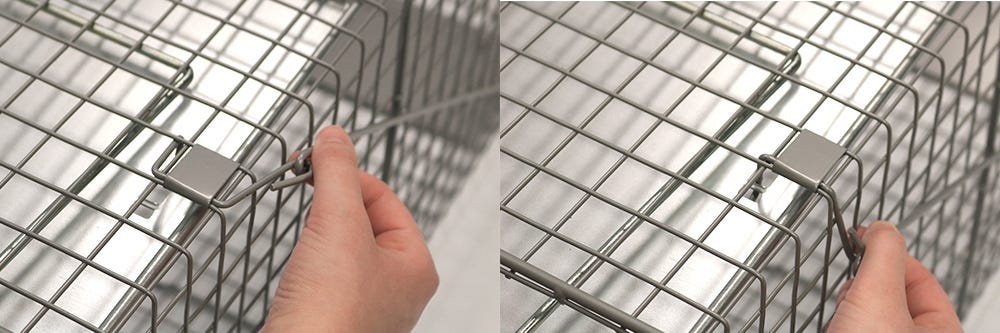
To set the trap, first, push down the trap door lock and lift the cage door. Keep the trap door lifted while pulling the trigger arm forward to set it. You can tell the trap is set when the hook at the front is holding onto the front cage door and remains open without you holding onto it.
Carefully place food such as sardines or meat (food with solid odors) as bait at the back of the cage behind the trigger plate to encourage the skunk to step further into the trap. Once the skunk goes to the back of the trap, it will step off the trigger plate and cause the front door of the cage to close.
Step 4: Monitor the Trap and Relocate the Skunk

Before approaching the cage, wear personal protective equipment (PPE), mask, and bring a disposable blanket, towel, or type of barrier to throw around the cage to keep the skunk from spraying you since they can spray several distances. Any personal belongings can be damaged by a skunk's spray.
The skunk may take a couple of days to approach the bait trap. If the trap has still not seen activity for a while, then refill it and change the bait inside the cage to help lure the skunk.
Once the skunk has been caught, slowly approach the trap with a blanket or towel and place the barrier over the trap to help block the skunk's vision and spray. You can then relocate the skunk away from your property. However, depending on local ordinances, it may be best to call local animal control or the state game warden's office to relocate the skunk without loading it into your personal vehicle.
Prevention
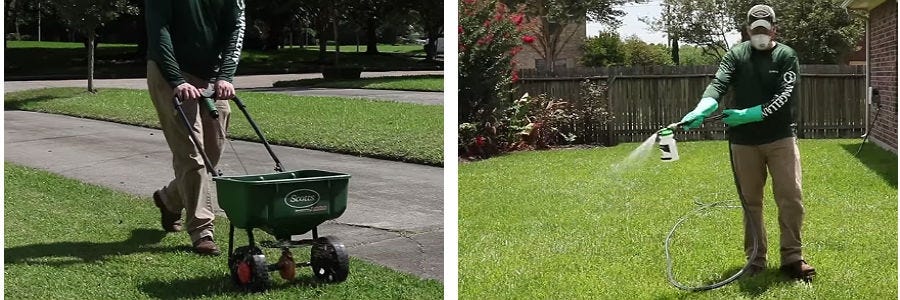
After the skunk has been secured off your property, you will want to ensure they do not return. Listed below are some preventive measures to help reduce the unwanted presence of skunks.
- Keeping waste out in the open in bags is an invitation to dinner for skunks. Place all trash or undesired products in a trash can with a secure, tight lid.
- Treat turf with appropriate insecticide or herbicide to reduce insects' presence, as skunks commonly feed on insects.
- If you have vegetable gardens or crops, like chicken wire around your crops and vegetation help eliminate this food supply to skunks.
- Close openings under buildings and objects to help deter skunks from making their dens on your property.
- Be sure to look for and treat any rodent infestations you may have, as this is another food source for skunks.
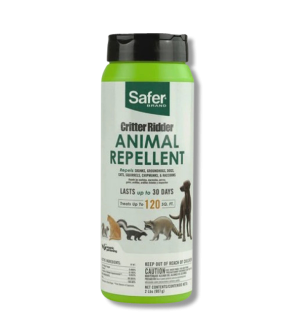
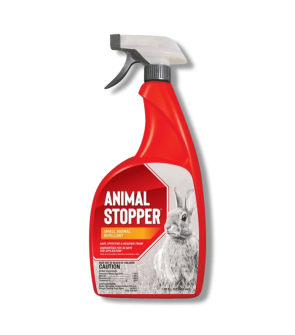
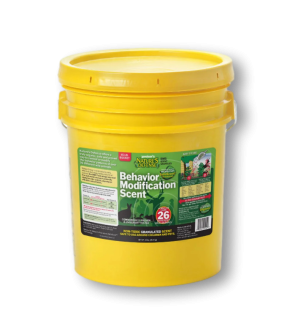
- You can also treat the perimeter of your property with an animal repellent like Critter Ridder. This repellent contains a natural blend of ingredients that animals like skunks find offensive, helping you maintain preventative control for up to 30 days. Sprinkle the Critter Ridder granules around your property at a rate of 1 pound per 40 square feet. Apply on sunny, dry days monthly for continued control.
Key Takeaways
What are Skunks?
- Skunks are nocturnal scavengers with black and white striped fur. They are persistent species that will not easily leave the area until all food sources are eliminated or lessened. Skunks are hunters who depend on their sense of smell for defense and food.
How to Get Rid Of Skunks
- The best way to remove skunks from your residence is to remove all available food sources outside your home and close all openings under buildings. Then, you will utilize humane live animal traps to trap the skunk for easy removal safely.
Preventing Skunks Reinfestation
- Prevent skunks from revisiting your property by treating any bug or rodent infestations, securing vegetable crops or poultry with proper fencing like copper wire mesh or chicken wire, and occasionally checking to see if there are any openings to be filled under sheds or other buildings. You can also use an animal repellent, like Critter Ridder, to keep skunks away from the property for up to 30 days.