



Gain access to personalized product screening, the best pricing, rewards, and more!
Create An Account, Or Sign In.
Most Effective Products
Trampweed Control: How to Get Rid of Trampweed
This page is an expert guide on eliminating trampweed from your property using the products and methods our experienced lawn care specialists suggested. Follow this guide and use the recommended products; we guarantee you will succeed.
From a distance, it might look like a light dusting of snow or gray fuzz on the ground, but that soft, powdery appearance is actually caused by a weed called trampweed (facelis retusa), also known as annual trampweed. This winter broadleaf weed is native to South America but has since spread to other parts of the world, including the southeastern United States, from Texas and Oklahoma eastward into Tennessee and North Carolina.
Trampweed spreads aggressively in warm-seasoned lawns, pastures, and sites with disturbed soil, often outcompeting desirable plants. One reason trampweed spreads aggressively is its abilty to produce a large number of dandelion-like seeds that are easily carried by wind, foot-traffic, and equipment. As an annual weed, it completes its life cycle quickly, allowing multiple generations to establish in a single growing season.
Although trampweed is native to warm climinates, in the southeastern U.S. it behaves as a winter weed allowing it to take advantage of lawns during months when many warm-seasoned plants are dormant. It's resilience to varying soil conditions, drought, and adaptability makes it a weedy invader in both rural and urban sites. However, the tips and products in our DIY guide can help to prevent and control trampweed.
Identification
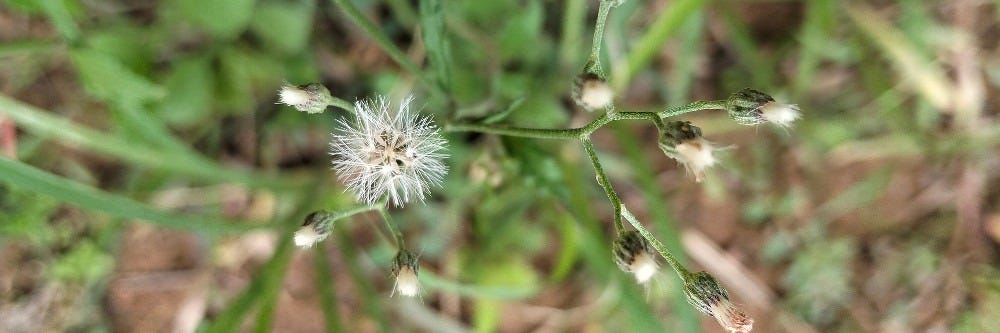
Before carrying out a treatment program, you must first be certain that you are dealing with trampweed and not some other weed. Careless identification can lead to using the wrong treatment methods, which can waste time and money. Listed below are some common characteristics to know what trampweed looks like:
- Trampweed is a winter annual broadleaf weed that grows from a taproot and develops freely branching stems that spread along the ground early in its life cycle, gradually becoming more upright as the plant matures and reaching about 5 to 30 centimeters (about 2 to 12 inches) in height. The stems lie close to the soil surface and are covered with tufts of long, soft hairs.
- Leaves are simple, narrow, and alternately arranged, usually lacking petioles, with smooth edges and a dull green upper surface. The lower leaf surface is distinctive, covered with white-gray, woolly hairs, and the leaf tip is rounded to slightly indented, often ending in a tiny sharp point.
- The plant produces small, discoid flower heads without ray flowers that form terminal clusters. During the spring, these flowers will release large amounts of feathery seeds, each equipped with white, hair-like bristles similar to dandelions.
Use the description and image above to help you identify the trampweed on your lawn. If you have trouble identifying the weed, you can always take a picture and send it to our experts. We will respond quickly with the correct identification of the plant and expert recommendations of products and techniques to remove that weed from your lawn.
Inspection
 After you have confirmed that you are dealing with trampweed, you can move on to inspection. During this phase, you will locate areas where trampweed are thriving and observe the conditions that allow them to succeed. This information will help you know where to focus your herbicide application.
Where to Inspect
Trampweed grows in cool-season conditions, thriving in disturbed, dry to moderately moist, well-drained soils with thin vegetation.
It is commonly found in warm-seasoned lawns, pastures, roadsides, fields, vacant lots, sandy fields, waste areas, and other places with thin or sparse vegetation.
What to Look For
Winter annual broadleaf weeds like trampweed germinate in the fall and first grow as a low rosette during the cooler months, remaining close to the ground until warmer spring temperatures trigger stem elongation, flowering, and seed production.
In spring, it is especially noticeable for the feathery, white, hair-like seeds it produces, similar to dandelion seeds.
Treatment
When handling any herbicide, be sure to wear the proper personal protective equipment (PPE).
Trampweed is best controlled early in the growth cycle, ideally in the fall or early winter while it is still in the low rosette stage, because plants are easier to kill before they send up flowering stems.
We recommend using post-emergent herbicides containing 2,4-D, dicamba, MCPP, or MCPA since they are most effective against trampweed.
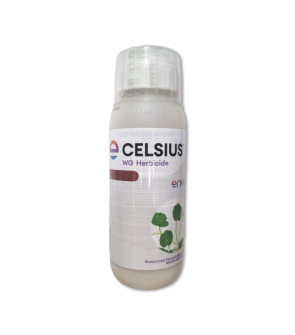
Step 1: Apply Celsius WG Herbicide
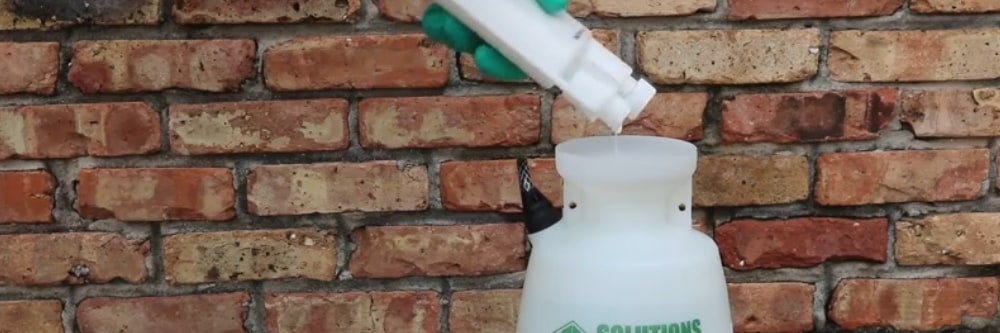 Celsius WG Herbicide is a selective post-emergent herbicide that targets a wide range of broadleaf weeds and grasses in warm-seasoned lawns.
Determine how much herbicide to use by measuring the square footage of the treatment area. Find the square footage by measuring the treatment area's length and width in feet, then multiplying them together (length X width = square footage).
To control trampweed, apply 0.085 oz (2.4 g) of Celsius WG Herbicide per 1 gallon of water per 1,000 sq. ft.
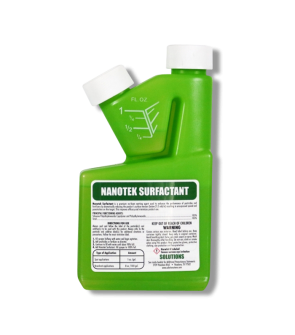
To enhance this product’s efficacy, mix in a non-ionic surfactant like Nanotek Surfactant.
Nanotek is a non-herbicide product designed to improve the adhesion and penetration of pesticides onto treated surfaces.
Just add 1 fluid ounce of Nanotek Surfactant per 1 gallon of solution.
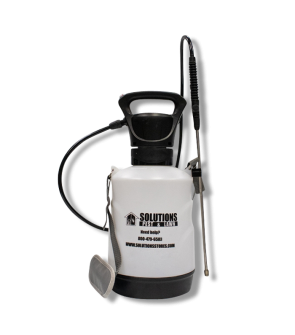
Fill the sprayer with half the amount of water, add the proper amount of product, and pour in the remaining half of the water. Add the surfactant to the spray tank last. Close the tank lid and shake until the solution is well-mixed.
Spray the top and bottom of weed leaves until wet, but not to the point of runoff.
Do not use a surfactant or spray adjuvant if the temperature is above 90 degrees Fahrenheit.
Keep people and pets out of the treated area until 24 hours have passed after application.
Step 2: Retreat
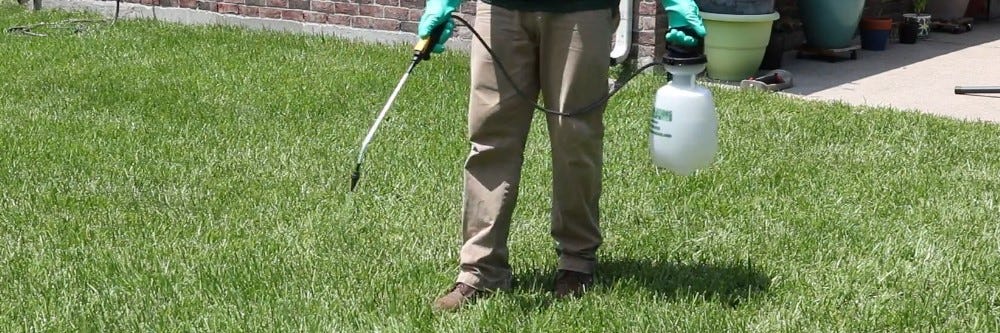 When used correctly, treated weeds will turn yellow and start to die.
If weeds show signs of regrowth, apply a second treatment of Celsius WG Herbicide 2 to 4 weeks after the previous application.
Prevention
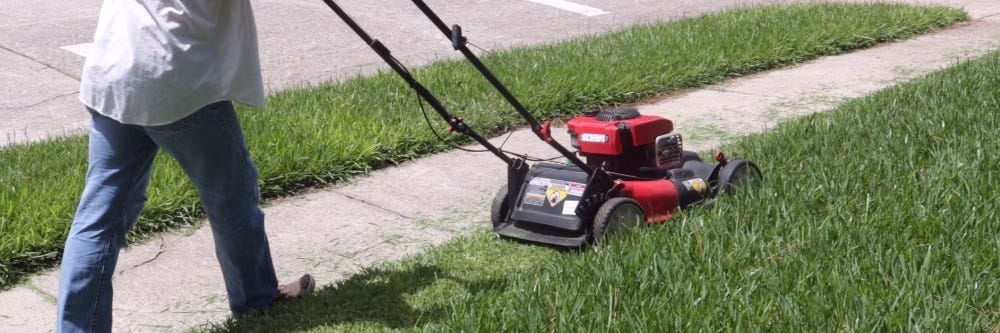 After eliminating trampweed from your property, it’s important to adopt ongoing maintenance strategies to stop it from coming back. The following are some preventative steps you can take to keep trampweed under control:
- Preventing trampweed starts with creating a lawn or landscape that leaves little room for weeds to take hold. Keeping your turf thick, healthy, and well-fertilized makes it harder for trampweed seeds to germinate and grow.
- Regular mowing and minimizing soil disturbance also reduce the open, bare spots that this weed loves. For trampweed, this means cutting plants when they are still young and green, usually every 1 to 2 weeks in active growing seasons. Cutting more than 1/3 stresses the grass, making it weaker and less able to compete with weeds like trampweed.
- Small infestations can be controlled by hand-pulling or shallow hoeing before the plants produce seeds. For larger areas, we recommend continual spot treatments with Celsius WG Herbicide.
- Avoid overwatering bare soil, as moist bare soil favors weed germination. We recommend watering with no more than 1-inch of irrigation once per week, preferably early in the morning.
Key Takeaways
What is Trampweed?
- Trampweed is an aggressive, low-growing winter broadleaf weed that produces numerous small dandelion-like seeds.
How to Get Rid of Trampweed
- To kill trampweed, we recommend using Celsius WG Herbicide.
Prevent Trampweed Reinfestations
- To prevent trampweed, continue to maintain a thick, healthy yard with regular fertilization, mowing, and watering. Be sure to cut no more than 1/3 of the grass, and minimizing bare soil where weeds can establish. Small infestations can be removed by hand, while larger areas may require targeted herbicide treatments.