

Gain access to personalized product screening, the best pricing, rewards, and more!
Create An Account, Or Sign In.
Most Effective Products
Common Aquatic Weeds In Canals
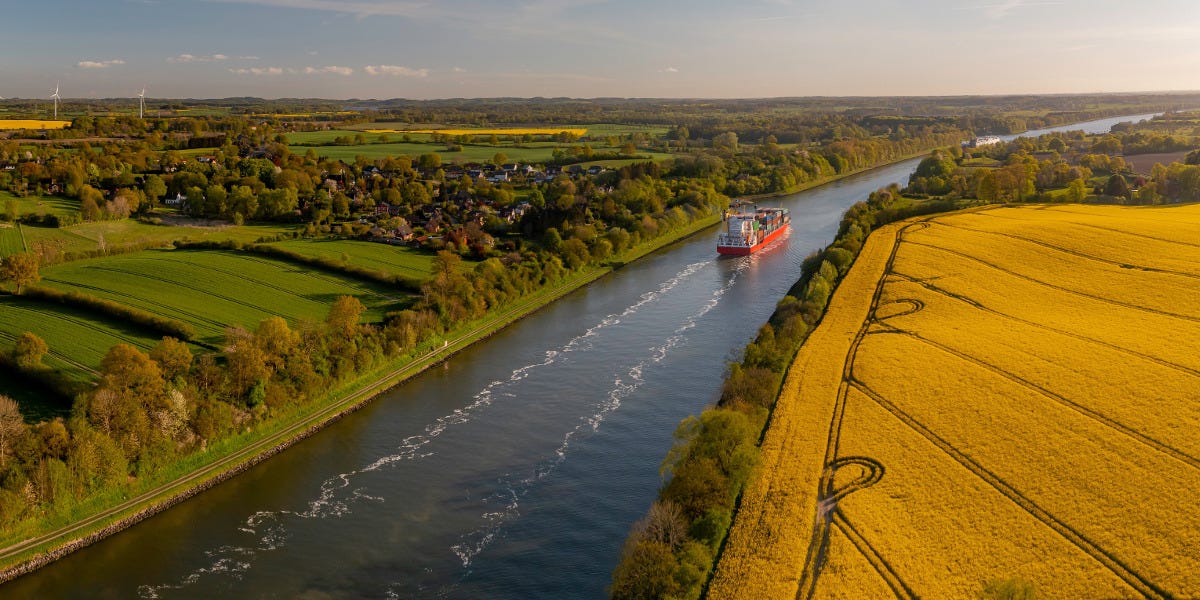
While most native aquatic plant species causes little issues for canals, there are some aquatic weed species that can take over. These aquatic weeds become invasive and a threat to the ecosystem by reducing water quality and flow.
Common aquatic weeds for water managers of canals to come across are algae, coontail, water milfoil, pondweeds, and water hyacinth. Even if the water can flow evenly there are the risks of plant fragments clogging ship propellers leading to costly damages and late shipments of goods through waterways.
If you are not seeing a aquatic weed listed here, then contact our customer service team by phone, email, or in-person for professional recommendations.
Algae
When algaes grow too quickly in canals, they form dense blooms that release toxins in the environment. This green scum in water can make it toxic to people and fish.
Identification
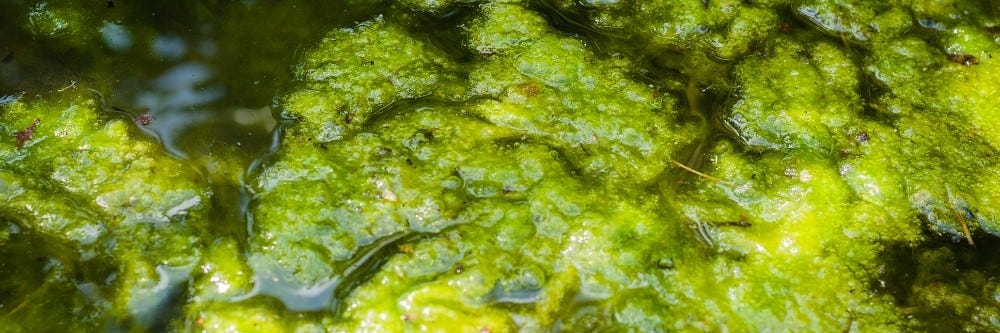 Depending on the species and size and shape of the canal the appearance of algae may differ. General characteristics to look out for are slimy, greasy splotches or clumps in water. In color, they will range from green, reddish-brown, or yellow.
Inspection
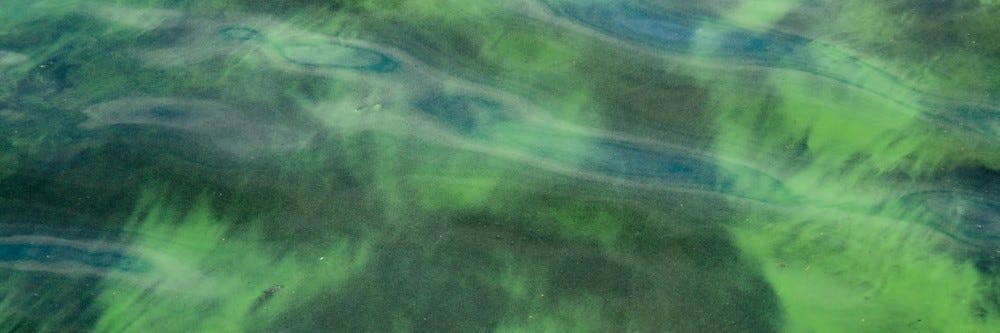
Algae will settle on the bottom and sides of canals. With some species, they can also be found floating on the surface of the water.
Treatment
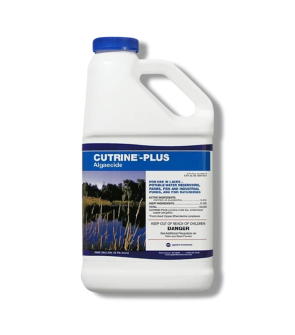
Step 1: Apply Cutrine Plus Algaecide

Cutrine Plus Algaecide is a copper-based algaecide that delivers fast control over unwanted aquatic vegetation, including algae in aquatic sites like canals.
Determine how much Cutrine Plus Algaecide to use by learning the cubic feet per second (water flow rates) for canals.
Follow the formula to learn this: Average Width (feet) x Average Depth (feet) x Velocity* (feet/second) x 0.9 = Cubic Feet per Second (C.F.S.).
*Velocity is the time it takes a floating object to travel a given distance. Dividing the distance traveled (feet) by the time (seconds) will yield velocity (feet/second). Repeat this measurement at least three times at the intended application site then average.
For a drip rate per minute, use 0.5 fl. oz. of Cutrine Plus Algaecide per 450 gallons of water to deliver 1 C.F.S.
Calculate the amount of this product needed to maintain the drip rate for a period of 3 hours by multiplying Qts./Hr. x 3; ml/Min. x 180; or Fl. Oz./Min. x 180. Dosage will maintain 1.0 ppm Copper concentration in the treated water for the 3 hour period.
Pour the required amount of this product into a drum or tank equipped with a brass needle valve and constructed to maintain a constant drip rate. Use a stop watch and appropriate measuring container to set the desired drip rate. Readjust accordingly if flow rate changes during the 3 hour treatment period.
Distance of control obtained down the waterway will vary depending upon density of vegetation growth.
Coontail
Like any other aquatic weed, coontail are a nuisance due to their ability to overtake waterways. This thick, winding weed can create chemicals that deprive benefical aquatic plants of nutrients leading to eventual death.
Identification
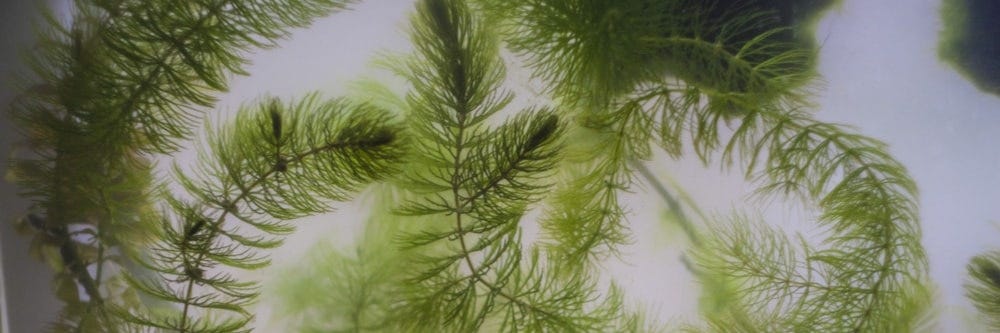 Coontails grow long and sparse stems that reach lengths between 9 to 15 feet long. They are easily identified by their spinky, forked leaves that resemble pine needles.
Inspection
Coontails are loosely anchored to the mud within freshwater or brackish canals. They mainly grow underwater with upper leaves reaching the surface of the water up to a depth of 20 feet.
Treatment
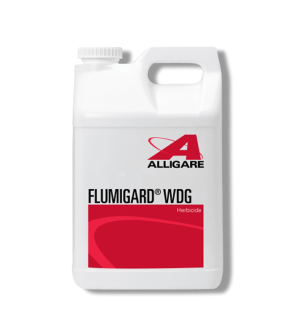
Step 1: Apply Flumigard WDG (Clipper) Aquatic Herbicide
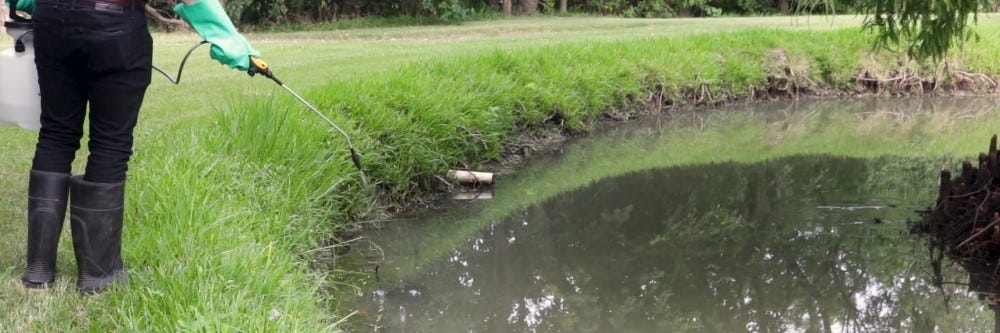
Flumigard WDG (Clipper) Aquatic Herbicide is a fast-acting water dispersable granule that delivers long-term control over aquatic weeds within bodies of waters like canals.
Determine how much Flumigard WDG (Clipper) Aquatic Herbicide Flumioxazin to use by measuring the square footage of the treatment area. To do this, measure the length and width of the treatment area in feet then multiply them together. For acreage, take the square footage and divide it by one acre (square footage / 43,560 sq. ft. = acre).
For surface applications against coontail, use 6 to 12 oz. of Flumigard WDG (Clipper) Aquatic Herbicide Flumioxazin per 30 gallons of water per acre.
To ensure thorough coverage, a boom sprayer or larger application equipment may be required.
Broadcast the proper amount of Flumigard WDG (Clipper) Aquatic Herbicide over the water surface.
In areas with dense weed vegetation, only treat 1/2 the water body at one time and wait 10-14 days before treating the remaining area.
Application of this product to public aquatic areas may require special approval and/or permits. Consult with local state agencies, if required.
Water Milfoil
Despite its thin appearance, water milfoil seriously harm ecosystems with its quick growth. Paired with its ability to re-root from any plant fragements makes it able to diminish fish habitat in a short time. They will also entangle boat propellers with their dense mats near the surface.
Identification

Water milfoil has various species, so we wil focus on common characteristics to easily identify it. Leaves are sub-emerged, feather-like, in whorls of 4 to 6, and up to 20 feet long.
Stems are branched often colored dark green, but will appear reddish-brown when dry.
Inspection
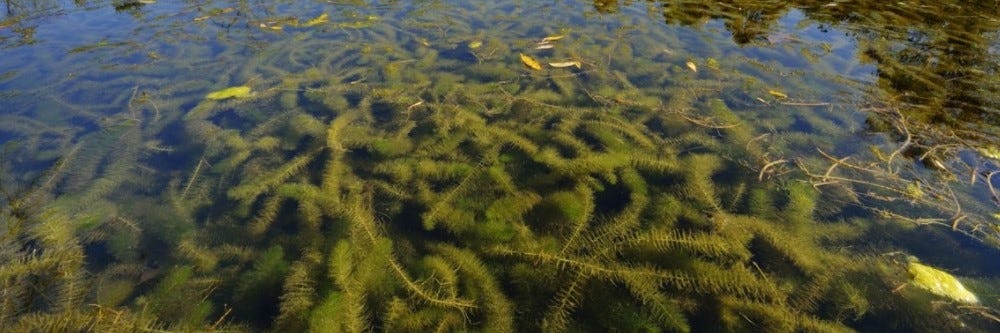
Water milfoils will grow in shallow to relatively deep waters of canals. They will grow under the water surface with leaves several inches below the surface of waters.
Treatment
Step 1: Apply Flumigard WDG (Clipper) Aquatic Herbicide
We recommend using Flumigard WDG (Clipper) Aquatic Herbicide Flumioxazin to eliminate water milfoils from canals.
Determine how much Flumigard WDG (Clipper) Aquatic Herbicide Flumioxazin to use by measuring the square footage of the treatment area. To do this, measure the length and width of the treatment area in feet then multiply them together. For acreage, take the square footage and divide it by one acre (square footage / 43,560 sq. ft. = acre).
To perform a subsurface application, you will need to use a subsurface trailing hoses in order to place the herbicide under the surface of water.
Apply 1.1 lbs. of Flumigard WDG (Clipper) Aquatic Herbicide Flumioxazin per surface acre with a water depth of 1 feet.
Insert the hose close to the mass of aquatic weeds to thoroughly treat them.
If aquatic vegetation is dense, treat submersed weeds in sections to avoid a rapid decrease in dissolved oxygen.
Pondweeds
With pondweeds, abundant mats can rapidly choke out native aquatic vegeation leading to decrease oxygen in water for fish and interfere with canal drainage.
Identification
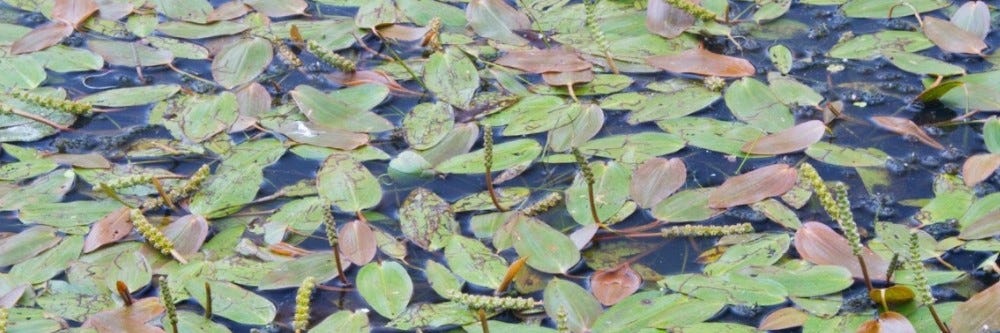
There are several species of pondweeds so will focus on a few general characteristics.
These aquatic plants will have linear, ovate, or lance-shaped leaves with small cluster of flowers along the spikes. They will range between 2-3 inches long.
Inspection
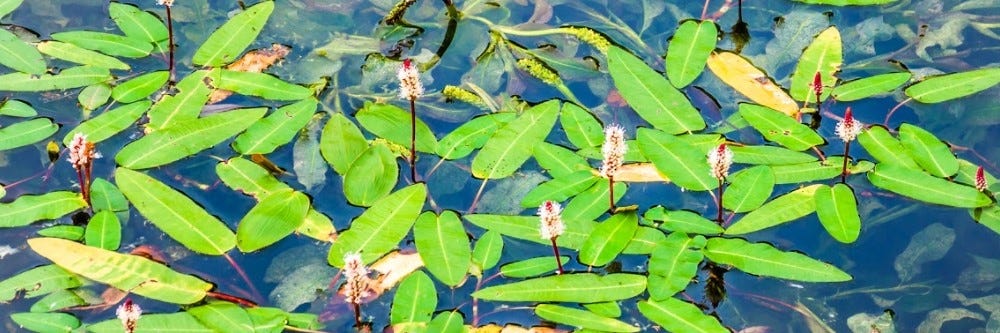 Pondweeds will grow in the shallow, calm water areas of canals.
Treatment
Step 1: Apply Flumigard WDG (Clipper) Aquatic Herbicide
To remove pondweed from canals, we recommend using a post-emergent herbicide such as Flumigard WDG (Clipper) Aquatic Herbicide.
Determine how much Flumigard WDG (Clipper) Aquatic Herbicide Flumioxazin to use by measuring the square footage of the treatment area. To do this, measure the length and width of the treatment area in feet then multiply them together. For acreage, take the square footage and divide it by one acre (square footage / 43,560 sq. ft. = acre).
For surface applications against pondweeds, use 6 to 12 oz. of Flumigard WDG (Clipper) Aquatic Herbicide Flumioxazin per 30 gallons of water per acre.
To ensure thorough coverage, a boom sprayer or larger application equipment may be required.
Broadcast the proper amount of Flumigard WDG (Clipper) Aquatic Herbicide over the water surface.
In areas with dense weed vegetation, only treat 1/2 the water body at one time and wait 10-14 days before treating the remaining area.
Application of this product to public aquatic areas may require special approval and/or permits. Consult with local state agencies, if required.
Water Hyacinth
Water hyacinth is a invasive mat forming aquatic plant that can easily clog waterways, making it difficult for travel through canals for shipments. These weeds can also harm exisiting submerged aquatic plants by blocking out sunlight.
Identification
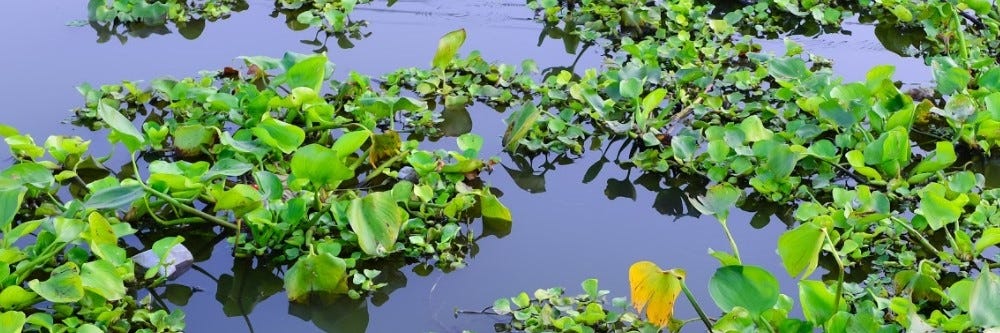
Water hyacinth is a free-floating aquatic plant that can grow up to 3 feet tall and forms a rosette arrangement. Leaves are circular, broad, and fleshy. Lavender flowers will form at the top of these weeds during bloom.
Inspection
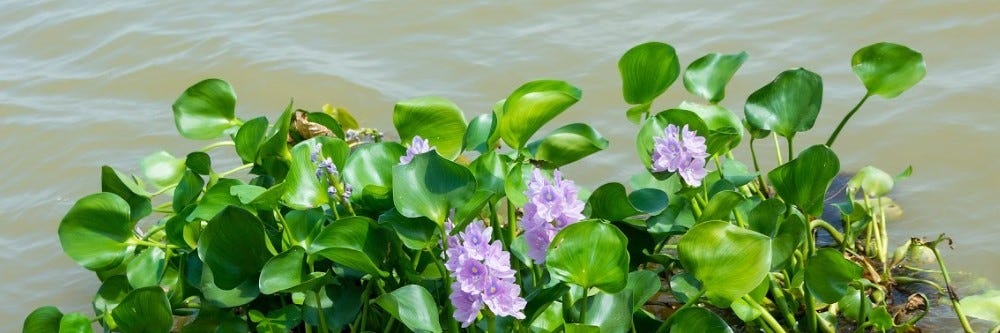
Water hyacinth will grow in parts of the canal with slow-moving waters.
Treatment
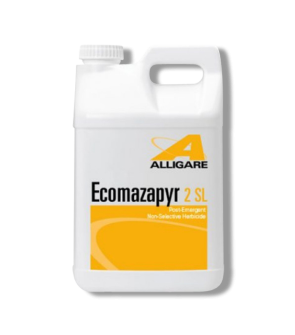
Step 1: Apply Ecomazapyr 2 SL Herbicide
Ecomazapyr 2 SL Herbicide is a flexible and long-lasting herbicide that will control weeds in both land and aquatic areas like canals.
Determine how much Ecomazapyr 2 SL Herbicide to use by measuring the square footage of the treatment area. To do this, measure the length and width of the treatment area in feet then multiply them together. For acreage, take the square footage and divide it by one acre.
Apply 1 to 2 pints of Ecomazapyr 2 SL Herbicide in 100 gallons of water per acre to get rid of water hyacinth.
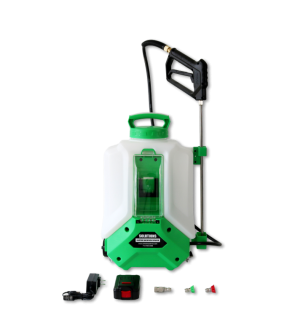
Mix and apply this product with a spray rig or other large volume application tool.
Once mixed, broadcast the solution over the surface of the water.
Do not apply this product to irrigation canals unless the 120-day restriction on irrigation water usage can be observed or product residue levels are determined by laboratory analysis, or other appropriate means of analysis, to be 1.0 ppb or less.
Do not apply this product to dry irrigation canals.
Key Takeaways
What Are the Most Common Weeds in Canals
- The most common aquatic weeds to appear in canals are algae, coontail, water milfoil, pondweeds, and water hyacinth.
When Should Aquatic Weeds Be Removed From Canals
- Applications from the spring and early fall, before the water freezes would be the best time to treat aquatic weeds.
What Causes Weeds in Canals
- Aquatic weeds favor nutrient-rich waters with domestic sewage that contains high amounts of phosphorous and nitrogen.