


Gain access to personalized product screening, the best pricing, rewards, and more!
Create An Account, Or Sign In.
Most Effective Products
Perennial Sowthistle Control: How to Get Rid of Perennial Sowthistles
This page is a general DIY guide for controlling perennial sowthistle. Using the suggested products and methods, you can control perennial sowthistle. Follow this DIY article and use the recommended products, and we guarantee 100% control of perennial sowthistle.
Perennial sowthistles are highly invasive perennial broadleaf weeds that are native of Europe and Eurasia, and are widely distributed throughout the northern half of the United States. It is a noxious weed that goes by many names, such as corn sow-thistle, field sowthistle, creeping sow-thistle, gutweed, milk thistle, field milk thistle, swine-thistle, tree cow-thistle, dindle, or marsh-sowthistle.
Despite its numerous names, this aggressive weed is known for its rapid spread through both seeds and rhizomes, which allows it to easily overtake cropland, lawns, and pastures. Unlike annual sowthistles, perennial sowthistles can live for multiple years, spreading not only by seeds, but can also regrow from underground rhizomes even after the above-ground plant parts have been removed. Not to mention its seeds are easily dispersible by wind, allowing it to colonize new areas quickly.
As a result, perennial sowthistles can form dense patches that outcompete grasses and crops, reducing the overall health and productivity of pastures and fields. Ultimately, perennial sowthistles can be controlled and prevented with the following products and tips suggested in our DIY guide.
Identification
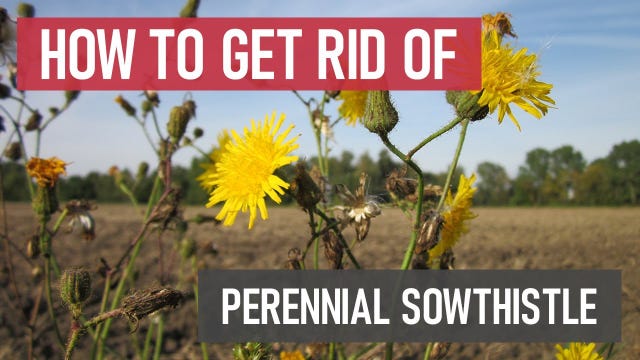
Before proceeding with a treatment program, you must be certain you are dealing with perennial sowthistles. Careless identification can lead to using the wrong treatment methods, which can be a waste of time and money. Listed below are characteristics to help you understand what perennial sowthistles look like.
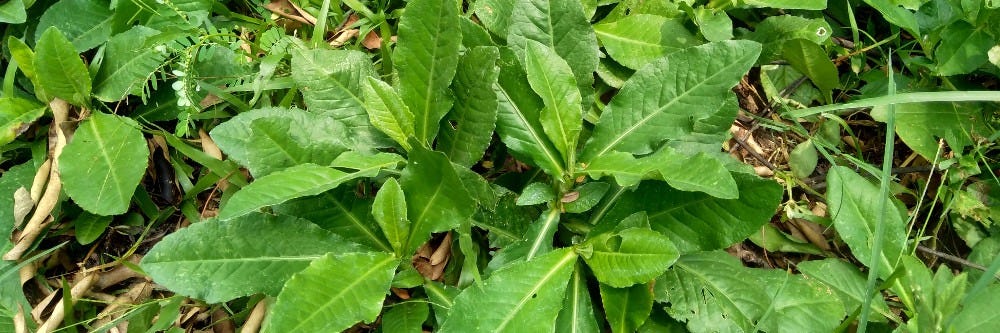
- Perennial sowthistle is a broadleaf weed that closely resembles a dandelion. Dandelions grow as a low basal rosette with all leaves originating at ground level, producing single, unbranched flower stems. In contrast, perennial sowthistle grows taller, reaching 2 to 6 feet in height, whereas dandelions are under a foot tall.
- The stems are upright, smooth, hollow, and mostly unbranched except near the top, where they divide into several flower stalks. The stems will exude a bitter, milky sap when broken.
- The leaves are alternate, clasping the stem, and vary in size and shape. They could be larger and deeply lobed at the base, becoming smaller and less lobed toward the top. The leaf edges are prickly, with sharp-pointed lobes.
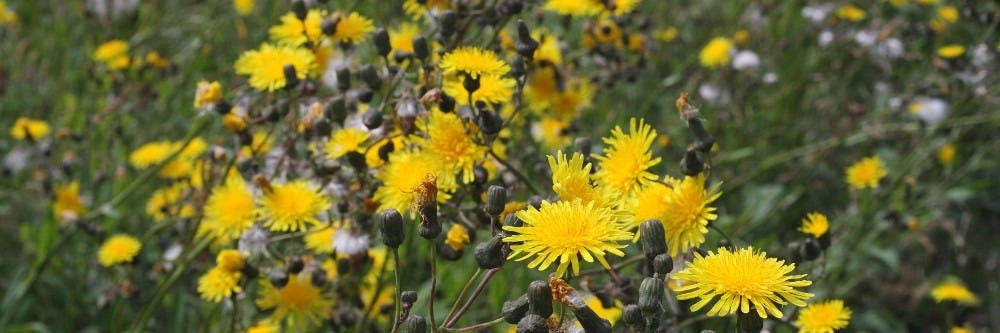
- From early summer through fall, bright yellow, dandelion-like flowerheads bloom at the tips of branches. These composite flowers, made up of petal-like ray florets, are about 1.5 to 3 inches wide. Each flower is surrounded by green bracts covered in bristly, sticky hairs.
- After flowering, the plant produces reddish-brown seeds with ribbed sides, each attached to a silky, parachute-like tuft of hairs.
- Be aware that perennial sowthistles look very similar to another weed, the annual sowthistle. While both plants are part of the same genus, they are different species. To tell the two weeds apart, observe their flowers and leaves. Perennial sowthistles grow larger flowers up to 3 centimeters in diameter, and their leaves are rounder lobed leaves with weak marginal prickles. Annual sowthistles grow smaller flowers up to 2.3 centimeters in diameter, and their leaves are deeply lobed with sharper angles.
Use the description and image above to help you properly identify perennial sowthistles on your property. If unsure, contact us and send a photo of your weed through email or in person at one of our stores to help you identify the weed and suggest treatment options.
Inspection
Once you confirm that you are dealing with perennial sowthistles, you can move on to inspection. During this phase, you will locate areas where perennial sowthistles are thriving and observe the conditions that allow this weed to thrive. This information will help you know where to focus your herbicide application.
Where to Inspect
Perennial sowthistle grows best in fertile, wet soils with exposure to sun, but it is highly adaptable to tolerate a wide range of environments.
It commonly invades agricultural land, pastures, rangelands, overgrazed areas, roadsides, ditches, gardens, forests, woodlands, along rivers and shorelines, miscellaneous waste areas, sloughs, beaches, lawns, and other settings.
What to Look For
From June to October, you can expect to see perennial sowthistle producing flowers.
During these months, the weed is tall, leafy, and produces its bright yellow dandelion-like flowers, making it easier to spot in your property.
Depending on where you live in the United States, the above-ground parts of the perennial sowthistle die back during the winter, usually between October and November.
While it may appear dead in the fall and winter, it's just dormant and will re-emerge when warmer weather returns.
Treatment
After identifying perennial sowthistles and inspecting where it is most active in your yard, you can begin to treat your property. Wear the appropriate personal protective equipment (PPE) before handling or applying any product.
Herbicides containing one or more of the active ingredients 2,4-D, aminopyralid, dicamba, glyphosate, or triclopyr have shown the best results to kill perennial sowthistles.
Regular mowing can help weaken the weed over time, but it won't remove it due to its deep root system. For this reason, we suggest using post-emergent herbicides in the spring or early summer, when the plant is actively growing before it flowers.
During this time, herbicides are more effective at weakening and killing the weed. Late summer or early fall treatments can also work, especially if you are using systemic herbicides.
Avoid trying to control it in the winter, as perennial sowthistles become dormant and treatments won't be as effective.
Step 1: Mix and Apply Herbicide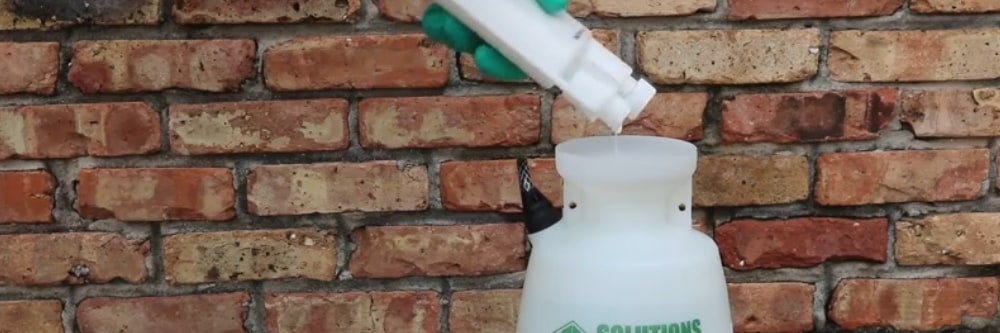
Determine how much herbicide to use by measuring the square footage of the treatment area. Find the square footage by measuring the treatment area's length and width in feet, then multiply them together (length X width = square footage). For acreage, take the square footage and divide it by one acre (square footage / 43,560 sq. ft. = acres).
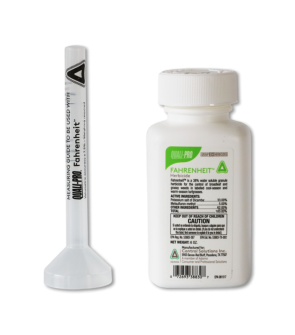
Fahrenheit Herbicide is a selective, post-emergent herbicide designed to target broadleaf and grassy weeds in warm-seasoned turf with the active ingredients dicamba and metsulfuron-methyl.
For spot applications in warm-seasoned grass, mix 0.2 oz. of Fahrenheit Herbicide per 1 gallon of water per 1,000 sq. ft.
2,4-D Amine Selective Post-Emergent Herbicide is a broadleaf and brush weed killer that targets unwanted foliage without harming desirable lawns, cool-seasoned turf, crop areas, and more.
To make spot treatments in cool-seasoned turf, use 1/4 pint of 2,4-D Amine Selective Post-Emergent Herbicide in 3 gallons of water.
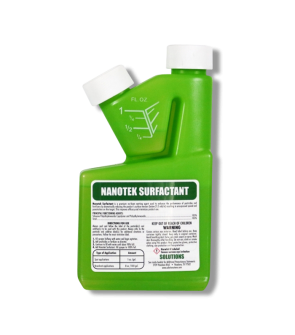
While these herbicides are effective on its own, we suggest using a non-ionic surfactant like Nanotek to increase its success rate against weeds like perennial sowthistle.
Just add 1 fl. oz. of Nanotek Surfactant per 1 gallon of spray solution.
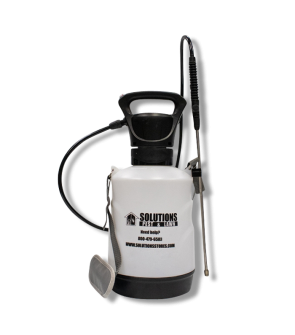
These products must be mixed with water in a handheld pump sprayer or backpack sprayer.
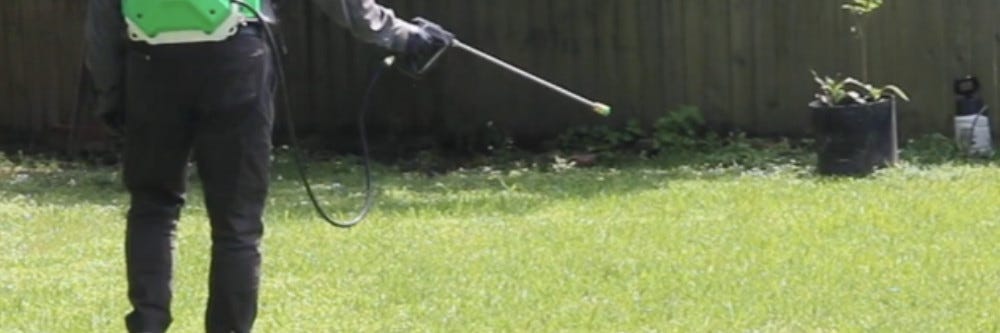
Spot treat any perennial sowthistles you have found in your property by spraying the top and bottom of the weed leaves.
Adjust your sprayer to a fan or cone setting. Do not spray to the point of runoff.
Be sure to spray on calm days when the weed is actively growing. For Fahrenheit Herbicide, avoid applications when temperatures are above 85 degrees Fahrenheit.
Do not allow people and pets to return to treated areas with 2,4-D Amine Selective Post-Emergent Herbicide until 48 hours have passed after application.
Keep people and pets away from treated areas with Fahrenheit Herbicide until 24 hours have passed after application.
Step 2: Repeat Applications
 When applied properly, treated weeds will begin to yellow and die. Conduct follow-up applications as necessary.
Reapplication with Fahrenheit Herbicide can be made when 4 to 6 weeks have passed after application.
2,4-D Amine Selective Post-Emergent Herbicide can be reapplied when 21 to 30 days have passed after treatment.
Prevention
Once perennial sowthistles have been eliminated from your property, you will need to proceed with the following preventative measures to ensure this broadleaf weed does not return.
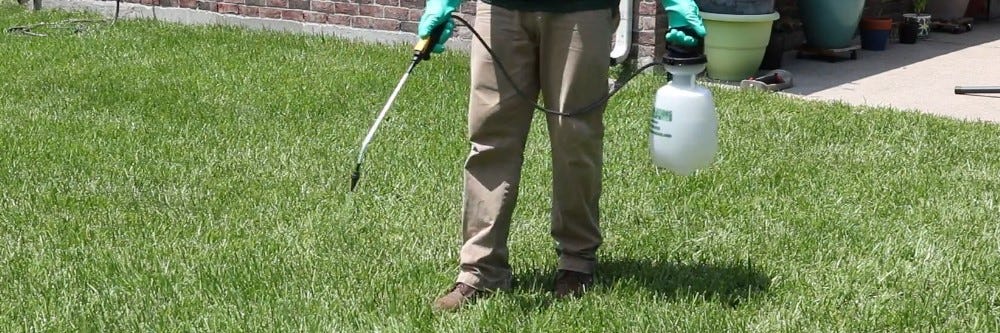
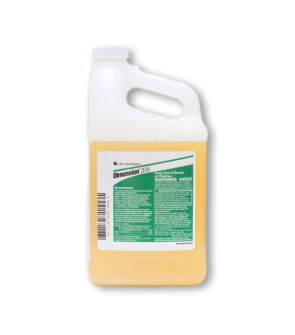
- As with most weeds, a good control involves applying a pre-emergent herbicide before perennial sowthistles appear, generally between mid-September to October and again from March to early May. Applications during this time frame will help to prevent perennial sowthistles from germinating in the soil. Dimension 2EW Herbicide is an effective pre-emergent herbicide concentrate that targets annual grassy weeds and broadleaf weeds in established turf, ornamental landscapes, non-croplands, and other settings. You will need to apply 0.73 fl. oz. of Dimension 2EW Herbicide per 1 gallon of water per 1,000 sq. ft. Treat the area you wish to prevent perennial sowthistle growth or where you have noticed previous activity. Do not spray to the point of runoff. After 6 hours, water the treatment area with 0.5 inches of water. You may reapply every 3 to 4 months, but do not exceed the maximum rate of 6 pints per acre per year or 2.2 fl. oz. per 1,000 sq. ft. per year.
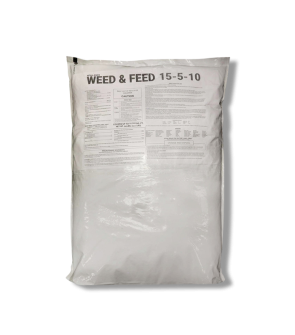
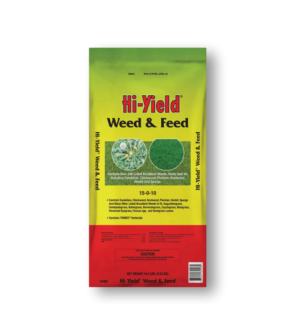
- Perennial sowthistles can easily grow in sites with minimal turf, often seen with overgrazing, excessive mowing, and other activities. To avoid this, we recommend promoting the health of your turf with a slow-release granular fertilizer. Solutions 15-5-10 Weed & Feed Fertilizer with Trimec is a unique fertilizer and post-emergent herbicide blend that slowly releases nutrients to turf and eliminates any above-ground weeds like sowthistles. This product will need to be used with a hand spreader, push spreader, or broadcast spreader. Mow lawn to normal height 1 to 2 days before application. For most applications, use 3.2 to 4.0 pounds of Solutions 15-5-10 Weed & Feed Fertilizer with Trimec per 1,000 sq. ft. Walk at a steady pace across your lawn to evenly spread the granules. If the grass is not moist at the time of application, sprinkle lightly with water to hold the material and prevent dust drift onto nontarget plants. Do not wash from weed leaves for 1 to 2 days after application. At this time, a thorough watering should be made.
- Mowing can help reduce the spread of perennial sowthistles, but due to its deep root systems it's not entirely effective on its own. We also recommend rotational grazing if you have grazing animals, as healthy, competitive vegetation can suppress perennial sowthistles and other weeds. Be sure to also water your turf to help encourage growth, since weeds like these grow in areas with thin grass. We recommend watering with no more than 1 inch of irrigation, once per week. Best to do so early in the morning to give the water enough time to absorb into the grass without evaporating in the sun.
- It's best to clean clothing and machinery used in areas with current or past perennial sowthistle infestations, as this helps prevent the spread of seeds and root fragments to new locations.
Key Takeaways
What is Perennial Sowthistles
- Perennial sowthistles are invasive, deep-rooted, broadleaf weeds that grow back yearly from underground rhizomes.
How to Get Rid of Perennial Sowthistles
- The best way to get rid of perennial sowthistles is to use selective, post-emergent herbicides such as Fahrenheit Herbicide or 2,4-D Amine Selective Post-Emergent Herbicide. We also recommend using Nanotek Surfactant to increase control over listed weeds.
Preventing Perennial Sowthistles Reinfestation
- To prevent perennial sowthistles before they appear in your property, apply Dimension 2EW Herbicide. Also, promote healthy turf with fertilizers such as Solutions 15-5-10 Weed & Feed with Trimec, and regular mowing, rotational grazing, and cleaning of clothing and equipment after working in infested areas.