


Gain access to personalized product screening, the best pricing, rewards, and more!
Create An Account, Or Sign In.
Most Effective Products
Carolina Geranium Control: How to Get Rid of Carolina Geranium
This page is a general DIY guide for controlling Carolina geranium. Using the products and methods suggested, you will get control of Carolina geranium. Follow this DIY article and use the recommended products; we guarantee 100% control of Carolina geraniums.
Carolina geranium, also known as Carolina cranesbill, wild geranium, or cranesbill is often a desired wildflower, but it can be deemed as a nuisance weed. It can be found throughout most of the United States of America, but it's most prevalent in the eastern half.
For most homeowners, this weed can be troublesome due to its ability to easily smother desired plants with its mat-like growth habit. They are also hard to get rid of because their seeds contain hard coats that make it difficult for pre-emergents to penetrate.
If left untreated, a Carolina geranium infestation can kill off other plant species in the area they are infesting and make the turf thin and bare. Our DIY guide can help make Carolina geranium control and prevention easy for experienced and advanced applicators. Simply follow along and use the suggested products and tips in this professional guide.
Identification
Before proceeding with a treatment program, you need to be certain that the weed infesting your property is Carolina geranium. Careless identification can lead to using the wrong treatment methods, which can waste time and money. Below are the following characteristics to help you understand what Carolina geranium looks like.
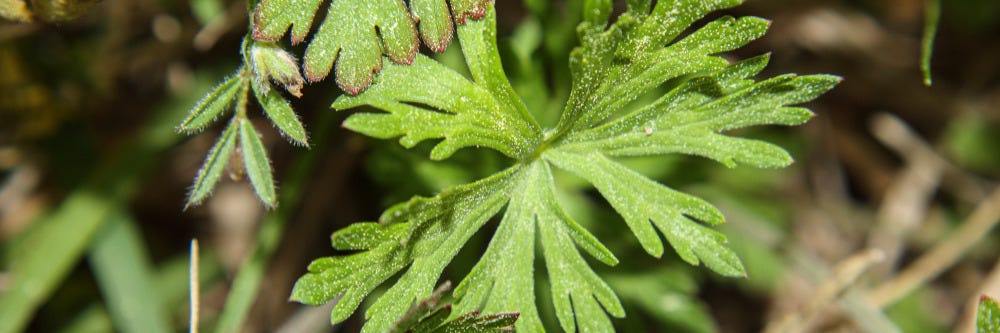
- Carolina geranium is a winter annual or biennial broadleaf weed with pink, light green, to red colored stems that have deeply lobed leaves. These leaves grow in an erect to semi-erect fashion.
- The leaves are hairy on both sides and are divided into 5 to 9 lobed or toothed pointed segments. They are usually green in color, but the leaves may have a red coloration as the weather changes.
- Carolina geraniums are low-growing plants that grow close to the ground in a basal rosette formation. Eventually, these stems become erect and grow upwards where it will branch freely. In size, this weed can reach 6 to 12 inches tall with the stems reaching out between 12 to 24 inches in length.
- The flowers of Carolina geraniums are found in small clusters at the tips of the stems and vary from whitish pink to purple with five petals.
- Fruit (also known as seeds) will develop in erect, slender hairy capsules that are about 1 inch long. These fruits are in the shape of a crane's bill, giving this foliage one of its common nicknames the Carolina cranesbill.
Use the description and image above to help you correctly identify Carolina geranium on your property. If unsure, contact us and send a photo of your weed through email or in person at one of our stores to help you identify the weed and suggest treatment options.
Inspection
Once it is confirmed that you are dealing with Carolina geranium, you can move on to inspection. During this phase, you will locate areas where Carolina geranium are thriving and observe the conditions allowing them to succeed. This information will help you in knowing where to focus your herbicide application.

Where to Inspect
Carolina geraniums grows well in full or partial sunlight in soil that is gravelly or sandy where the turf is thin.
Common sites for this weed to be found are lawns, landscape beds, fields, along roadsides, waste areas, ditchbanks, in and around crops, and other areas with thin turf.
What to Look For
From March to May, the Carolina geranium will begin to bloom and then become mature within the months of May to August.
The easiest way to spot Carolina geranium in your property is to watch out for dense mats of rosettes that may twist around other plants.
Seeds will mature and become set within May to June.
Treatment
After identifying Carolina geranium and inspecting where they are most active in your property, you can begin to treat your area. Be sure to wear the proper personal protective equipment (PPE) before handling or applying any herbicides.
To get rid of Carolina geraniums, we recommend using a post-emergent herbicide containing 2,4-D amine, mecoprop, or dicamba for best results.
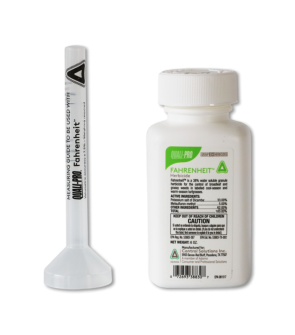
Fahrenheit Herbicide is an effective water-soluble granule herbicide specially formulated to control numerous broadleaf and grassy weeds such as Carolina geranium in warm-seasoned turf.
We suggest 2,4-D Amine Selective Post-Emergent Herbicide to get rid of Carolina geranium in cool-seasoned turf. The 2,4-D Amine Selective Post-Emergent Herbicide is an easy-to-use emulsifiable concentrate that will eliminate emerged broadleaf weeds.
Step 1: Apply Herbicide
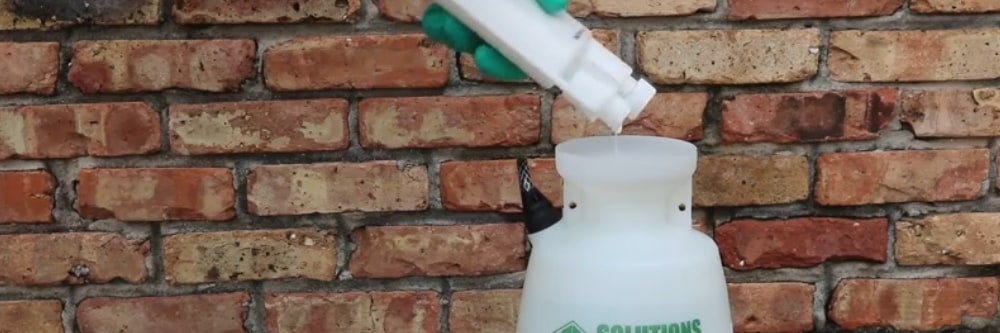 Determine how much herbicide to use by measuring the square footage of the treatment area. Find the square footage by measuring the treatment area's length and width in feet, then multiplying them together (length X width = square footage). For acreage, take the square footage and divide it by one acre (square footage / 43,560 sq. ft. = acres).
For spot applications to control Carolina geranium in warm-seasoned turf, use 0.2 oz. of Fahrenheit Herbicide per 1 gallon of water per 1,000 sq. ft.
To control Carolina geranium in cool-seasoned turf, apply 2,4-D Amine Selective Post-Emergent Herbicide at the rate of 1/4 pint in 3 gallons of water.
Apply 2,4-D Amine Selective Post-Emergent Herbicide as a spot treatment.
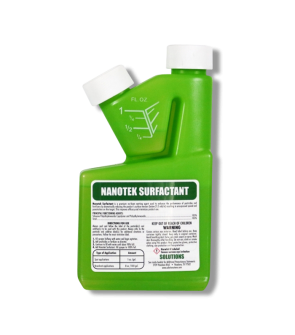
We recommend using a non-ionic surfactant to enhance the performance of your herbicide. Nanotek Surfactant is a non-ionic surfactant that greatly enhances the penetration and coverage of herbicide and insecticide material.
Just add 1 oz. of Nanotek Surfactant per 1 gallon of spray solution.
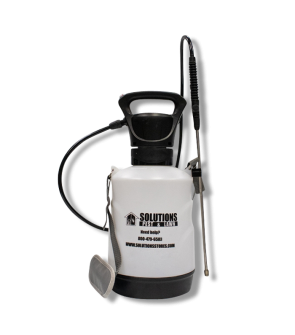
These products will need to be mixed with water in a handheld pump or backpack sprayer.
To mix, simply fill the tank with half the amount of water, add the proper amount of herbicide and surfactant, and pour in the remaining half of water. Close the tank lid and agitate well.
Spot-treat any weed you find during your inspection. Use a fan or cone spray pattern to ensure the leaves are fully coated, and spray the weed to the point of wetting but not runoff.
Do not apply when temperature exceeds 90 degrees Fahrenheit for 2,4-D Amine Selective Post-Emergent Herbicide.
Apply Fahrenheit Herbicide when soil temperatures are above 60 degrees Fahrenheit, but beneath 85 degrees Fahrenheit.
Step 2: Reapply Herbicide If Necessary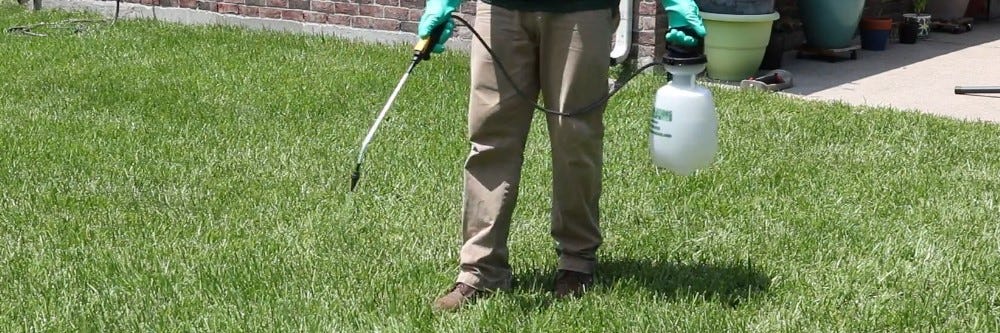
Weed growth ceases within hours after application of Fahrenheit Herbicide resulting in control of weeds within 1-3 weeks after application depending on the weed species and environmental conditions.
Repeat application of Fahrenheit Herbicide in 4-6 weeks if necessary.
If weeds are still appearing after applying 2,4-D Amine Selective Post-Emergent Herbicide another application may be needed.
Only perform 2 applications per year with 2,4-D Amine Selective Post-Emergent Herbicide. Wait at least 21 days from the previous treatment before making a second application.
Prevention
Once Carolina geranium has been eliminated from your property, you will need to implement preventative measures to ensure that it does not return.
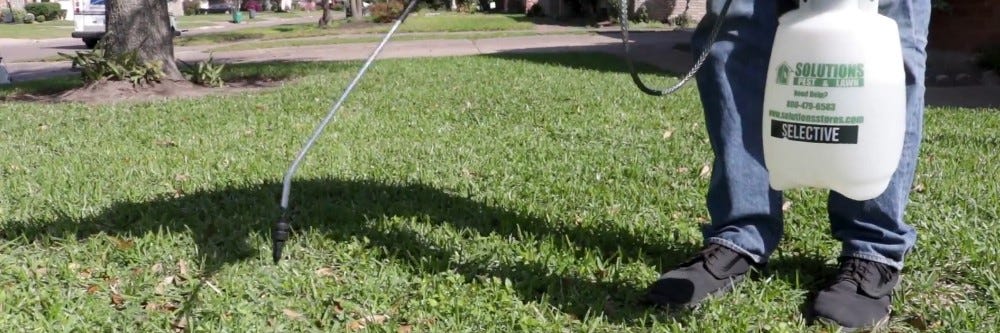
- The best way to reduce future Carolina geranium appearance in your property is to apply a pre-emergent herbicide. Best to make pre-emergent applications in the early spring and early fall before seeds germinate. A pre-emergent containing isoxaben or dithiopyr would be most effective against Carolina geranium. Dithiopyr 2EW Herbicide is a liquid pre-emergent herbicide that stops annual grasses and broadleaf weeds before they emerge in established lawns, ornamental and sports turf, non-cropland areas, and more. Apply 0.73 fl. oz. of Dithiopyr 2EW Herbicide per 1 gallon of water per 1,000 sq. ft. Broadcast the mixed solution in a handheld or backpack sprayer across your treatment area. After 6 hours from the first application, irrigate the treated area with 0.5 inches of irrigation.
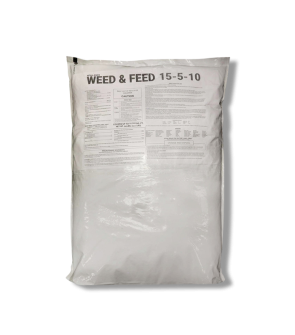
- Combine regular lawn maintenance and pre-emergent applications to better prevent this weed. A thick, healthy lawn can help prevent weed growth since Carolina geranium likes to grow in areas with little vegetation and thin turf growth. Mowing and seasonal fertilization with a slow-release can help with this. A fertilizer we recommend using, mainly during the spring is the Solutions 15-5-10 Weed & Feed Fertilizer with Trimec. It is a unique fertilizer and post-emergent herbicide blend. You can apply between 3.2 to 4 pounds of Solutions 15-5-10 Weed & Feed Fertilizer with Trimec per 1,000 sq. ft. of turf. Mow lawn to normal height 1 to 2 days before application. If the grass is not moist at the time of application, sprinkle lightly with water to hold the material and prevent dust drift onto nontarget plants. Adjust your push or broadcast spreader then load the proper amount of granules. Start at the edge of your treatment area and then cover the space in the middle. Be careful to avoid overlaps. Do not wash from weed leaves for 1 to 2 days after application. At this time, a thorough watering should be made.
Key Takeaways
What are Carolina Geraniums?
- Carolina geraniums are cool-seasoned broadleaf weeds that are known for its long, branching stems.
How to Get Rid of Carolina Geranium
- Post-emergent herbicides such as Fahrenheit Herbicide are most effective in removing Carolina geranium from warm-seasoned turf and 2,4-D Amine Selective Post-Emergent Herbicide in cool-seasoned turf.
Preventing Carolina Geranium Reinfestations
- To prevent Carolina geraniums the use of pre-emergent herbicides like Dithiopyr 2EW Herbicide and regular turf maintenance will do well.