


Gain access to personalized product screening, the best pricing, rewards, and more!
Create An Account, Or Sign In.
Most Effective Products
Tip Moth Control: How to Get Rid of Tip Moths
This page is a general DIY guide that eliminates tip moths from plants within your lawn. Using the products and methods suggested you will get control tip moths. Follow this guide and the recommended products to completely control tip moth infestations.
Tip moths are a small invasive pest that is widely found in forest settings, but can invade residential lawns and gardens. There are three known species of tip moths known as the Nantucket pine tip moth, pitch pine tip moth, and the subtropical pine tip moth. The most experienced pest from this species genre is the Nantucket pine tip moth or more specifically its larvae.
Mostly occurring throughout the eastern portion of the United States, it can also be located in Massachusetts, Florida, and the western half of Texas and Arkansas. Usually pine tree species are the food source for various types of tip moths. Once these pests larvae hatch from their eggs they will begin to feed on the inside and outside of trees leaves, buds, and shoots of new growth.
While damages may appear minimal at first if left untreated then populations can increase leading to tree deformity then eventual death. Refer to the steps and products listed in this DIY guide to completely eliminate tip moth populations, which will help to lessen finances and time.
Identification
Before you can proceed with a treatment program, you need to be certain that the pest infesting your yard is a species of tip moth. Due to each species having their own defining characteristics, this article will focus on the most encountered tip moth which is the Nantucket pine tip moth. Listed below is defining characteristics to identify tip moths.
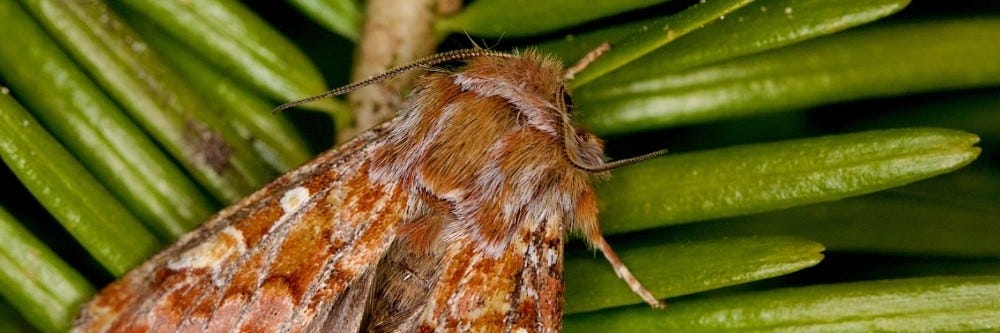
- There are many species of tip moths found in the United States. Generally, these moths have reddish brown forewings with silver markings and grow up to half an inch in length. When at rest, their wings fold over the body in a tent-like shape. It’s not often you’ll actually be able to spot these moths when they’re active.
- The larvae are cream to reddish-brown caterpillars with dark heads and grow to about 1/2 inch long.
Use the image and description above to help you correctly identify tip moths. If unsure, contact us with a photo or sample of the pest by email or in person at one of store locations.
Inspection
After you have confirmation of tip moths, you need to inspect the area to see where they are most active. Determine the size and severity of the infestation to help you in your pesticide and treatment application.
Where to Inspect
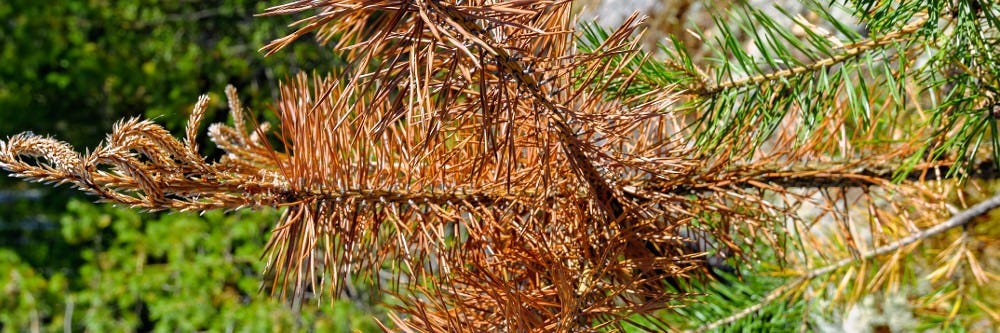
Tip moths can be found in young or established pine shoot tips, leaves, buds, and new shoot growth within grassy and forested areas, Christmas tree plantations, ornamental pines, orchards, and other landscaped areas in residential, commercial, and agricultural fields.
What to Look For
Adult moths may emerge from December to April, depending on the local climate.
Pine tip moths can produce two to five generations per year, with warmer climates producing more generations. Specific species of tip moth may target specific species of pine tree.
Tip moths are easiest to identify by their larvae as adults are nocturnal. Larvae can easily be identified by their bright rustic colors, large group feedings, or feeding activity. This pest should also be noted for their ability to travel inside plant tissue to feed. If there is no physical identification then examine the bite patterns on the foliage. When feeding larvae will leave irregular holes across the bud, cones, and leaves of pine trees.
Treatment
Before beginning with any insecticide application you will need to wear the appropriate personal protective equipment (PPE) such as gloves, mask, safety googles, long-sleeve shirt, long-sleeve pants, coveralls, Tyvek suit, and closed-toe shoes with socks.
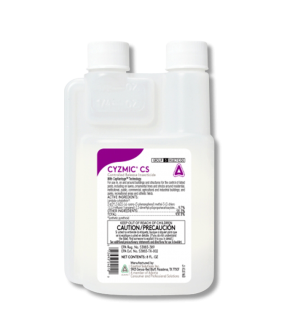
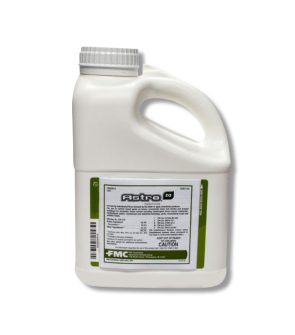
The best method of control is to apply insecticide products containing bifenthrin, permethrin, or lamba-cyhalothrin prior to tip moth breeding activity.
We recommend treating your property prior to April until late July as this is when tip moths breed and lay eggs.
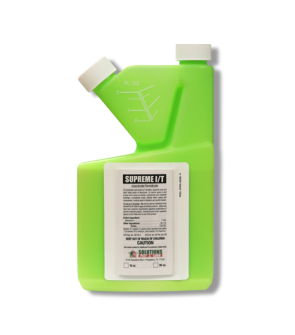
Step 1: Mix and Prepare Supreme IT
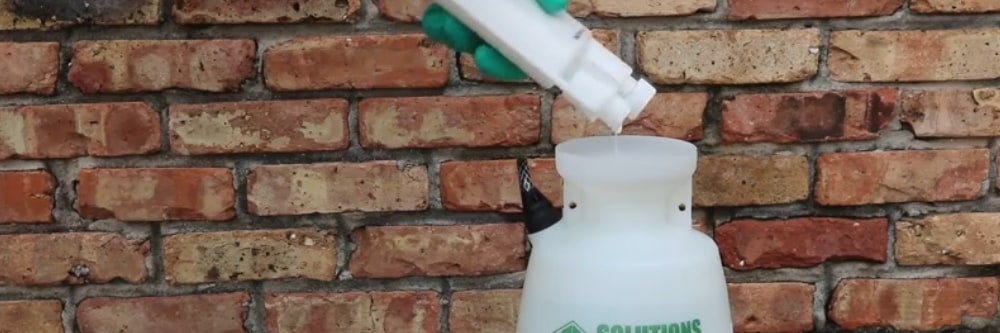
Supreme IT is a broad-spectrum insecticide that can treat and prevent over 70 types of insects, including tip moths. Once applied this liquid formulated product will seep into the treated surface to leave a residual effect that will continue to fight against moth activity for at least 90 days.
Determine how much Supreme IT to use by measuring the square footage of the treatment area. To do this, measure the treatment area's length and width in feet and multiply together (length X width = square footage).
To control moths on ornamentals, use 0.25 to 0.50 fl. oz. of Supreme IT per gallon of water per 1,000 sq. ft.
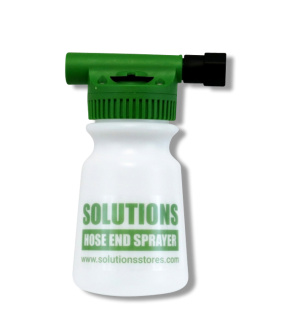
We recommend mixing the product in a hose-end sprayer to reach up high foliage heights such as trees. For low-level shrubbery or small treatment areas, you can use a handheld pump sprayer or backpack sprayer.
Treat the bottom and top of leaves until wet, but not to the point of run-off.
Keep people and pets away from the treated area until the spray has completely dried.
Step 2: Retreat Property
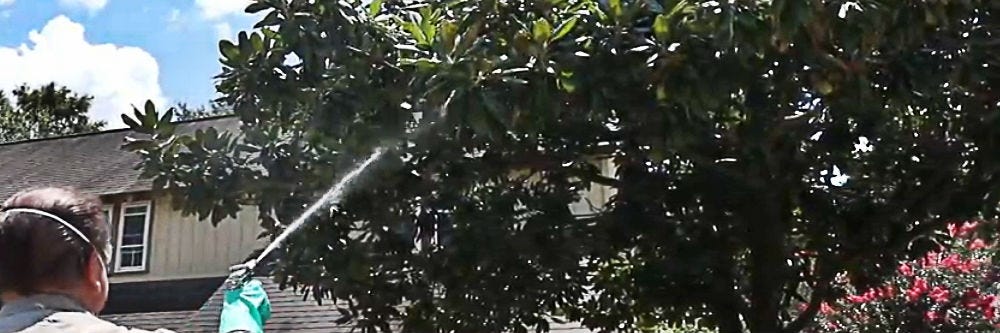
Tip moths have multiple generations per year meaning that reinfestation is more than possible.
Reapply Supreme IT once every 90 days to continue to repel and eliminate infestations.
Prevention
Once tip moths have been successfully eliminated from your yard, ensure they do not return by following these preventative measures.
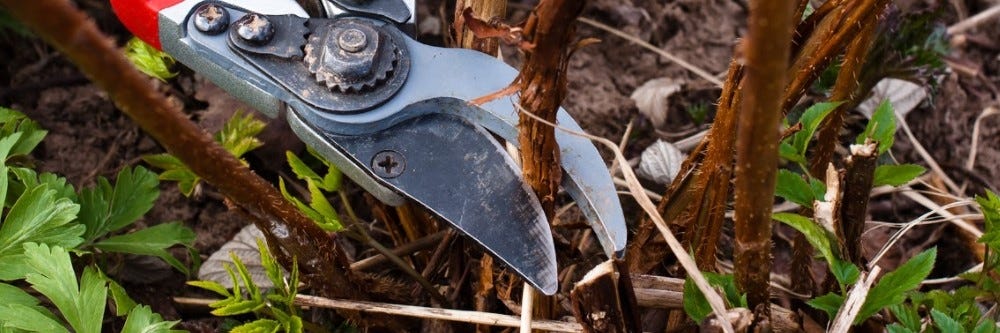
- Prune infested or decaying pine branches during the late summer and fall season to prevent overwintering.
- Water pine foliage with an inch of irrigation to keep plants healthy and growing from past damage.
- Fertilize property with the appropriate fertilizers to keep plants strong and fight against other diseases after tip moth feeding activity.
- Dethatch the turf and replace the soil surrounding pine plants to disturb tip moth eggs or pupae.
- Reapply Supreme IT at the beginning of spring and fall to eliminate future breeding activity. Best to retreat on a quarterly basis through the year.
Key Takeaways
What is Tip Moths?
- Tip moths are a species of moths that feed on various pine foliage in forests or residential yards. Their larvae are known for creating the most damage to the inside and outside the surface of pine tree species.
How to Get Rid of Tip Moths
- We recommend applying Supreme IT during the early spring to fall season to your yard and ornamental foliage. This will work to deter tip moths from invading your property to feed on pine tree leaves, buds, and cones.
How to Prevent Tip Moth Reinfestation
- Prevent potential tip moth infestations by monitoring your yard, removing decaying branches, and applications of Supreme IT every 90 days.