


Gain access to personalized product screening, the best pricing, rewards, and more!
Create An Account, Or Sign In.
Most Effective Products
Stinging Nettle Control: How to Get Rid of Stinging Nettle
This page is an expert DIY guide on removing stinging nettle from your property using the products and methods our experienced lawn care specialists suggested. Follow this guide and use the recommended products. We guarantee you will have a lawn free of stinging nettle.
Stinging nettle, commonly known as Urtica dioica, common nettle, or nettle leaf, is a perennial weed revered for its unpleasant tiny hairs on the leaves and stems. You will often experience a burning or stinging sensation when coming into contact with these tiny hairs (trichomes). Hairs from the stinging nettle weed contain a mix of histamine, acetylcholine, serotonin, and formic acid, released onto your skin when the hairs are broken off the weed.
Belonging to the Urticaceae category, stinging nettle has several subspecies that fall under the Gracilis and Holosericea categories. These subspecies can be found throughout the eastern half of the United States. Depending on moisture and shade, stinging nettle cannot survive in consistently dry and warm climates. This perennial weed survives in neglected or overgrown yards, edges of fields and pastures, and in properties containing numerous trees that provide partial shade.
Besides the physical harm it poses to you, this plant grows tall in the summer and begins to die back down closer to winter. Limiting the growth of desired foliage such as crops or gardens and entirely dominating the area through its underground stolons. As a perennial weed, stinging nettle may continue to grow from its rhizomes and seeds.
Stinging nettle is a fast-growing and persistent weed that will easily overcome your yard and agricultural fields. Our simple DIY guide will show you how to remove and prevent stinging nettle weeds in your lawn and other desired foliage areas. Follow the step-by-step instructions and recommended products listed throughout this article to control stinging nettles cost-efficiently and in a timely.
Identification
Before proceeding with a treatment program, you need to properly identify stinging nettle by knowing what it looks like. Misidentification can lead you to use the wrong herbicides, costing you time and money. Refer to the following characteristics to correctly identify stinging nettle.
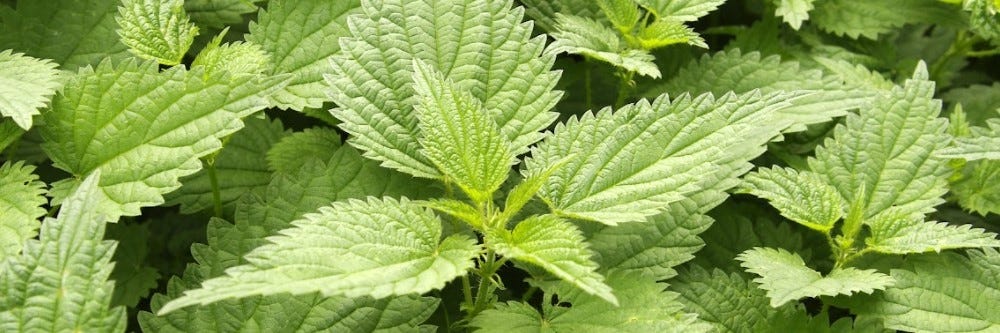
- The size of stinging nettle ranges from 3.5 to 10 feet tall.
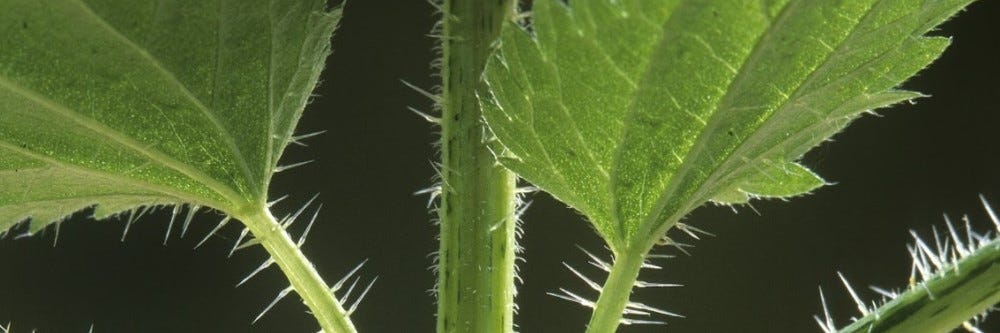
- The stems and leaves of stinging nettle contain hairs (trichomes) that burn or irritate your skin when broken or brushed against. The stems are covered in long, stinging, and shorter, non-stinging hairs. Stems will be slender, upright, four-angled, and branched at the base.
- Leaves are green and oval to slightly heart-shaped, with toothed margins and a pointed tip. The leaves grow from 2.5 inches to 5 inches in length. They can have 3 to 5 veins that branch from the base of the leaf. The leaves are also coated in stinging and non-stinging hairs.
- From May to October, the stinging nettle produces female and male flowers that are whitish green. Once these flowers are developed, a white or brown oval-shaped achene with a single seed inside will form.
- It forms large clumps and can quickly spread and take over areas with its underground rhizomes. In one season, rhizomes can spread 5 feet or more.
Use the description and image above to help you identify the stinging nettle on your lawn. If you are unsure whether the plant is stinging nettle, contact us with a photo of the weed, and we will properly identify the foliage and suggest the appropriate herbicide.
Inspection
After you have confirmed that the weed you encounter is stinging nettle, you can move forward with inspection. During this phase, you will need to determine the areas where stinging nettle is concentrated and the conditions of these areas. This will help you to decide where to focus your herbicide treatment.
Where to Inspect
Stinging nettle thrives in damp soil that receives only partial sunlight throughout the day. It does not grow well in climates with excessive heat or prolonged sun exposure.
Common sites where stinging nettles are found include but are not limited to, pastures, ditches, overgrown areas, wooded areas, and yards.
What to Look For
Stinging nettle is a summer annual weed with a clumping habit. Its seeds germinate in spring, and the flowers often bloom from March to September.
These dense formations will contain green leaves and stems with multiple hairs throughout their life cycle. When fully matured, this plant will hover over other foliage at a height of 10 feet.
Treatment
Be sure to wear the appropriate personal protective equipment (PPE) when handling or spraying any type of chemical product. Goggles, gloves, long-sleeve shirts, and pants are strongly recommended to prevent the stinging nettle hairs from irritating your skin.
To completely remove stinging nettle, you must prevent root growth. The best option is to use a systemic, selective herbicide product labeled to treat stinging nettles, such as 2,4-D Amine Selective Post-Emergent Herbicide or Fahrenheit Herbicide.
Step 1: Mix and Apply Herbicide
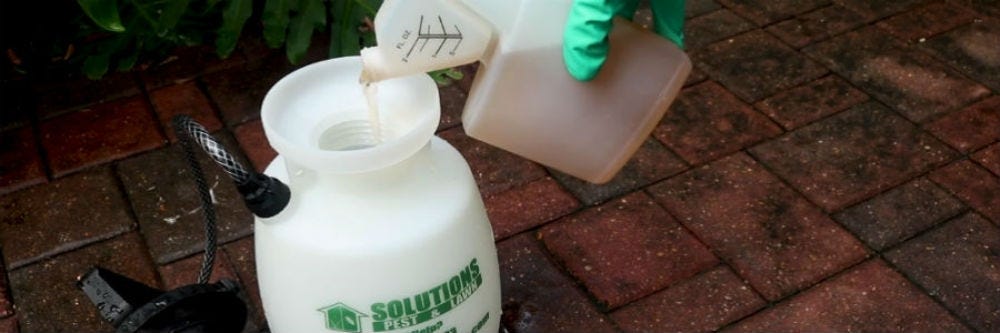
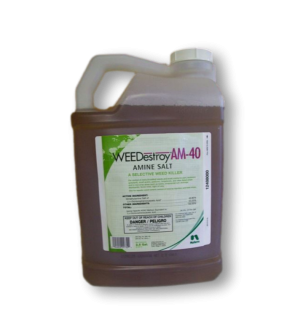
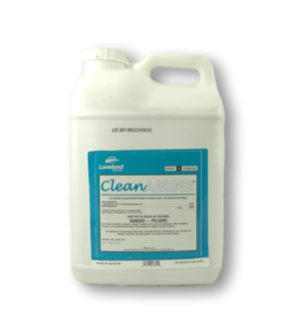
2,4-D Amine Selective Post-Emergent Herbicide is a liquid-formulated product that controls various emerged weeds, such as stinging nettle. Once stinging nettle has been treated with this product, its active ingredient 2,4-D, 46.8%, will travel from the stem to the roots to eliminate the weed.
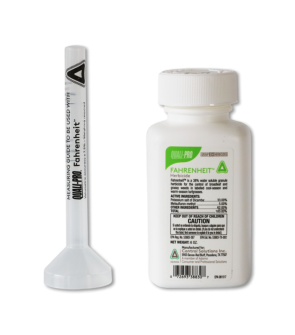
Fahrenheit Herbicide is a water-soluble product that offers selective control over various types of broadleaf and grassy weeds, such as stinging nettle, in warm-seasoned turf.
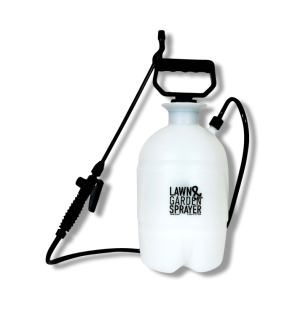
Either of these products will need to be mixed and applied with a handheld pump sprayer.
Measure the square footage of the treatment area to determine how much product to use. To do this, measure the area's length and width in feet and multiply them together (length X width = square footage).
Spot applications in cool-seasoned turf to control stinging thistles will use a rate of 1/4 pint of 2,4-D Amine Selective Post-Emergent Herbicide with 3 gallons of water.
To perform spot applications in warm-seasoned turf, use 0.2 oz. of Fahrenheit Herbicide in 1 gallon of water per 1,000 sq. ft. For broader coverage, apply 4 to 6 oz. of product in 20 to 80 gallons of water per acre.
Keep in mind that when making applications over St. Augustinegrass, Bermudagrass, or Zoysiagrass, temporary stunting or chlorosis may occur.
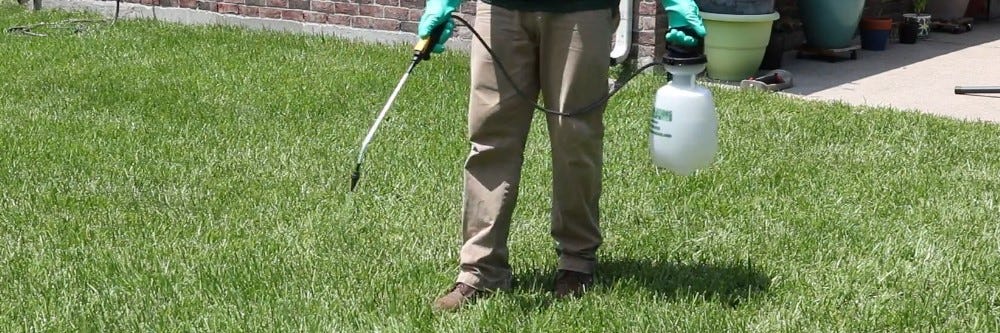
Once the product is well-mixed in a handheld pump sprayer, apply the solution to the top and bottom of the stinging nettle leaves on a fan-spray setting to coat them evenly. Do not spray to the point of runoff.
Step 2: Retreat Afflicted Areas
Due to stinging nettles' persistence and large group growth, retreatment may be necessary after the first application.
Reapplication intervals with 2, 4-D Amine Selective Post-Emergent Herbicide range from 21 to 30 days, and those with Fahrenheit Herbicide range from 4 to 6 weeks.
Applications are most effective when the plant grows young before flower or seed production.
Prevention
After successfully removing stinging nettle from your property, you will want to ensure it does not return. The best defense against stinging nettle is to apply a weed and feed fertilizer before the spring season, as seeds begin to germinate. Listed below are other forms of preventative measures to follow.
- Mow your yard when it has reached a height of 3 inches to prevent stinging nettles from growing. This will only thin the stinging nettle population. You must remove the stinging nettle from the root using a chemical product.
- Dig the plant out with a garden hoe in areas that cannot be mowed. Expose the plant rhizomes, but avoid touching the stinging nettle hairs. Rhizomes that were previously drugged up should not be left on top of the soil as this can still create dense infestations.
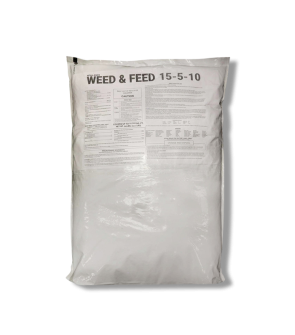
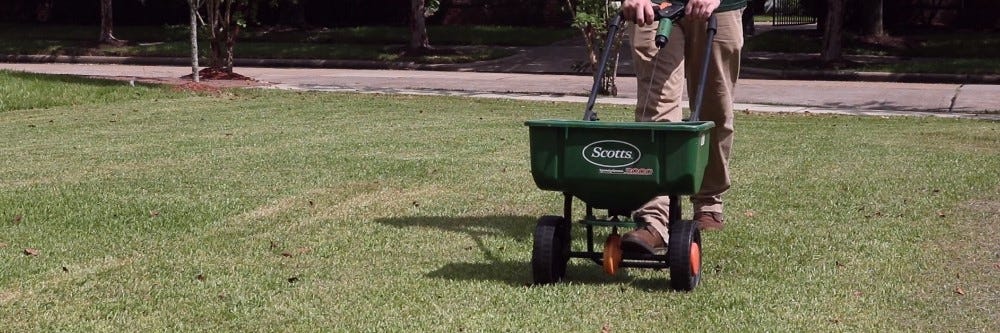
- Thicker lawns will help to minimize space for stinging nettle growth and help lessen conditions for this weed to grow. We recommend using a fertilizer to promote healthier turf growth, such as Solutions 15-5-10 Weed & Feed Fertilizer with Trimec. Apply Solutions 15-5-10 Weed and Feed Fertilizer with Trimec at 3.2 to 4.0 lbs. of product per 1,000 sq. ft. of turfgrass. Once finished, water the lawn with an inch of water to activate the product.
- Reseed areas that have become thin from stinging nettles activity. Established grasses will help to suffocate stinging nettle weeds.
Key Takeaways
What is stinging nettle?
- Stinging nettle is a common weed that grows throughout the eastern half of the United States. It mainly grows in damp, fertile soil.
How to Get Rid of Stinging Nettle
- Our recommendation for removing stinging nettle is to use a systemic product labeled to treat this weed. Products like 2,4-D Amine Selective Post-Emergent Herbicide or Fahrenheit Herbicide will work best.
Prevent Stinging Nettle Reinfestations
- Stinging nettle can easily overtake areas due to its rhizomes, which grow to 5 feet or more in one season. Partial fragments of rhizomes or roots will pose the risk of re-infestation. The best way to cease this activity is to apply Solutions 15-5-10 Weed and Feed Fertilizer with Trimec at the beginning of spring when the lawn is actively growing.