


Gain access to personalized product screening, the best pricing, rewards, and more!
Create An Account, Or Sign In.


LOVELAND PRODUCTS
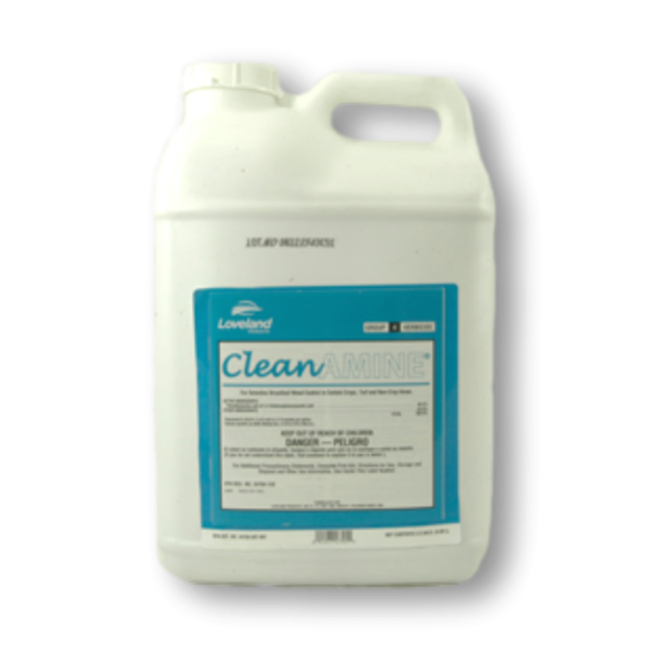
Clean Amine Herbicide
Clean Amine Herbicide is a low-odor, selective herbicide that delivers proven, reliable control of over 70 broadleaf weeds across a wide range of crops, turf, and non-crop areas.
As low as
$94.76
Only %1 left
SKU
Clean Amine Herbicide Product Page
Min : 94.76 - Max : 94.76
Price as of
10/22/26
10/22/26
Price Transparency
See how our pricing compares to other online retailers for this item.
Clean Amine Herbicide, manufactured by Loveland Products, is a low-odor, selective post-emergent herbicide that delivers powerful broadleaf weed control with reduced volatility, making it a safer, cleaner choice for crops, turf, and non-crop areas.
This broad-spectrum herbicide uses synthetic auxin technology, a proven mode of action that disrupts normal growth processes in susceptible broadleaf weeds. Synthetic auxins mimic natural plant growth hormones, and when absorbed by broadleaf weeds they trigger uncontrolled cell elongation, abnormal growth patterns, and disrupted nutrient transport, ultimately leading to plant death. Grasses, however, are able to metabolize the herbicide differently, allowing them to remain unharmed while broadleaf weeds are effectively controlled.
Clean Amine Herbicide is a reliable, low-odor, selective broadleaf weed control solution built for real-world conditions. Its amine-based formulation reduces volatility and odor while delivering proven systemic control of over 70 broadleaf weed species across a wide range of crops and use sites. For applicators who want effective weed control without harsh smells, unpredictable drift, or unnecessary complications, Clean Amine offers consistency, flexibility, and peace of mind.
Tools Needed
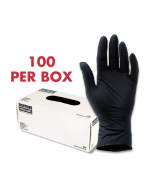
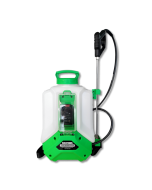
A handheld sprayer, backpack sprayer, hose-end sprayer, spray rig, chemigation, or aircraft will be needed.
How to Use
- Step 1: Determine how much Clean Amine Herbicide to use by measuring the square footage of the treatment area. Find the square footage by measuring the treatment area's length and width in feet, then multiply them together (length X width = square footage). For acreage, take the square footage and divide it by one acre (square footage / 43,560 sq. ft. = acres). For spot treatments, apply 3 fl. oz. of Clean Amine Herbicide per 1 to 3 gallons of water per 1,000 sq. ft. Do not make more than 2 applications per year for spot treatments. For ornamental and recreational turf, use 2.0 to 4.0 pints of product per 20 to 100 gallons of water per acre. Refer to the product label for specific application rates and restrictions.
- Step 2: Fill the sprayer tank with half the amount of water, add the proper amount of product, and pour in the remaining half of the water. Close the tank lid and shake until it is evenly mixed.
- Step 3: Spray the top and bottom of the weed leaves until wet, but not to the point of runoff. For broadcast applications, spray no higher than 2 feet above the ground or for directed sprays, no more than 1 foot above the ground, or 1.25 feet (15 inches) for better spray patterns without boom levelers on uneven terrain.
Where to Use
Clean Amine Herbicide can be used in certain crops, turf, and non-crop areas.
Do not apply under circumstances where spray drift may occur to food, forage, or other plantings that might be damaged or crops thereof rendered unfit for sale, use or consumption. Susceptible crops include, but are not limited to, cotton, okra, flowers, grapes (in growing stage), fruit trees (foliage), soybeans (vegetative stage), ornamentals, sunflowers, tomatoes, beans, and other vegetables, or tobacco.
When to Use
Apply when weeds are present.
Safety Information
Clean Amine Herbicide is safe for people and pets when applied according to the product label instructions. Always wear the proper personal protective equipment (PPE) when mixing and applying this product.
Keep people and pets out of the treated area until 48 hours have passed after application.
Special Considerations
Adding oil, wetting agent, or other surfactant to the spray may increase effectiveness on weeds, but also may reduce selectivity to crops, resulting in crop damage. When an adjuvant is to be used with this product, Loveland Products, Inc. recommends using LI 700. For drift control and defoaming, the use of Compadre at 0.125% v/v is recommended.
| Restricted Use | No |
|---|---|
| Shipping Restrictions | AK, AR, DC |
| Availability | Online |
| Signal Word | DANGER |
| Keith's Pro Tip | "Maintaining proper planting density, optimizing soil fertility, and using timely cultivation or mowing can reduce weed pressure, while regular field scouting helps identify problems early so control measures can be applied before weeds become established and harder to manage." |
| Time to Kill | Clean Amine Herbicide will control weeds within 30 days. |
| Chemical Type | Herbicide |
| Formulation | Emulsifiable Concentrate (EC) |
| Application Methods | Broadcast Spray, Overhead Sprinkler Irrigation, Spot Treatment |
| Product Drawbacks | Labeled crops may be at risk for crop injury or loss when planted soon after application, especially in the first 14 days. |
| Active Ingredient | 2,4-D 46.5% |
| Application Equipment | Aerial Application Equipment, Backpack Sprayer, Chemigation System, Hose End Sprayer, Pump Sprayer, Spray Rig |
| Mix Rate | For spot treatments, apply 3 fl. oz. of Clean Amine Herbicide per 1 to 3 gallons of water per 1,000 sq. ft. For ornamental and recreational turf, use 2.0 to 4.0 pints of product per 20 to 100 gallons of water per acre. |
| Use Sites | Outdoors |
| Yield | 2.5 gallons of Clean Amine Herbicide will cover 3-10 acres. |
| EPA Registration No. | 34704-120 |
| Shelf Life | Clean Amine Herbicide will last for 3 years when stored in a dry, clean area. Do not store below temperature of 25° F. If frozen, warm to 70° F and redissolve before using by rolling or shaking the container. |
| Comparable Products | 2,4-D Amine Selective Post-Emergent Herbicide, Hi-Yield 2,4-D Selective Weed Killer, Martin's 2,4-D Amine Selective Weed Killer |
| Children or pets? | Yes |
| Property Characteristics | None |
| Availability | Online |
| Restricted Use | No |
| Brand | LOVELAND PRODUCTS |
| Keith's Pro Tips | "Maintaining proper planting density, optimizing soil fertility, and using timely cultivation or mowing can reduce weed pressure, while regular field scouting helps identify problems early so control measures can be applied before weeds become established and harder to manage." |
| Product Drawbacks | Labeled crops may be at risk for crop injury or loss when planted soon after application, especially in the first 14 days. |
| Target Pests | Alder, Ash, Aspen, Alfalfa, Artichoke, Aster, Austrian Fieldcress, Beggarticks, Birch, Blackgum, Bindweed, Small-flowerd Bitter cress, Bittersweet, Bitterweed, Blue Lettuce, Blue Beech, Broomweed, Bullnettle, Bull Thistle, Burdock, Small-flowered Buttercup, Canada Thistle, Carolina Geranium, Catnip, Chicory, Cinquefoil, Clover, Cherry, Cockle, Cocklebur, Coffeeweed, Croton, Dogwood, Dandelion, Docks, Dogbane, Evening Primrose, Elm, Daisy Fleabane, Flixweed, Frenchweed, Galinsoga, Goatsbeard, Goldenrod, Ground Ivy, Hairy Galinsoga, Hickory, Hawthorn, Heal-all, Hoary Cress, Horsetail, Horseweed or Marestail, Ironweed, Jerusalem Artichoke, Jimsonweed, Knotweed, Lambsquarters Prickly Lettuce, Wild lettuce, Locoweed, Mallow, Maple, Manyflowered Aster, Marsh Elder, Morningglory, Mousetail, Musk Thistle, Mustard, Nettles, Orange Hawkweed, Oak, Poplar, Parsnip, Field Pennycress, Pennywort, Pecan, Peppergrass, Pigweed, Plantains, Povertyweed, Prickly Lettuce, Primrose, Puncturevine, Common Purslane, Radish, Ragweed, Rough Fleabane, Russian Thistle, Salsify, Shepherd’s Purse, Sicklepod, Sumac, Smartweed, Sowthistle, Spanish Needles, Speedwell, Stinging Nettles, Sweetgum, Wild Strawberry, Sunflower, Tansymustard, Tanweed, Canada Thistle, Bull thistle, Toadflax, Tumbleweed, Velvetleaf, Venice Mallow, Vervains, Vetch, Virginia Copperleaf, Wild Carrot, Wild Garlic, Wild Onion, Wild Parsnips, Wild Radish, Wild Rape, Wild Sweet Potato, and Wormwood. |
| Application Equipment | Aerial Application Equipment, Backpack Sprayer, Chemigation System, Hose End Sprayer, Pump Sprayer, Spray Rig |
| Application Methods | Broadcast Spray, Overhead Sprinkler Irrigation, Spot Treatment |
| Active Ingredient | 2,4-D 46.5% |
| Product Type | Herbicide |
| Formulation | Emulsifiable Concentrate (EC) |
| Application Rate | For spot treatments, apply 3 fl. oz. of Clean Amine Herbicide per 1 to 3 gallons of water per 1,000 sq. ft. For ornamental and recreational turf, use 2.0 to 4.0 pints of product per 20 to 100 gallons of water per acre. |
| Shelf Life | Clean Amine Herbicide will last for 3 years when stored in a dry, clean area. Do not store below temperature of 25° F. If frozen, warm to 70° F and redissolve before using by rolling or shaking the container. |
| Yield | 2.5 gallons of Clean Amine Herbicide will cover 3-10 acres. |
| Use Sites | Outdoors |
| Time to Kill | Clean Amine Herbicide will control weeds within 30 days. |
| Comparable Products | 2,4-D Amine Selective Post-Emergent Herbicide, Hi-Yield 2,4-D Selective Weed Killer, Martin's 2,4-D Amine Selective Weed Killer |
| Incompatible Home Siding | Brick, Hardie Plank, Stone Veneer, Stucco, Wood, Vinyl |
| EPA Registration # | 34704-120 |

*Price does not include freight. We guarantee our rate plus shipping will be less than anyone else's price.