


Gain access to personalized product screening, the best pricing, rewards, and more!
Create An Account, Or Sign In.
Most Effective Products
Downy Mildew Control: How to Get Rid of Downy Mildew
This page is a general DIY guide for controlling downy mildew. Using the products and methods suggested you will get control of downy mildew infestations. Follow this DIY article and use the recommended products, and we guarantee 100% control of downy mildew.
Downy mildew is a common and destructive plant disease that's known for its ability to rapidly spread on many types of vegetables, ornamentals, and greenhouse crops. Despite the damage and spread of this disease, downy mildew isn't a true fungus, but an oomycete, or water mold, which behaves similarly.
It's more than a nuisance plant disease, downy mildew can seriously compromise plant health and productivity. This disease quickly reduces plant vigor by attacking the leaves, causing yellowing, spotting, and eventually leaf defoliation. For commercial growers, this can spell disaster by wiping out entire fields of high-value crops. Even in home gardens, the disease weakens plants, leaving them more susceptible to other pests and diseases.
The problem with downy mildew is that its spores are incredibly resilient and easily spread. Because of this, effective prevention and control aren't just recommended, they are essential. To prevent downy mildew from becoming a recurring issue and making successful plant production a constant challenge take on the following tips and product suggestions in this article.
Identification
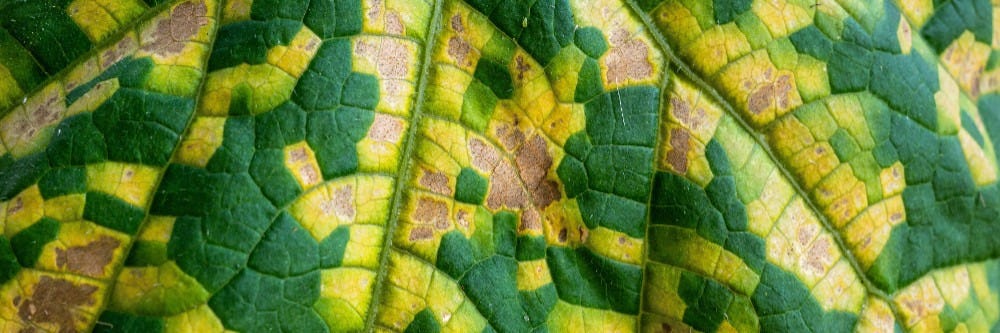
Before proceeding with a treatment program, you will need to be certain that you are dealing with downy mildew. Careless identification can lead you to using the wrong treatment methods, which can be a waste of your time and money. Here are some common signs and symptoms to help identify downy mildew:
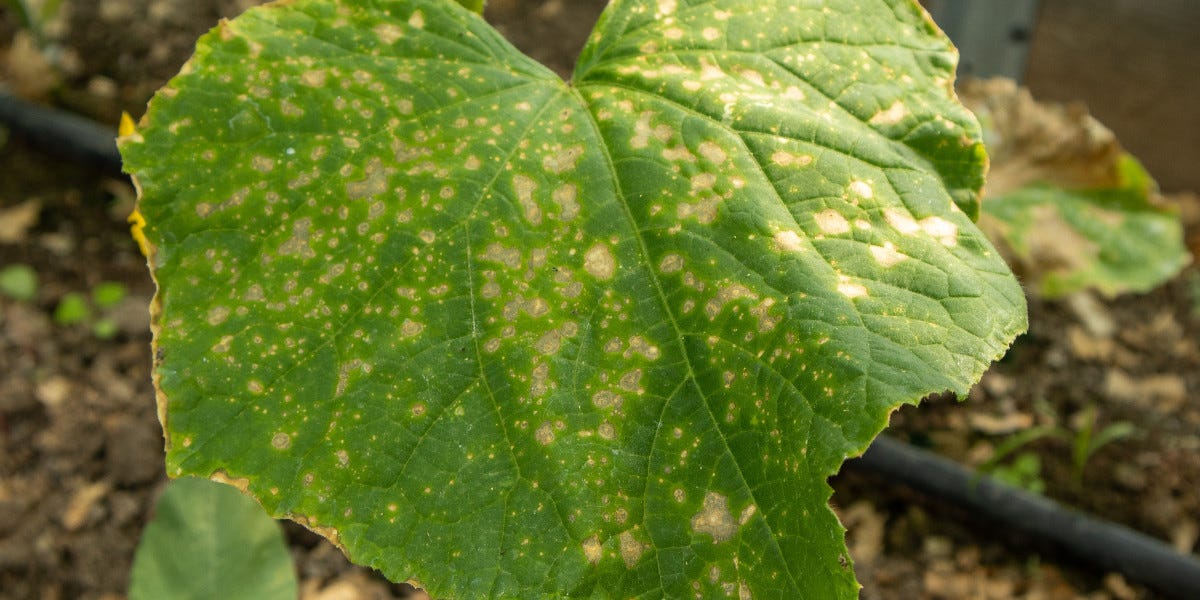
- Although it can be mistaken for powdery mildew, downy mildew can be distinguished by its preference for cool, moist conditions and by the characteristic angular lesions limited by leaf veins. Powdery mildew typically produces circular white fungal spots that can develop anywhere on the leaf surface, including both the upper and lower sides. In contrast, downy mildew causes angular grayish lesions that are confined by the leaf veins and are more often found on the underside of leaves. Another important difference is in how the diseases present in the early stages: with powdery mildew, leaf yellowing occurs after the fungal growth is already visible, whereas downy mildew may cause yellowing before any visible fungus appears.
- Early stages of downy mildew will appear as small, yellow-green translucent spots on the upper leaves. Over time, the speckled spots become bright yellow, eventually becoming angular, brown, necrotic, and often distorted. Depending on the plant species, these spots may also appear pale green or gray-purple. In some plant species, the spots will be oily.
- As the infection advances, a white to gray growth appears on the underside of leaves, often flecked with tiny black spots. Affected parts of the plant dry out and turn brown, leading to leaf and flower drop, leaving mostly bare stems behind.
Use the image and description above to help you properly identify downy mildew on your property. If unsure, contact us and send a photo of the plant symptoms through email or in-person at one of our store locations to help you identify the disease and suggest treatment options.
Inspection
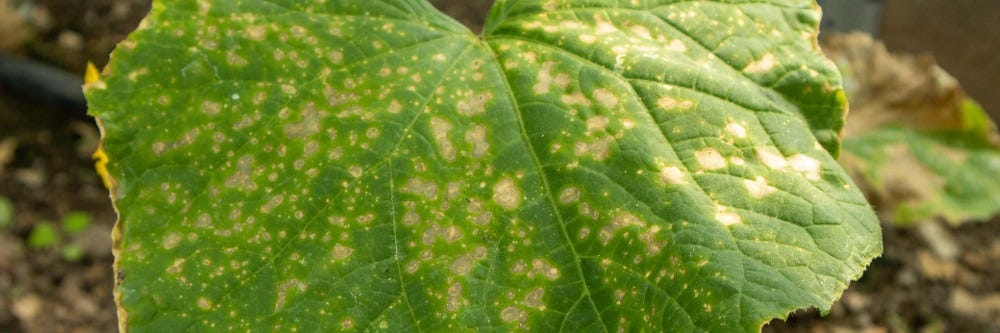
Once confirmed that are you dealing with downy mildew, you can move on to inspection. During this phase, you will locate all areas where downy mildew is developing and observe the conditions allowing it to thrive. This information will help you in knowing where to focus your fungicide applications.
Where to Inspect
Downy mildew affects a broad variety of plants, such as vegetables (cucumbers, squash, lettuce, spinach, carrots, onions, peas, brassicas, basil, melons), ornamentals (impatiens, roses, pansies, viburnum), and crops (grapevines, tobacco, sunflowers, and soybeans).
They are often seen on the leaves, stems, flowers, and fruits of these plant species.
What to Look For
Downy mildew thrives when temperatures range from 45 to 75 degrees Fahrenheit and develop when humidity levels are above 85 degrees Fahrenheit.
The infection from this disease and the production of spores are sure to occur when excessive moisture, such as rain, dew, or overhead watering is present. With cool, wet conditions and high relative humidity, such as these are likely to lead to outbreaks.
These pathogens are typically host-specific, meaning the strain that infects one plant won't infect the other. However, if downy mildew is present on one plant, the cool, wet conditions that lead to its development could lead to outbreaks across many different plant species in the area.
In certain plants, such as varieties of basil, distinct spots may not appear, but instead the entire leaf may turn yellow.
Treatment
Once downy mildew has been identified and the affected plants have been inspected, you can begin treating the foliage. Always wear appropriate personal protective equipment (PPE) before handling or applying any treatment products.
The most effective active ingredients in fungicides for controlling downy mildew include azoxystrobin, chlorothalonil, mefenoxam, metalaxyl, mandipropamid, cyazofamid, dimethomorph, and oxathiapiprolin.
For best results, apply treatments early and rotate between fungicides with different modes of action to prevent resistance.
Step 1: Prune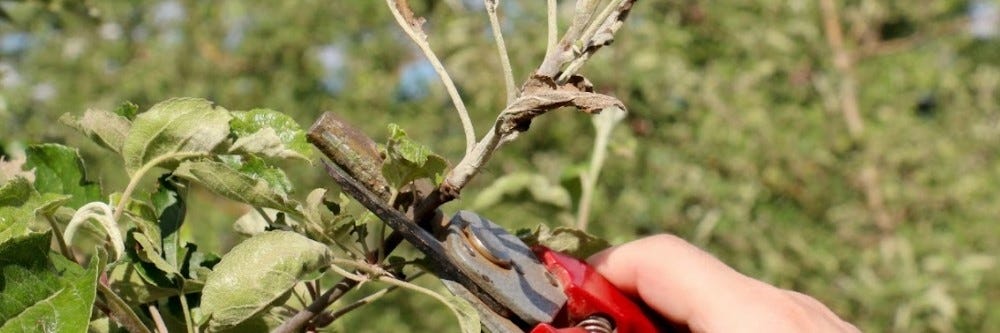
To get rid of downy mildew, start by pruning and removing all infected leaves and plant parts to reduce the spread of spores and improve air circulation around the plant.
This helps create a less favorable environment for the disease.
Step 2: Apply Fungicide
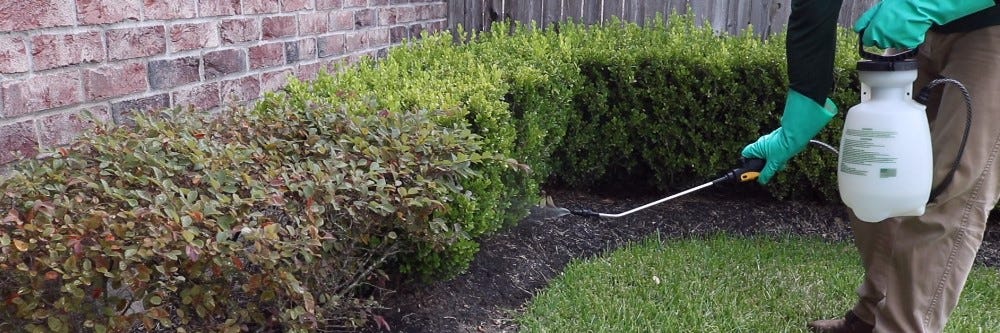
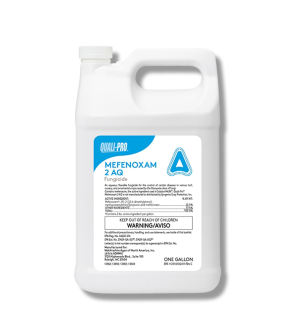
In addition to pruning, applying a systemic fungicide such as Mefenoxam 2AQ Fungicide can be very effective against downy mildew.
Mefenoxam 2AQ Fungicide is an effective, preventative, and curative fungicide concentrate that targets a broad-spectrum of diseases, such as downy mildew systemically in residential and commercial ornamental landscapes, turf, greenhouses, and more.
Determine how much fungicide to use by measuring the square footage of the treatment area. Find the square footage by measuring the treatment area's length and width in feet, then multiplying them together (length X width = square footage).
For downy mildew control with Mefenoxam 2AQ Fungicide, you will need to mix it with a non-Group 4 Fungicide (meaning any other fungicide that's not a group 4).
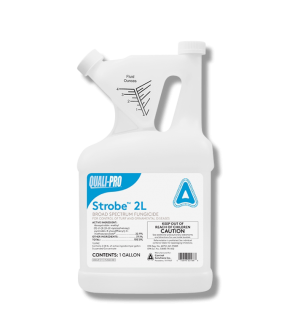
We recommend mixing it with Strobe 2L Liquid Fungicide, which is considered a group 11 fungicide. Strobe 2L Liquid Fungicide is a systemic fungicide used to prevent and control a broad range of turf and ornamental diseases.
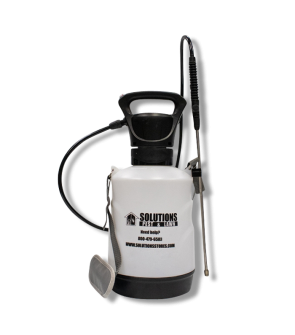
Based on both labels, you will to mix this product combination with water in a handheld pump sprayer or backpack sprayer.
A compatible and effective tank mix combination will use 0.98 fl. oz. of Mefenoxam 2AQ Fungicide with 2 to 4 fl. oz. of Strobe 2L Liquid Fungicide per 100 gallons of water.
Fill the spray tank with half the amount of water, add the proper amount of product, and pour in the remaining half of the water. Close the tank lid and shake until well-mixed.
The fungicides should be applied to all above-ground parts of the ornamental plants, including the leaves (both upper and lower surfaces), stems, and branches. Do not spray to the point of runoff.
Reapply every 7 to 14 days during periods of high disease pressure.
Alternate with fungicides from different FRAC groups (not Group 4 or 11) to help delay resistance.
Prevention
 After successfully controlling downy mildew, it's important to take preventative steps to keep downy mildew from coming back. Use the following practices to protect your plants and prevent future outbreaks.
- To reduce the odds of downy mildew appearing, adjust the space around plants to avoid overcrowing, and regularly prune plants to encourage growth and maintain the foliage health. Be sure to remove infected or discolored foliage to limit potential infestations.
- Avoid overhead irrigation to keep foliage dry since wet conditions risk fungi growth. Water early in the day with an inch of irrigation once per week. By watering early, you can give your plants enough time to dry from the water and avoid stagnant water. In glass greenhouses, try to avoid excessive humidity by opening doors and vents to the building.
- Rotate your crops each season to avoid soil-borne spores from downy mildew, and avoid replanting in the same area where previous infestations took place.
- Lastly, reapply Mefenoxam 2AQ Fungicide and Strobe 2L Liquid Fungicide for preventative measures. Begin applications early in the growing season during periods of active plant growth, and repeat treatments every 14 to 21 days, adjusting the frequency based on environmental conditions and disease pressure. Always follow resistance management practices by rotating or tank mixing with fungicides from different FRAC groups and by not exceeding the maximum number of applications per season as outlined on the product labels.
Key Takeaways
What is Downy Mildew
- Downy mildew is a disease that causes yellowing and fuzzy growth on plant leaves, which eventually leads to the foliages death.
How to Get Rid of Downy Mildew
- Apply Mefenoxam 2AQ Fungicide with Strobe 2L Liquid Fungicide to get rid of downy mildew.
Preventing Downy Mildew Reinfestations
- To prevent downy mildew, ensure proper plant spacing, prune regularly, avoid overhead water, and manage airflow and humidity. Rotate crops regularly and reapply Mefenoxam 2AQ Fungicide and Strobe 2L Liquid Fungicide every 14 to 21 days when conditions favor disease.