



Gain access to personalized product screening, the best pricing, rewards, and more!
Create An Account, Or Sign In.
Most Effective Products
Mayfly Control: How To Get Rid of Mayflies
This page is a general mayfly control guide. Using the products and methods suggested, you will reduce the likelihood of mayflies. Follow this guide and use the recommended products; you should see a reduction in mayflies.
If you enjoy spending time outdoors for a picnic or swimming at the local lake, a few annoyances can get in the way of a good time. One such annoyance is the mayfly. These little flying irritants can damper your outdoor experience since they love gathering in lakes, ponds, and parks.
Mayflies, also popularly known as shadflies or lakeflies, are aquatic insects that belong to the Ephemeroptera order, the same as dragonflies and damselflies. There are at least 3,000 species of mayflies found across the world. They frequent around bodies of water, and during adulthood, their only objective is to mate and lay eggs, which only lasts a few hours before they die off.
Mayflies develop in ponds, lakes, and rivers. While they are a pesky pest in the aquatic ecosystem, they are an important food source for many aquatic animals, such as fish, frogs, and other water-based insects. Some fishermen use fake mayfly larvae and adults to try to catch trout.
While mayflies do not create health hazards to humans or transmit disease, bite, or sting, they can invade conducive areas in large numbers. Mayfly swarms can be so massive that they completely cover roads, structures, cars, sidewalks, stores, and houses.
If you want to know how to get rid of mayflies, follow our guide below to learn more about the mayflies and how to control an infestation on your property.
Identification
Before you can proceed with a treatment program, you need to identify and make sure that the pest you are dealing with is, in fact, a mayfly. Careless identification can lead to using the wrong treatment methods, costing you time and money. Below, we will share with you some traits, so you know what Mayflies look like:
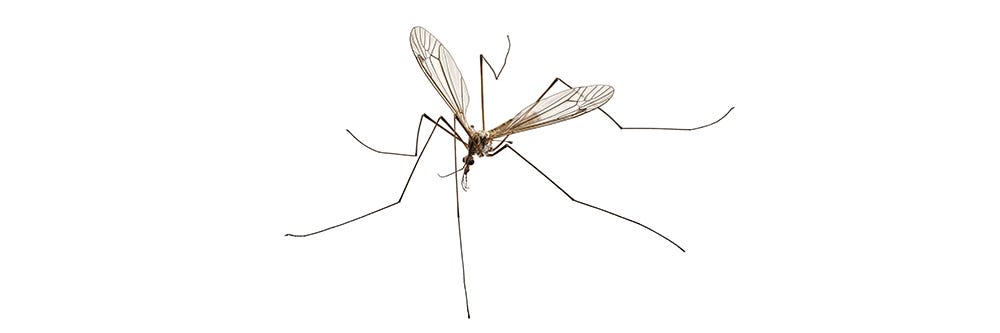
- Mayflies are delicate, soft-bodied insects with six legs, short antennae, large compound eyes, and vary in size from 1/32 of an inch to a little over 1 inch.
- They typically have two or three long, threadlike tails extending from the end of their abdomen.
- Unlike most flying insects, mayflies have 2 pairs of wings, four in total. Their delicate, transparent wings are covered in a fine network of visible veins, giving them a lacy, fragile look. At rest, mayflies hold their wings upright.
- Mayflies are often mistaken for mosquitoes due to their similar features, but they are both their own class of pests. Mosquitoes have a single pair of scaly wings and lack the long tail filaments like mayflies. They have long antennae (feathery in males) and a prominent proboscis used for feeding. In contrast, mayflies do not have a proboscis. Mosquitoes also have a hunched body posture and produce a distinctive buzzing sound in flight.
Use the image and description above to identify mayflies properly. If you are not sure, contact us, and we will assist you with mayfly's correct identification.
Inspection
Before proceeding with treatment, you must know the areas attracting mayflies. You're most likely experiencing an infestation because your home is close to a body of water, and the lights of your structure attract them at night.
During the inspection, you will look for conducive conditions attracting mayflies.

Where to Inspect
Mayflies mainly live in and around freshwater habitats, especially rivers, streams, ponds, and lakes. Their immature stage (nymphs), which lasts the longest part of their life cycle, develops underwater where they cling to rocks, sediment, or aquatic plants.
The adults are attracted to lights and can be seen around streetlights, porch lights, windows, or illuminated signs, especially near lakes or rivers where they emerged.
Unlike mosquitoes, adult mayflies do not breed in swimming pools, bird baths, or other stagnant water sources in your yard.
However, adult mayflies may swarm around your pool area, especially at night if lights are on. They might land on the water or surfaces nearby, sometimes in large numbers during peak emergence, but this is temporary and harmless.
What To Look For
Look for swarms or large numbers of adults resting on walls, siding, decks, or cars during the spring and summer months.
In heavy infestations, check for piles of dead mayflies near lights, doors, or, on sidewalks
Treatment
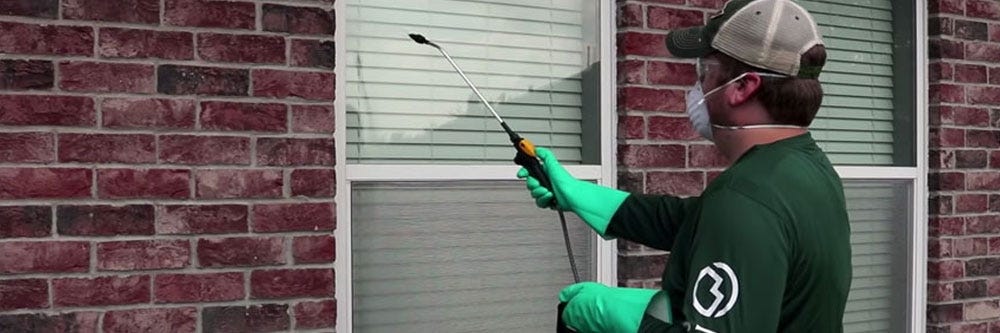
Once you have confirmed conducive conditions that attract mayflies, it is time to begin treatment. Remember to read all product labels, follow the application instructions on these labels, and stay safe by wearing personal protective equipment.
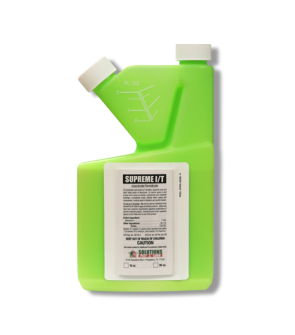
To successfully keep mayflies away from your property, use Supreme IT Insecticide to create an insecticide barrier around your home. We also suggest treating your turf and ornamentals.
Step 1: Outdoor Treatment with Supreme IT
Supreme IT is an effective insecticide concentrate that targets more than 70 insects. It will create an insecticidal barrier around your property that repels or kills mayflies and other pests if they come into contact with the treated areas. Supreme IT has excellent residual control, remaining effective for up to 90 days.
Determine how much Supreme IT to use by measuring the square footage of the treatment area. To find the square footage, measure the length and width of the treatment area in feet, then multiply them together (length x width = square footage).
Mix 1 fl. oz. of Supreme IT per 1 gallon of water per 1,000 sq. ft. to control mayflies.
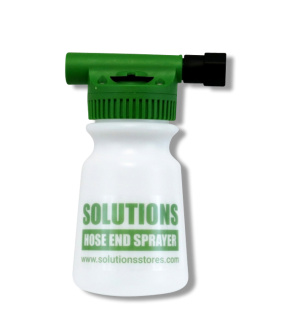
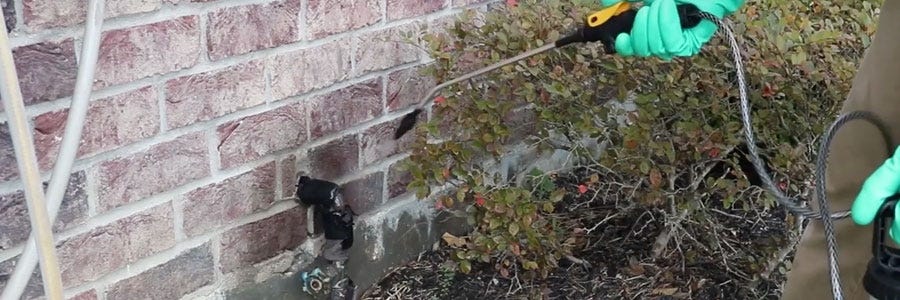
Broadcast your solution evenly over your lawn with a fan or cone spray pattern. Spray shrubbery and ornamentals from above and below to coat all leaf surfaces. Spray all foliage to the point of wet, but not runoff.
You will then do a perimeter treatment by spraying 3 feet up and 3 feet out from the foundation of your structure and outside perimeter of your structure. While spraying in this manner, you will also spray door frames, window frames, eaves, soffits, and electrical/plumbing penetrations. Also make sure to spray around light fixtures as it is a common spot where mayflies congregate.
Do not let people or pets enter areas treated until the spray has dried.
This product may not be applied to any grass or turf area within 100 feet of a water body (lake, pond, river, stream, wetland, or drainage ditch).
Prevention
Prevention is the best cure when it comes to mayflies infesting your property. You can do many things around your structure to prevent mayflies, but the best way to control them is during the months when they hatch and are active.
- Keep all outdoor lights turned off and block light inside with curtains or shades. If you can not turn off outdoor lights, consider switching to yellow bug light bulbs. Yellow bug lights emit a spectrum of light that is less visible or appealing to mayflies, which can reduce the number of them swarming around your outdoor lights at night.
- Do your best to eliminate bodies of water around your property. Ensure that standing water doesn’t accumulate around your property by fixing poor drainage areas, filling low spots, and redirecting runoff away from your yard. Remove or regularly empty containers, birdbaths, clogged gutters, and any other places where water can pool and become stagnant. If you have a pond, lake edge, or slow-moving stream nearby, encourage water movement by installing aerators or fountains to reduce stagnant zones where mayfly nymphs thrive. Keep the pool covered when not in use.
- Mayflies are weak fliers, so placing outdoor fans on patios or decks can help keep them away.
- Finally, spray Supreme IT on a quarterly basis before mayflies invade. Mayflies are in full force in May (hence their name), so conduct an application in early April.
Key Takeaways
What are Mayflies?
- Mayflies are flying insects that commonly infest residences because of their attraction to freshwater areas and lights.
How To Get Rid of Mayflies
- Apply Supreme IT around the perimeter of your structure to keep mayflies away from your property.
Preventing Mayfly Reinfestation
- Preventative applications of Supreme IT, such as reducing light at night, changing to yellow bug bulbs, and reducing standing water areas, can keep mayflies at a distance.
Questions and Answers
-
Q:We have a boat in Michigan where mayflies/fish flies are pretty bad when they’re in season. Is your product safe to spray on the fiberglass , glass doors/windows, and wood of our boat without causing any harm or discoloration?6/5/25
-
Q:I live in a lake in WI. I also have extensive gardens and foundation plantings with ground cover. This exacerbates the mayfly problem. I’m not changing my landscaping so is the insecticide safe for plants?5/2/24A:Yes, Supreme IT is safe for plants. Supreme IT's active ingredient, bifenthrin, is not absorbed by foliage or translocated throughout plants and is considered non-toxic to plants.
Colin Travis
6/7/24