


Gain access to personalized product screening, the best pricing, rewards, and more!
Create An Account, Or Sign In.
Most Effective Products
Shepherd's Purse Control: How to Get Rid of Shepherd's Purse
This page is a general shepherd's purse control guide. Using the products and methods suggested, you will get control of shepherd's purse. Follow this guide and use the recommended products; we guarantee 100% control of shepherd's purse.
Don't let its small size fool you, shepherd's purse is a fast-spreading winter annual broadleaf weed that can quickly take over yards. It survives winter as low rosettes and produces hundreds of seeds, making infestations tough to control. Left unchecked, it competes with grass and other plants for sunlight, nutrients, and water, leaving lawns thin, patchy, and full of weeds.
Also called shepherds-purse, pepper plant, shepherds-bag, caseweed, pick-purse, shepherd's bag, shepherds-pouch, pick-pocket, St. James weed, mother's-heart, toothwort, witches-pouch, shovel-plant, or capsella, this plant gets its name from its tiny heart- or triangle-shaped seedpods, which resemble the purses once carried by shepherds. Shepherd's purse belong to the mustard family, and its young leaves and seedpods are edible, often used in salads or cooked like spinach.
Even though it's technically edible, shepherd's purse is a weed that spreads quickly and competes with desirable plants. Using the strategies, tips, and recommended products in this DIY guide will help homeowners control shepherd's purse effectively and prevent future weeds.
Identification
Before proceeding with a treatment program, you must be certain you are dealing with a shepherd's purse infestation. Careless identification can lead to using the wrong treatment methods, which can be a waste of time and money. The following details explain what shepherd's purse looks like:
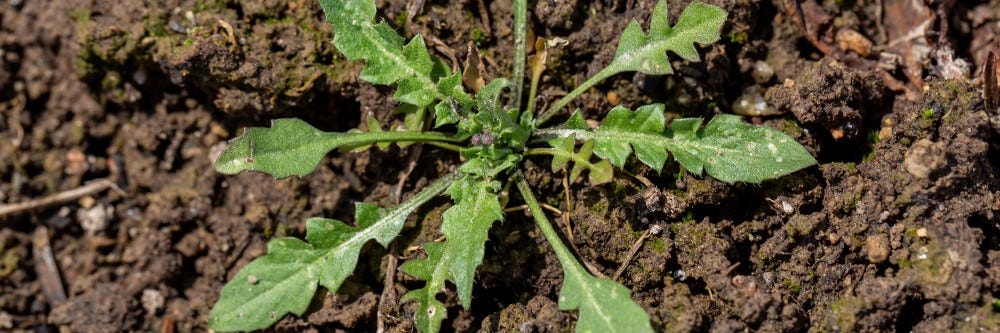
- Shepherd's purse is a small winter annual broadleaf foliage that begins as a flat rosette of pale-green seedling leaves, with tiny oblong seed leaves (cotyledons) ranging between 3 to 6 mm long. Early true leaves are smooth to slightly toothed.
- As the rosette matures, the leaves become more deeply lobed and are covered with fine, star-shaped hairs.
- When fully grown, shepherd's purse sends up one or several slender, erect stems ranging from about 10 to 60 cm tall, with few narrow, stalkless stem leaves that clasp the stem and may be toothed or lightly lobed.
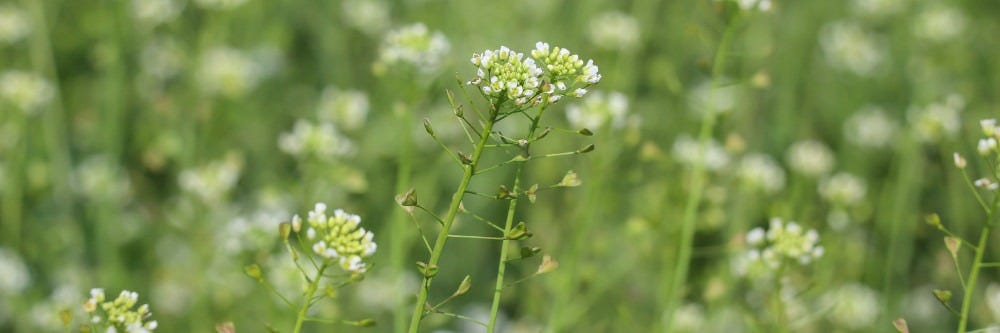
- The plant produces small, white, rounded flowers with four petals in a cross shape, sometimes tinged pink, arranged in loose clusters at the tips of stems that bloom from late winter through spring or whenever conditions allow.
- The shepherd's purse most recognizable feature is its fruit: flat, heart- or triangle-shaped seedpods (silicles) held on thin stalks along the stem, each pod divided into two chambers and containing many tiny reddish-brown seeds.
Use the description and image above to help you properly identify shepherd's purse on your property. If unsure, contact us and send a photo of your weed through email or in person at one of our stores to help you identify the weed and suggest treatment options.
Inspection
Once you are confirmed that you are dealing with shepherd's purse, you can move on to inspection. During this phase, you will locate areas where shepherd's purse thrives and observe the conditions allowing it to thrive. This information will help you know where to focus your herbicide application.
Where to Inspect
Shepherd's purse is a hardy, fast-spreading plant that thrives in disturbed or bare soil.
Often, this plant can be found in lawns, gardens, flower beds, agricultural fields, vacant lots, roadsides, orchards, vineyards, waste places, pastures, vineyards, orchards, around construction sites, and other areas where the soil has been disturbed or left uncovered.
What to Look For
Shepherd's purse prefers cool, moist weather often appearing in early spring or late fall.
Seeds of shepherd's purse are dormant when they are first released and need a period of cold temperatures before they can germinate. Once this dormancy is broken, many of the seeds will sprout at day-night temperature ranges between 59/43 degrees Fahrenheit to 86/59 degrees Fahrenheit.
When soil temperatures are around 95/68 degrees Fahrenheit or higher then the plant can become dormant again, while moderately warm soil causes only part of the seed population to become dormant.
Normally, the seeds need a brief exposure to light to trigger germination, so they most often begin sprouting during daylight when light reaches the soil surface. However, in early spring, when temperatures are cool and moisture levels are high, some seeds are able to germinate even in complete darkness, meaning they can emerge at night as well.
Seedlings often appear in the fall and survive winter as low rosettes, or they may emerge early in spring, making shepherd’s purse one of the first plants to show new growth.
The plant is very tolerant of cold, with acclimated individuals able to withstand temperatures down to 10 degrees Fahrenheit with minimal damage, and fall-germinated plants commonly surviving through winter.
When fully grown, shepherd’s purse develops small white flowers with four petals and produces its distinctive heart-shaped seed pods. Flowering can be seen from April to September or from March to December, depending on the time of germination.
Overall, shepherd’s purse is a delicate, branching plant that becomes instantly identifiable once its characteristic heart-shaped pods develop.
Treatment
After confirming the presence of shepherd’s purse and noting the spots where it’s most concentrated, you can move on to treatment. Always wear proper personal protective equipment (PPE) before using any product.
Shepherd's purse should be controlled as soon as seedlings appear, which is typically in early fall or early spring. Early intervention is important because the plants can survive the winter as rosettes and produce numerous seeds if allowed to mature.
For chemical control, we recommend using post-emergent herbicides containing 2,4-D, dicamba, MCPP (mecoprop), or glyphosate for most effective control against shepherd's purse.
Applying these types of herbicides when seedlings are small and before flowering maximizes their effectiveness.
Step 1: Mixing and Applying Herbicides
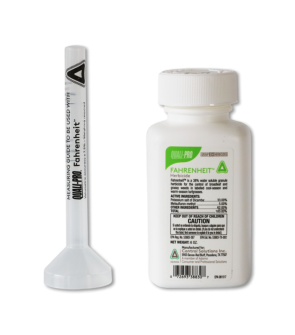
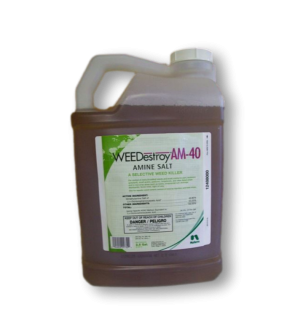
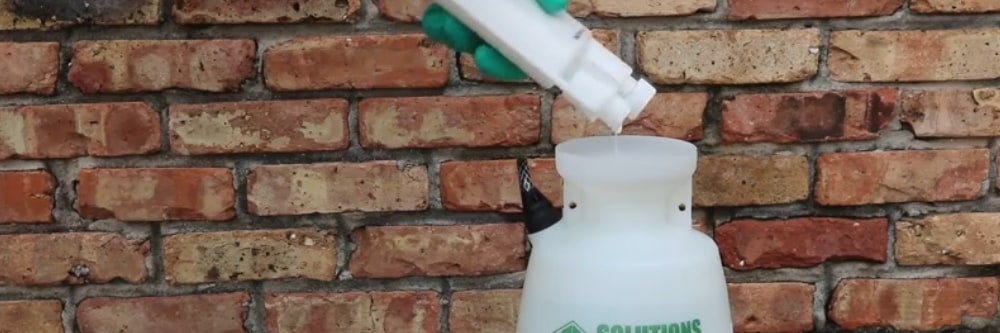 Once you find shepherd's purse in your property, you will want to use a post-emergent herbicide like Fahrenheit Herbicide or 2,4-D Amine Selective Post-Emergent Herbicide.
Determine how much herbicide to use by measuring the square footage of the treatment area. Find the square footage by measuring the treatment area's length and width in feet, then multiply them together (length X width = square footage).
Fahrenheit Herbicide is a selective, water-dispersible granule herbicide used for broadleaf and grassy weed control in warm-seasoned turf.
For spot applications in warm-seasoned turf, mix 0.2 oz. of Fahrenheit Herbicide per 1 gallon of water per 1,000 sq. ft.
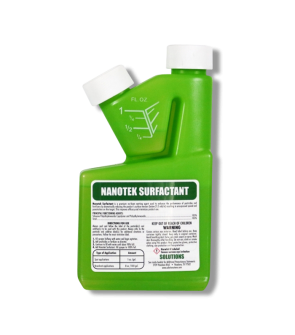
To enhance this herbicide's performance, we suggest using a non-ionic surfactant like Nanotek Surfactant. Nanotek is a liquid non-ionic surfactant that helps herbicides spread, stick, and penetrate plant leaves more effectively, improving overall weed control.
For properties with cool-seasoned turf, we suggest using 2,4-D Amine Selective Post-Emergent Herbicide.
Spot applications in cool-seasoned turf will use 1/4 pint of 2,4-D Amine Selective Post-Emergent Herbicide with 3 gallons of water.
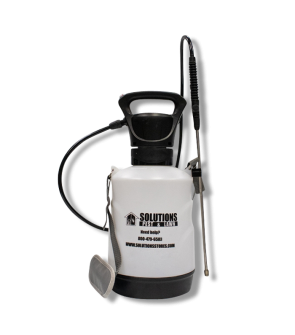
For either product being used, you will need to mix it with water in a handheld sprayer or backpack sprayer.
To mix, fill your sprayer with half the amount of water, add the proper amount of product, and pour in the remaining half of the water. Add the surfactant to the spray tank last. Close the tank lid and shake well until thoroughly mixed.
Adjust your sprayer nozzle to deliver a fan or cone spray pattern. Then, spray the top and bottom of the weed leaves until wet, but not to the point of runoff.
Be sure to spray on calm days when temperatures are not too hot and when wind speeds are low to minimize drift.
Keep people and pets away from treated areas for 24 hours after applying Fahrenheit Herbicide.
After 2,4-D Amine Selective Post-Emergent Herbicide application, you will need to keep people and pets away from treated areas until 48 hours have passed after application.
Step 2: Retreatment
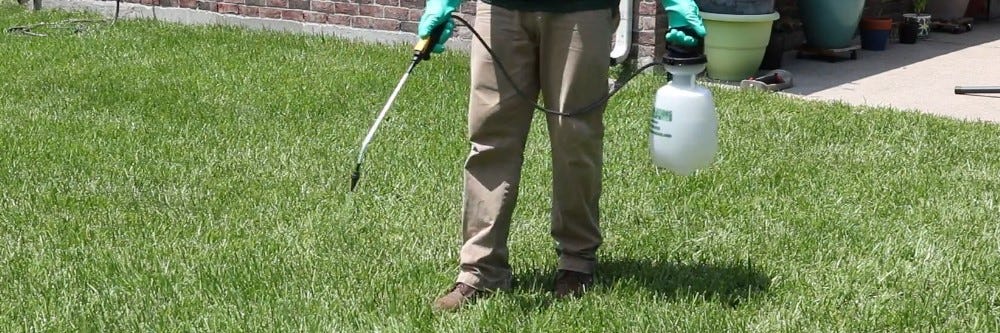 Even with proper application, some shepherd's purse plants may survive or new seedlings may emerge. Check the treated areas regularly and plan follow-up applications as needed.
Fahrenheit Herbicide needs to be reapplied every 4 to 6 weeks, while 2,4-D Amine Selective Post-Emergent Herbicide works faster but requires follow-up treatment every 30 days to keep weeds under control.
Always monitor the area for new growth, and remember to follow all label instructions and be sure not to exceed maximum application rates during treatment. Timely follow-ups help prevent weeds from producing seeds and keep your property free of shepherd's purse long-term.
Prevention
After you’ve removed shepherd’s purse from your property, you’ll need to take preventive steps to keep it from coming back. Here are some common preventative methods you can take:
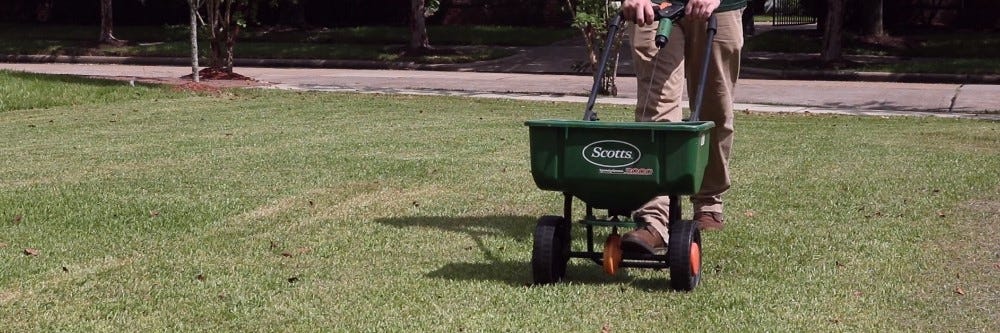
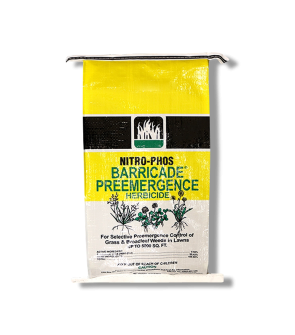
- To prevent shepherd's purse, you will need to use a pre-emergent herbicide. Pre-emergent herbicides should be applied before shepherd's purse seeds germinate, which is typically in late summer to early fall for fall seedlings and in late winter to early spring for spring-emerging seedlings. Barricade Pre-Emergent Herbicide is a pre-emergent herbicide granule that forms a protective barrier against germinating weeds in the soil of turf, landscape ornamentals, and wild flower plantings. Depending on your turf, apply 1.5 to 4 pounds of Barricade Pre-Emergent Herbicide per 1,000 sq. ft. For landscape ornamentals, use 2.5 to 5.94 pounds of product per 1,000 sq. ft. Calibrate your push or handheld spreader to the proper settings then load the granules. Apply the Barricade Pre-Emergent Herbicide granules evenly across the area with your spreader, making a second pass at a right angle if needed to ensure complete and uniform coverage. After application, irrigate the treated area with 0.5 inches to activate the granules.
- Covering bare soil with landscape fabric can greatly reduce germination because the seeds usually need light to sprout.
- Light cultivation in early spring or fall can destroy small seedlings, but deep tilling should be avoided because it brings buried seeds to the surface. Reducing soil disturbance overall and promptly covering exposed ground further limits the weed’s spread.
- Watering deeply but less frequently encourages strong root systems in desirable plants, helping them outcompete weeds. For this reason, we recommend watering with 1 inch of irrigation once per week, preferably in the early morning.
- Because this weed takes advantage of open soil, reducing disturbance helps limit new germination. Only dig where necessary, and cover exposed soil promptly.
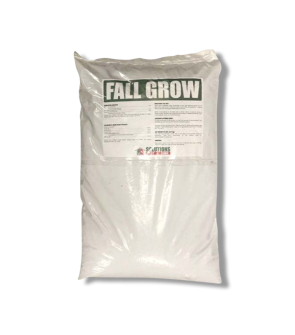
- Keeping lawns and garden beds dense and healthy also helps, as shepherd’s purse thrives in thin or disturbed areas. We recommend using the appropriate seasonal fertilizer to help encourage thick growth. For the fall, we suggest using the Solutions 8-12-16 Fall Grow Fertilizer. It is a balanced nutrient fertilizer formulated to promote healthy root development and overall turf growth during the fall season. Before using this fall fertilizer, cut the lawn 1 to 2 days before application. Apply 5 pounds of Solutions 8-12-16 Fall Grow Fertilizer per 1,000 sq. ft. Begin applying the Solutions Fall Grow along the lawn edges, moving steadily around the perimeter, then cover the interior by walking back and forth across the yard, and finally, water the lawn after application.
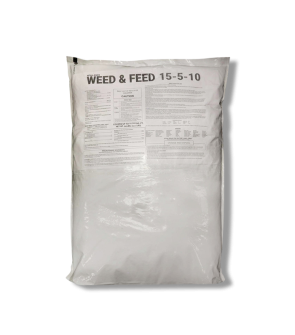
- To fertilize in the spring season, we recommend the Solutions 15-5-10 Weed & Feed Fertilizer with Trimec. Solutions 15-5-10 Weed & Feed Fertilizer with Trimec is a slow-release granule fertilizer treatment that combines nutrients for healthy grass growth and a broadleaf herbicide to control emerged weeds, including shepherd's purse. You will need to mow the lawn 1 to 2 days before application. Water the lawn thoroughly at least 1 day before application to sustain moisture until the next watering. For most applications, use 3.2 to 4 pounds of Solutions 15-5-10 Weed & Feed Fertilizer with Trimec per 1,000 sq. ft. Evenly apply the fertilizer across the treatment area by spreading half of the granules in a perpendicular direction, beginning along the lawn’s edges and moving steadily around the perimeter, then cover the center by walking back and forth across the yard. Avoid washing the product off for 1 to 2 days after application, then follow up with a thorough watering.
Key Takeaways
What is Shepherd's Purse
- Shepherd's purse is a small, fast-growing broadleaf weed recognizable by its heart-shaped seedpods and ability to survive winter as low rosettes.
How to Get Rid of Shepherd's Purse
- Fahrenheit Herbicide or 2,4-D Amine Selective Post-Emergent Herbicide can be used to kill shepherd's purse.
Preventing Shepherd's Purse Reinfestation
- Barricade Pre-Emergent Herbicide can be used to prevent shepherd's purse. Also, maintain healthy and dense turf to outcompete weeds with fertilizers like Solutions 8-12-16 Fall Grow and Solutions 15-5-10 Weed & Feed Fertilizer with Trimec. Cultural practices such as reducing soil disturbance, covering bare soil, and watering deeply but less frequently also help limit germination and spread.