



Gain access to personalized product screening, the best pricing, rewards, and more!
Create An Account, Or Sign In.
Most Effective Products
Musk Thistle Control: How to Get Rid of Musk Thistles
This page is a general DIY guide for controlling musk thistles. Using the suggested products and methods, you can control musk thistles. Follow this DIY article and use the recommended products, and we guarantee 100% control of musk thistles.
Musk thistle, sometimes called nodding thistle, nodding plumeless thistle, or giant plumeless thistle is more than just an unsightly weed its a serious problem for pastures, rangelands, and lawns across North America. Native to Europe and Western Asia, musk thistle was introduced into the United States during the 1800's, likely through contaminated crop seed.
Since then, this biennial or winter annual weed has become widespread across the United States. Each plant produces over 1,000 seeds per head and as many as 120,000 seeds per plant, resulting in dense infestations, rapid spread, and less space for desirable plants.
It's spiny leaves and stems make it unpalatable to livestock, which tend to avoid it, leaving valuable forage untouched. Combined with its rapid seed production and ability to outcompete desirable grasses and plants, musk thistle can drastically reduce pasture productivity and create ongoing challenges for farmers, ranchers, and homeowners trying to maintain healthy, productive land.
For step-to-step guidance and expert-recommended products, be sure to check out our DIY musk thistle control guide.
Identification
Before you can proceed with a treatment program, you must be sure that your weed is indeed musk thistle. Misidentification can lead you to use the wrong treatment products and waste time and money. Below are some characteristics to help you know what musk thistle looks like:
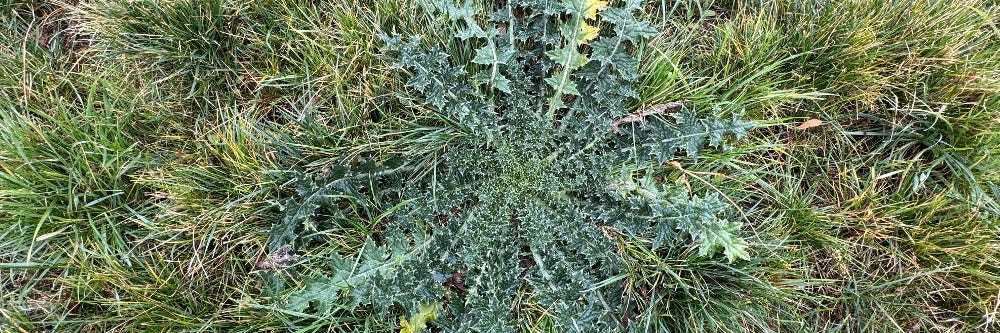
- Musk thistle is a tall, spiny herbaceous plant that behaves as an annual or biennial, typically reaching 3 to 7 feet in height. It has a single thick, ridged stem, and its leaves, stems, and branches are all covered with sharp spines.
- In its first year of growth, it will stay a basal rosette (about 2 feet wide), with deeply lobed, dark-green leaves that have smooth, waxy surfaces, whitish or silver gray margins, and sharp spines at the lobe tips.
- In its second year, the plant bolts in the late spring, sending up one to many branched, spiny-winged stems that can reach 5 to 7 feet tall. Leaves become smaller as they ascend the stem, remain alternate, and often clasp the stem with their spiny bases.
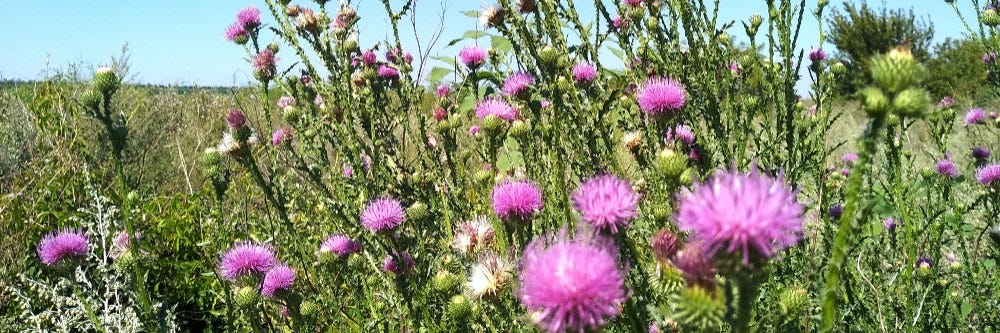
- During their second year, musk thistle will produce one large powder puff-like flower head from May to October. These flowers are 1.5 to 3 inches across, and pink to purple or lavender in color. Each flower head is encircled by many sharp-tipped bracts, 1/8 to 3/8 inch wide, that flare outward from the base of the head. When mature, the flower will droop to a 90-degree angle, giving these plants it's nodding appearance, hence it's other common name nodding thistle.
- After flowering, musk thistle produces numerous straw-colored, oblong achenes (seeds) that are roughly 5 mm long and about 1 mm wide with faint dark longitudinal markings. Each seed is topped with a tuft of fine, plume-like, hairlike bristles (the pappus) that functions like a tiny parachute, allowing the seeds to be easily carried by wind.
- Musk thistle differs from other common thistles in several clear ways. It has large, solitary, nodding flower heads and broad, mostly hairless leaves with spiny wings running down the stem. Canada thistle, by contrast, has small upright flower heads in clusters and smooth, non-winged stems. Plumeless thistle is more slender and highly branched, with many small flower heads and very narrow, deeply cut leaves. Bull thistle has extremely hairy, prickly leaves and bristly, spiny flower heads, making the plant appear much rougher than musk thistle. Field thistle has white-wooly leaf undersides and upright, usually paler flower heads, lacking the distinctive drooping heads and shiny green leaves of musk thistle.
Use the description above and the images to help you identify musk thistle on your property. If you are having trouble, contact us, and we will assist you in properly identifying your weed and offer suggestions.
Inspection
Once you have confirmed that you are dealing with musk thistle, you can proceed to inspection. During this phase, you will pinpoint the areas where the musk thistle is growing and observe the conducive conditions helping the weed to thrive. This will help you in determining where to focus your treatment applications.
Where to Inspect
Musk thistle thrives in sunny, disturbed areas with well-drained, bare, or lightly vegetated soil where there is little competition from other plants.
It can be found in lawns, pastures, rangelands, roadsides, vacant lots, over-grazed sites, riparian areas, railroads, right-of-ways, along fences, hay meadows, ditch banks, hay fields, lands in conservation reserve programs, grasslands, prairies, hillsides, and other open disturbed soil areas.
What to Look For
Musk thistle typically germinates in the fall or spring when soil temperatures range between 59 to 86 degrees Fahrenheit.
After seed germination, the plant develops a fleshy taproot and a basal rosette of deeply lobed, spiny leaves, which persists through the growing season and overwinters. In the second year, usually beginning in late May, the plant starts to bolt, producing tall, spiny stems that can reach 3 to 7 feet, followed by flowering, which normally begins in early to mid-May and can occasionally continue through August.
Flower heads are large, nodding, and pink to purple, and the plant dies after all its seeds have matured, completing its biennial life cycle.
Treatment
Before applying any type of pesticide material, you will need to wear the proper personal protective equipment (PPE).
Musk thistle is best controlled when treated early, before it flowers and sets seed. The most effective time to manage it is in the rosette stage, typically in fall or early spring, when the plant is low-growing and more vulnerable.
Control methods often include herbicides with active ingredients such as 2,4-D, dicamba, triclopyr, or clopyralid, which target broadleaf weeds while sparing most grasses. Treating at the right time with the proper active ingredients greatly reduces reinfestation and long-term spread.
Step 1: Mixing and Apply Post-Emergent Herbicides
 Determine how much herbicide to use by measuring the square footage of the treatment area. Find the square footage by measuring the treatment area's length and width in feet, then multiplying them together (length X width = square footage).
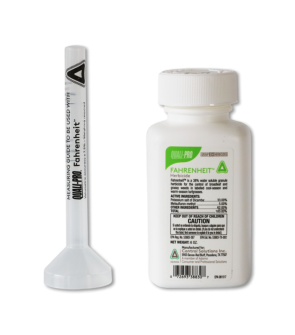
Fahrenheit herbicide is a post-emergent herbicide containing dicamba and triclopyr that is used to control tough broadleaf and grassy weeds, including musk thistles, in warm-seasoned turfgrass.
For spot applications, mix 0.2 oz. of Fahrenheit Herbicide per 1 gallon of water per 1,000 sq. ft.
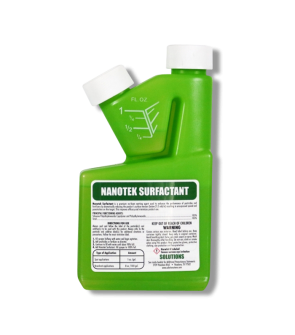
To enhance your herbicides efficacy, mix in a surfactant like Nanotek. Nanotek is a non-herbicide product designed to improve the adhesion and penetration of pesticides onto treated surfaces.
Just add 1 fl. oz. of Nanotek Surfactant per 1 gallon of solution.
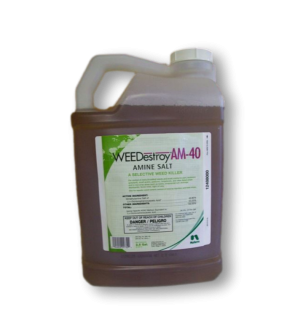
2,4-D Amine Selective Post-Emergent Herbicide is a systemic broadleaf herbicide that selectively controls many unwanted broadleaf weeds and brush, by mimicking plant growth hormones while leaving most grasses unharmed.
For spot applications in cool-seasoned turf, use 1/4 pint of this product in 3 gallons of water.
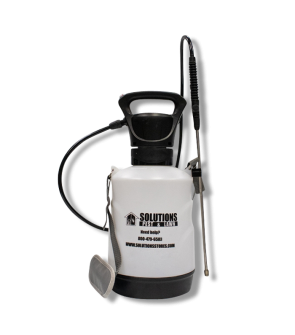
We recommend making applications with a backpack or handheld pump sprayer.
Since musk thistle is common on pastures and rangelands, we recommend using Flagstaff Fluroxypyr Herbicide.
Flagstaff Fluroxypyr Herbicide is a selective broadleaf herbicide used to control a variety of invasive and noxious weeds, in non-crop areas like pastures and rangelands.
To control musk thistles, apply 23 fl. oz. of Flagstaff Fluroxypyr Herbicide mixed into enough water to distribute over 1 acre.
Due to this product’s high-volume application rate, a spray rig may be necessary.
Fill the spray tank with half the amount of water, add the proper amount of product, and pour in the remaining half of the water. Close the tank lid and shake until the solution is well-mixed.
Spray the top and bottom of the weed leaves until wet, but not to the point of runoff.
Keep people and pets out of areas treated with 2,4-D Amine Selective Post-Emergent Herbicide for 48 hours after application.
For sites treated with Fahrenheit Herbicide or Flagstaff Fluroxypyr Herbicide, be sure to keep people and pets out of the treated area for 24 hours after application.
Step 2: If Needed, Retreat
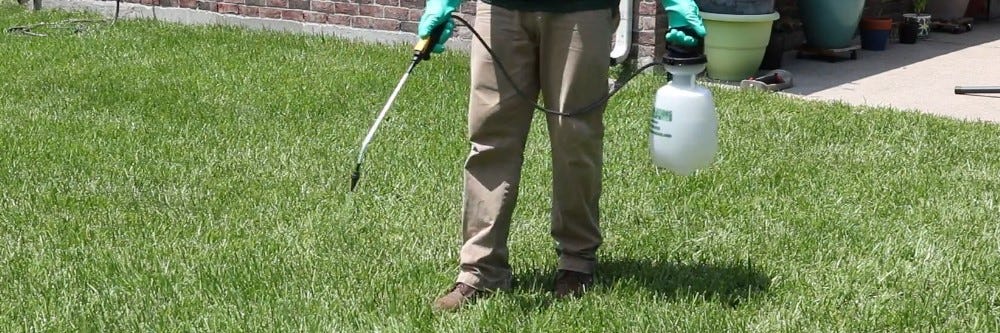 When applied correctly, the targeted weeds will turn yellow and start to die off; additional treatments should be made as needed.
If weeds are still appearing, reapply Fahrenheit Herbicide after 4 to 6 weeks have passed after the first application.
Retreat with 2,4-D Amine Selective Post-Emergent Herbicide when 30 days have passed after application.
Flagstaff Fluroxypyr Herbicide can be reapplied when 14 days has passed after the previous application.
Prevention
After removing musk thistle, you’ll want to keep it from coming back. The following measures can help prevent its return:
- One of the simplest things you can do is mow plants before they flower, which stops them from producing seeds. For smaller patches, hand-pulling works well, and keeping your lawn and pasture healthy and dense can naturally outcompete thistle seedlings, making it harder for them to establish.
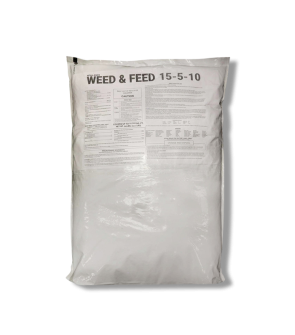
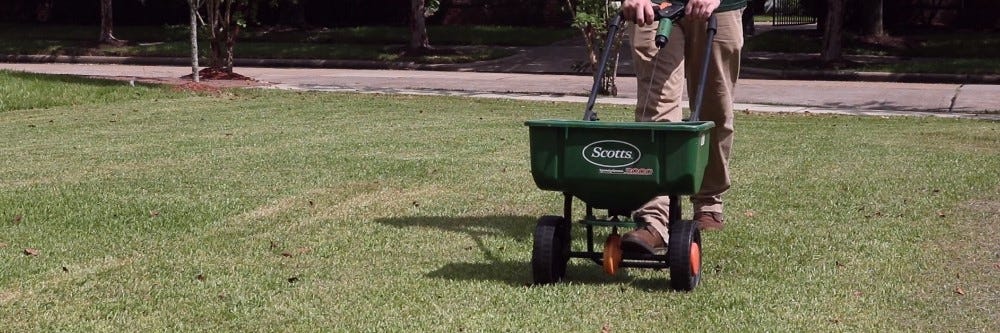
- Maintaining healthy soil through regular fertilization helps grasses and pasture plants grow strong, making it more difficult for musk thistle and other weeds to establish. For your lawn, we recommend using the Solutions 15-5-10 Weed & Feed with Trimec. It is a slow-release granule fertilizer that releases essential nutrients and controls emerged weeds. Apply 3.2 to 4 pounds of Solutions 15-5-10 Weed & Feed with Trimec per 1,000 sq. ft. for most applications. Mow your lawn to normal height 1 to 2 days before application. Water your lawn thoroughly at least 1 day before application to sustain moisture until the next watering. Spread the granules evenly across the treatment area with a push or broadcast spreader. Do not wash from the weed leaves for 1 to 2 days after application. At this time, a thorough watering should be made.
- Musk thistle is a biennial weed, meaning it spends its first year as a low-growing rosette and its second year as a flowering plant producing seeds. By rotating livestock grazing or altering what crops or grasses are planted, you can disrupt this cycle. For example, grazing livestock more heavily in areas where thistle seedlings are present can help trample young plants before they grow large enough to flower, while rotating animals away afterward allows desirable grasses to recover. Similarly, planting fast-growing competitive crops or cover crops in pastures or disturbed areas can shade out thistle seedlings and reduce available space for them to establish. By changing grazing schedules, pasture rest periods, and planting sequences from year to year, you make it much harder for musk thistle to complete its two-year life cycle and produce seeds, gradually reducing its population over time.
- In both pastures and lawns, areas with poor drainage or excessive moisture create ideal conditions for musk thistle seeds to germinate and establish. Over-irrigated lawns, low spots that hold water, or compacted soil in pastures can weaken grass and other desirable plants, giving thistle seedlings an advantage. By improving drainage, avoiding overwatering, and aerating compacted soil, you create healthier, more competitive turf and pasture, making it harder for musk thistle to take hold. We recommend watering with no more than 1 inch of irrigation once per week, preferably in the early morning.
- For chemical control, a pre-emergent herbicide is highly effective. These prevent musk thistle seeds from germinating, stopping the weed before it takes root. The ideal times to apply pre-emergents are early spring (late February through early April) or late fall (October through November), just before seeds would naturally start to sprout. Prodoxaben G Pre-Emergent Herbicide is a granule pre-emergent herbicide that prevents 150 types of broadleaf and grassy weeds, including musk thistle, from appearing in established lawns, ornamentals, and non-crop areas. Depending on the turf, apply 1.7 to 8.4 pounds of Prodoxaben G Pre-Emergent Herbicide per 1,000 sq. ft. After application, irrigate the treatment area with 0.5 inches of water or rainfall. You will need a push or broadcast spreader. Most applications will last 3 to 8 months, depending on the rate and region.
Key Takeaways
What is Musk Thistle
- Musk thistle is a fast-growing, invasive biennial weed with large rose-purple flowers and spiny leaves that quickly dominate lawns, pastures, rangelands, and more.
How to Get Rid of Musk Thistle
- To get rid of musk thistle, you will need to use either Fahrenheit Herbicide, Flagstaff Fluroxypyr Herbicide, or 2,4-D Amine Selective Post-Emergent Herbicide. To aid in weed control, we suggest using Nanotek Surfactant with your selected herbicide.
Preventing Musk Thistle Reinfestation
- Preventing musk thistle involves keeping lawns and pastures healthy through proper fertilization and physical control like hand-pulling, along with targeted chemical measures. Solutions 15-5-10 Weed & Feed with Trimec strengthens grass while controlling existing weeds, and Prodoxaben G Pre-Emergent Herbicide prevents new musk thistle seeds from germinating when applied in early spring or late fall. Together, these practices help reduce musk thistle establishment and maintain strong, weed-resistant turf and pasture.