



Gain access to personalized product screening, the best pricing, rewards, and more!
Create An Account, Or Sign In.


LOVELAND PRODUCTS
Rifle Herbicide
Rifle Herbicide is a fast-acting, broad-spectrum herbicide designed for crops, turf, and non-cropland areas, delivering powerful performance against over 200 tough broadleaf weeds including hard-to-control and resistant species for clean fields and dependable results.
As low as
$128.76
Only %1 left
SKU
Rifle Herbicide Product Page
Min : 128.76 - Max : 128.76

+
Price as of
10/22/26
10/22/26
Price Transparency
See how our pricing compares to other online retailers for this item.
Rifle Herbicide, manufactured by Loveland Products, is a strong, contact-driven dicamba herbicide that controls numerous broadleaf broadleaf weeds in pastures, rangelands, turf, and crops within 10 to 14 days.
This powerful contact herbicide is built on dicamba, a trusted and proven active ingredient known for its ability to control broadleaf weeds that other herbicides struggle with. Dicamba works by mimicking natural plant growth hormones, causing uncontrolled cell division and growth in susceptible broadleaf weeds. This results in rapid twisting, curling, wilting, and eventual plant death.
Rifle Herbicide is a dependable, broad-spectrum pre- and post-emergent herbicide concentrate built for real-world weed control challenges across a wide range of crops, turf systems, and non-cropland areas. With its broad-spectrum dicamba formulation, ability to control over 200 weed species, and proven performance against ALS-resistant waterhemp and kochia, it offers the strength and flexibility modern weed management demands.
Tools Needed
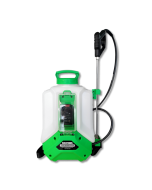
A backpack sprayer, handheld pump sprayer, spray rig, or aircraft equipment will be required.
How to Use
- Step 1: Determine how much Rifle Herbicide to use by measuring the square footage of the treatment area. Find the square footage by measuring the treatment area's length and width in feet, then multiply them together (length X width = square footage). For turf, lawns, farmstead (non-cropland), and sod farms, apply 1 to 2 1/4 teaspoons of Rifle Herbicide per 3 qts. to 4 1/4 gallons of water per 1,000 sq. ft. for small, actively growing annual weeds. Increase to 2 1/4 to 3 1/4 teaspoons for established annual weeds. Biennial weeds with rosettes less than 3 inches in diameter in turf, lawns, farmstead (non-cropland), and sod farms require 1 to 2 1/4 teaspoons of product, while larger rosettes need 2 1/4 to 4 1/2 teaspoons of product per 3 qts. to 4 1/4 gallons of water per 1,000 sq. ft. For perennials, woody brush, and vines in turf, lawns, farmstead (non-cropland), and sod farms, apply 2 1/4 to 4 1/2 teaspoons per 3 qts. to 4 1/4 gallons of water per 1,000 square feet. Refer to the product label for specific application rates and restrictions.
- Step 2: Fill the sprayer tank with half the amount of water, add the proper amount of product, and pour in the remaining half of the water. Close the tank lid and shake until well-mixed.
- Step 3: Spray the top and bottom of weed leaves until wet, but not to the point of runoff. Wait until 30 days have passed from the previous application before retreating.
Where to Use
Rifle Herbicide can be used in Corn, Sorghum, Small Grains, Pasture, Hay, Rangeland, Farmstead (Non-Cropland), Fallow, Cotton, Sugarcane, Asparagus, Turf, and Grass Seed Crops.
When to Use
For best performance, apply when weeds are emerged and actively growing. For pre-emergence use, applications may be made before, during, or after planting.
Safety Information
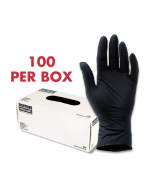
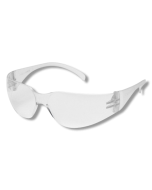
Rifle Herbicide is safe for people and pets when applied according to the product label instructions. Always wear the proper personal protective equipment (PPE) when mixing and applying this product.
Do not allow people or pets to enter the treated area until 24 hours have passed after application.
Special Considerations
This product may cause injury to desirable trees and plants, particularly beans, cotton, flowers, fruit trees, grapes, ornamentals, peas, potatoes, soybeans, sunflowers, tobacco, tomatoes, and other broadleaf plants when contacting their roots, stems or foliage.
| Restricted Use | No |
|---|---|
| Shipping Restrictions | AK, AR |
| Availability | Online |
| Signal Word | WARNING |
| Keith's Pro Tip | "Rotate herbicides with different modes of action to reduce resistance, and use integrated practices like crop rotation, cover crops, and proper tillage to disrupt weed life cycles." |
| Time to Kill | Rifle Herbicide will control weeds within 30 days. |
| Chemical Type | Herbicide |
| Formulation | Emulsifiable Concentrate (EC) |
| Application Methods | Broadcast Spray |
| Product Drawbacks | Do not use adjuvants containing penetrants such as petroleum-based oils after crop emergence or crop injury may result. |
| Active Ingredient | Dicamba 48.2% |
| Application Equipment | Aerial Application Equipment, Backpack Sprayer, Pump Sprayer, Spray Rig |
| Mix Rate | For turf, lawns, farmstead (non-cropland), and sod farms, apply 1 to 2 1/4 teaspoons of Rifle Herbicide per 3 qts. to 4 1/4 gallons of water per 1,000 sq. ft. for small, actively growing annual weeds. Increase to 2 1/4 to 3 1/4 teaspoons for established annual weeds. Biennial weeds with rosettes less than 3 inches in diameter in turf, lawns, farmstead (non-cropland), and sod farms require 1 to 2 1/4 teaspoons of product, while larger rosettes need 2 1/4 to 4 1/2 teaspoons of product per 3 qts. to 4 1/4 gallons of water per 1,000 sq. ft. For perennials, woody brush, and vines in turf, lawns, farmstead (non-cropland), and sod farms, apply 2 1/4 to 4 1/2 teaspoons per 3 qts. to 4 1/4 gallons of water per 1,000 square feet. |
| Use Sites | Outdoors |
| Yield | At the highest rate, 2.5 gallons covers about 9.8 acres. |
| EPA Registration No. | 34704-861 |
| Shelf Life | Rifle Herbicide will last for 3 years when stored in a dry, clean area. |
| Comparable Products | Cruise Control Dicamba Herbicide, Endrun Turf Herbicide (2, 4-D Mecoprop Dicamba) |
| Children or pets? | No |
| Property Characteristics | None |
| Availability | Online |
| Restricted Use | No |
| Brand | LOVELAND PRODUCTS |
| Keith's Pro Tips | "Rotate herbicides with different modes of action to reduce resistance, and use integrated practices like crop rotation, cover crops, and proper tillage to disrupt weed life cycles." |
| Product Drawbacks | Do not use adjuvants containing penetrants such as petroleum-based oils after crop emergence or crop injury may result. |
| Target Pests | Alder, Alfalfa, Annual Clover, Annual Fleabane, Annual Sowthistle, Annual Weeds, Annual Wormwood, Ash, Aspen, Basswood, Bedstraw, Beech, Biennial Weeds, Birch, Bitterdock, Black Henbane, Black Knapweed, Black Locust, Black Nightshade, Blackberry, Blackgum, Bladder Campion, Bracken Fern, Bracted Plantain, Bristly Starbur, Broadleaf Dock, Broadleaf Plantain, Broom Snakeweed, Buffalobur, Buffalograss, Bull Thistle, Bur Ragweed, Burcucumber, Bursage, Buttercup, California Burclover, Canada Goldenrod, Canada Thistle, Carelessweed, Carolina Geranium, Carolina Horsenettle, Cherry, Chicory, Chinquapin, Climbing Milkweed, Common Broomweed, Common Burdock, Common Chickweed, Common Cocklebur, Common Dandelion, Common Eveningprimrose, Common Goldenweed, Common Lambsquarters, Common Mallow, Common Milkweed, Common Purslane, Common Ragweed, Common Spikeweed, Common Sunflower, Common Wormwood, Common Yarrow, Common Yellow Woodsorrel, Corn Chamomile, Corn Cockle, Corn Spurry, Cottonwood, Cow Cockle, Creeping Waterprimrose, Creeping Woodsorrel, Creosotebush, Curly Dock, Cutleaf Eveningprimrose, Cypressweed, Dalmatian Toadflax, Dewberry, Diffuse Knapweed, Dogfennel, Dogwood, Dwarf Mallow, Eastern Persimmon, Eastern Red Cedar, Elm, English Daisy, Field Bindweed, Field Chickweed, Field Pennycress, Florida Beggarweed, Florida Pusley, Frenchweed, Fringed Sagebrush, Giant Ragweed, Grape, Green Smartweed, Gromwell, Halfshrub Sundrop, Hawkweed, Hedge Bindweed, Hemlock, Hemp Dogbane, Hemp Sesbania, Henbit, Hickory, Honeylocust, Honeysuckle, Honeyvine Milkweed, Hop Clover, Hornbeam, Horseweed, Huckleberry, Huisache, Ironweed, Ivyleaf Morningglory, Jerusalem Artichoke, Jimsonweed, Knotweed, Kochia, Kudzu, Ladysthumb, Lakeweed, Lambsquarters, Lanceleaf Ragweed, Leafy Spurge, Louisiana Wormwood, Macartney Rose, Marestail, Mayweed, Mesquite, Milk Thistle, Missouri Goldenrod, Mouseear Chickweed, Multiflora Rose, Musk Thistle, Mustard, Nettleleaf Goosefoot, Nightflowering Catchfly, Oak, Pennsylvania Smartweed, Peppergrass, Perennial Sowthistle, Perennial Weeds, Pigweed, Pine, Plumeless Thistle, Poison Ivy, Poison Oak, Pokeweed, Poorjoe, Poplar, Povertyweed, Prickly Lettuce, Prickly Sida, Prostrate Pigweed, Prostrate Spurge, Puncturevine, Rabbitbrush, Red Sorrel, Redroot Pigweed, Redvine, Rough Pigweed, Rough Sumpweed, Roughseed Buttercup, Russian Knapweed, Russian Olive, Russian Thistle, Sassafras, Servicea Lespediza, Serviceberry, Sheep Sorrel, Shepherdspurse, Sicklepod, Silverleaf Nightshade, Slender Aster, Smooth Bedstraw, Smooth Pigweed, Sowthistle, Spicebush, Spiny Amaranth, Spiny Aster, Spiny Pigweed, Spiny Sowthistle, Spotted Knapweed, Spruce, Stinging Nettle, Stinkweed, Sumac, Sunflower (Volunteer), Swamp Smartweed, Sweetclover, Sweetgum, Sycamore, Tall Buttercup, Tall Morningglory, Tansy Ragwort, Tansymustard, Tarbush, Teasel, Teaweed, Texas Blueweed, Thornapple, Tropic Croton, Tropical Soda Apple, Trumpetcreeper, Tumble Pigweed, Velvetleaf, Venice Mallow, Vetch, Virginia Pepperweed, Waterhemlock, Waterhemp, Western Ragweed, Western Whorled Milkweed, White Cockle, White Heath Aster, White Horsenettle, Wild Carrot, Wild Garlic, Wild Mustard, Wild Onion, Wild Plum, Wild Radish, Wild Sunflower, Willow, Winged Waterprimrose, Witchhazel, Woody Plants, Woody Vines, Woolly Croton, Woolyleaf Bursage, Yankeeweed, Yellow Starthistle, Yellow Woodsorrel, and Yucca. |
| Application Equipment | Aerial Application Equipment, Backpack Sprayer, Pump Sprayer, Spray Rig |
| Application Methods | Broadcast Spray |
| Active Ingredient | Dicamba 48.2% |
| Product Type | Herbicide |
| Formulation | Emulsifiable Concentrate (EC) |
| Application Rate | For turf, lawns, farmstead (non-cropland), and sod farms, apply 1 to 2 1/4 teaspoons of Rifle Herbicide per 3 qts. to 4 1/4 gallons of water per 1,000 sq. ft. for small, actively growing annual weeds. Increase to 2 1/4 to 3 1/4 teaspoons for established annual weeds. Biennial weeds with rosettes less than 3 inches in diameter in turf, lawns, farmstead (non-cropland), and sod farms require 1 to 2 1/4 teaspoons of product, while larger rosettes need 2 1/4 to 4 1/2 teaspoons of product per 3 qts. to 4 1/4 gallons of water per 1,000 sq. ft. For perennials, woody brush, and vines in turf, lawns, farmstead (non-cropland), and sod farms, apply 2 1/4 to 4 1/2 teaspoons per 3 qts. to 4 1/4 gallons of water per 1,000 square feet. |
| Shelf Life | Rifle Herbicide will last for 3 years when stored in a dry, clean area. |
| Yield | At the highest rate, 2.5 gallons covers about 9.8 acres. |
| Use Sites | Outdoors |
| Time to Kill | Rifle Herbicide will control weeds within 30 days. |
| Comparable Products | Cruise Control Dicamba Herbicide, Endrun Turf Herbicide (2, 4-D Mecoprop Dicamba) |
| Use Caution With | Centipedegrass, St Augustine |
| Incompatible Home Siding | Brick, Hardie Plank, Stone Veneer, Stucco, Wood, Vinyl |
| EPA Registration # | 34704-861 |

*Price does not include freight. We guarantee our rate plus shipping will be less than anyone else's price.