


Gain access to personalized product screening, the best pricing, rewards, and more!
Create An Account, Or Sign In.
Most Effective Products
Curly Dock Control: How to Get Rid of Curly Dock
This page is a general DIY guide for controlling curly dock. Using the products and methods suggested, you will get control of curly dock. Follow this DIY article and use the recommended products; we guarantee 100% control of curly dock.
Curly dock, also referred to by common names sour dock, yellow dock, curled dock, or narrowleaf dock, is a persistent winter perennial weed native to Eurasia and now found throughout much of the United States. While it may appear harmless, this weed's deep taproot system makes it highly resilient, allowing it to survive cold temperatures and drought conditions.
As a winter weed, curly dock grows when other plants are dormant, giving it a competitive advantage. It spreads rapildly through seed production, with each plant releasing thousands of seeds annually. Beyond it's impact on crops and turf, the seeds and vegetation of curly dock are toxic to poultry and can cause dermatitis and gastric problems in cattle.
Effective control of curly dock is critical in protecting crops, livestock, and landscapes. For practical solutions, homeowners can protect their property and animals by using the products and tips outlined in this easy-to-use DIY guide.
Identification
Before proceeding with a treatment program, you need to be certain that the weed infesting your property is curly dock. Careless identification can lead to using the wrong treatment methods, which can waste time and money. To know what curly dock looks like, check out the following characteristics.
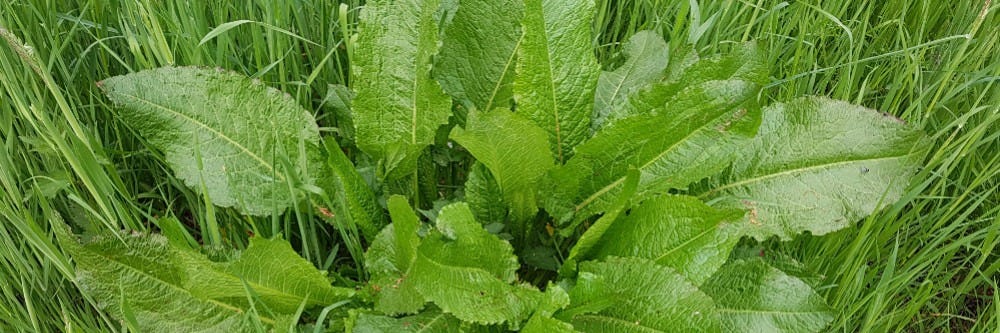
- Curly dock is a tall, coarse perennial weed that grows 2 to 5 feet high on stout, erect, hairless stems, often unbranched below the flower cluster.
- It has both basal and alternative leaves that are hairless, with margins ranging from wavy, curly, or smooth. Leaf tips are sharply pointed, and bases vary from wedge-shaped to nearly heart-shaped. Basal leaves are lance-oblong, range from 4 to 12 inches long and 1 to 2 inches wide, with stalks nearly as long as the blade, while upper leaves become smaller, more lance-linear, and shorter-stalked as they ascend the stem. At the base of each leaf stalk is a brownish papery sheath, called an ocrea, which typically disintegrates as the plant matures. The leaves are dark green, sometimes turning reddish as the season changes.
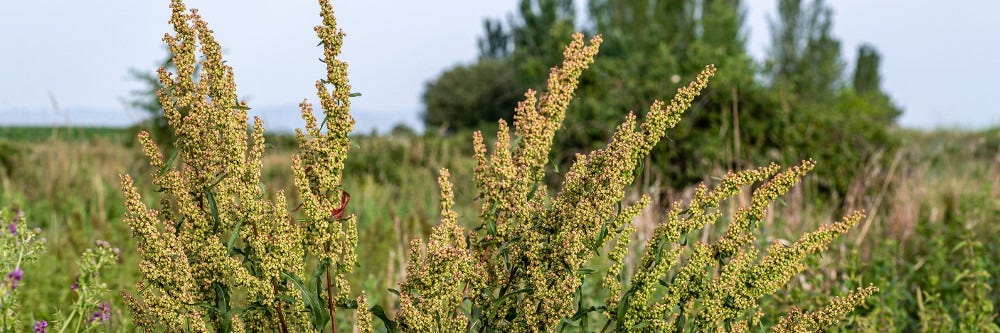
- Curly dock typically produces flowers from June to October. The small, greenish flowers grow on drooping stalks from the fascicle nodes and form dense, elongated inflorescences that turn reddish-brown as the seed matures. Flowers are arranged in whorls of 10 to 25 along the panicle racements, with individual flowers being male, female, or bisexual. Each flower has six tepals, six stamens, and three styles, with a distinctive tubercle a small warty growth usually forming on the central vein of the three inner tepals, one of which is often larger.
- Seeds are produced in large, loose, branching clusters at the top of the stems, typically 1 1/2 to 2 feet long. Each flower yields a single glossy, triangular achene, approximately 1/12 inch in length. An achene is a small, dry, single-seeded fruit that does not open at maturity, with the seed attached to the fruit wall at only one point. The achene is inclosed by a papery, three-valved or three-winged structure. These seed clusters turn reddish-brown as they mature.
Use the description and image above to help you properly identify curly dock on your property. If unsure, contact us and send a photo of your weed through email or in-person at one of our store locations so we can help you identify the weed and suggest treatment options.
Inspection
Once it is confirmed that you are dealing with curly dock, you can move on to inspection. During this phase, you will locate areas where curly dock thrives and observe the conditions allowing it to grow. This information will help applicators where to focus herbicide applications.
Where to Inspect
Curly dock becomes established in environments with disturbed soils, preferring full sun to partial shade, moist but well-drained soils, and areas prone to drought or overwatering.
It commonly grows in lawns, ornamental landscapes, pastures, roadsides, margins of ponds, marshes, lakes, and other aquatic areas. It can also grow in crop fields, agricultural fields, fallow fields, drainage ditches, overgrazed fields, waste areas, or sites swept by floods.
What to Look For
Curly dock seeds germinate from late spring through early fall, producing seedlings, while perennial plants emerge in mid-spring from their deep taproots, forming a robust basal rosette.
The round, hairless stalks bolt from the rosette in mid-spring, and flowering begins primarily in June, continuing through late fall.
Seed germination can occur at various times during the growing season, depending on the light and soil temperature. As the seeds mature, the greenish flowers gradually turn reddish-brown.
At the end of the season, the plants’ leaves will die out, but the taproot will remain to resume growth next spring.
Treatment
Once you have determined where curly dock is present, you can proceed with treatment. Be sure to wear the proper personal protective equipment (PPE) when mixing and applying herbicides.
Although curly dock is most actively growing in spring and summer, it remains present in winter as a basal rosette, making early detection important. Applications can be done during the winter, but successful control is seen more during the fall and spring.
Several herbicides have been shown to control curly dock effectively when applied while the plants are actively growing. Common active ingredients 2,4-D, dicamba, picloram, or glyphosate, often show the best results in killing curly dock.
Step 1: Mix and Apply Post-Emergent Herbicide
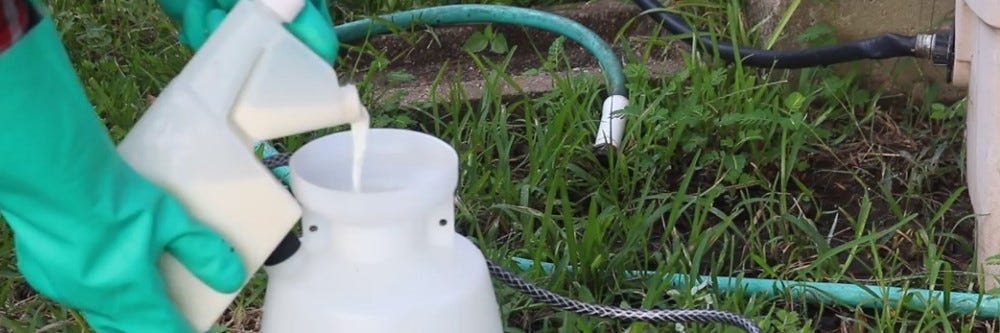
Determine how much herbicide to use by measuring the square footage of the treatment area. Find the square footage by measuring the treatment area's length and width in feet, then multiplying them together (length X width = square footage).
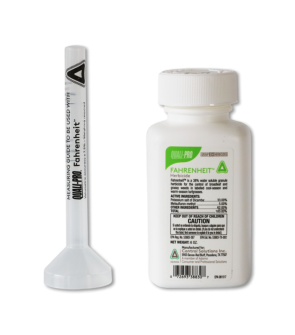
Fahrenheit herbicide is a water‑soluble granular weed killer that controls broadleaf and grassy weeds in warm-seasoned turf.
Spot applications with Fahrenheit Herbicide will use 0.2 oz. per 1 gallon of water per 1,000 sq. ft.
If you have curly dock growing on properties with cool-seasoned grasses, we recommend 2,4-D Amine Selective Post-Emergent Herbicide.
A spot application with 2,4-D Amine Selective Post-Emergent Herbicide will use 1/4 pint of this product in 3 gallons of water.
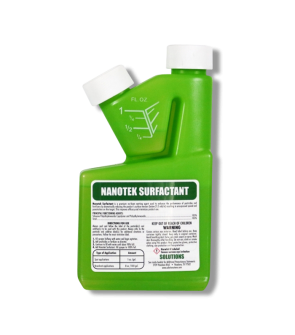
To enhance your herbicides efficacy, mix in a surfactant like Nanotek. Nanotek is a non-herbicide product designed to improve the adhesion and penetration of pesticides onto treated surfaces.
Just add 1 fluid ounce per 1 gallon of solution.
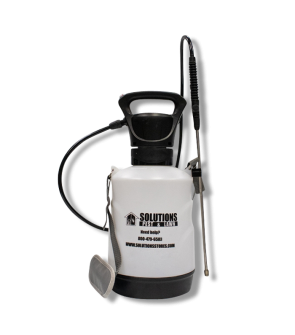
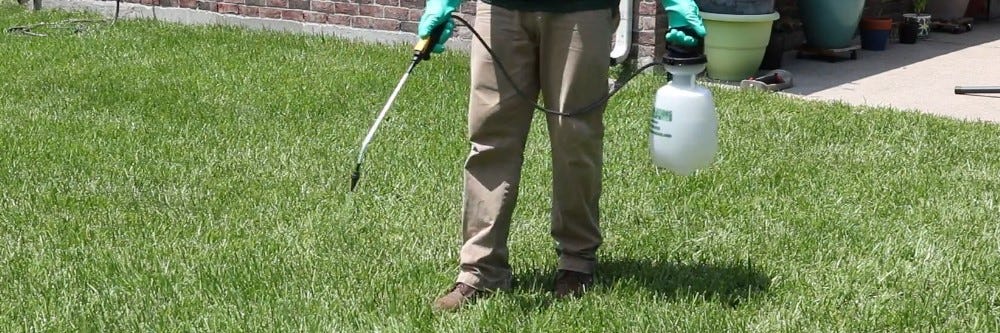
These herbicides will need to be mixed with water in a handheld pump sprayer or backpack sprayer.
Spray the top and bottom of weed leaves until wet, but not to the point of runoff.
Keep people and pets out of areas treated with 2,4-D Amine Selective Post-Emergent Herbicide for 48 hours after application.
For sites treated with Fahrenheit Herbicide, be sure to keep people and pets out of the treated area for 24 hours after application.
Step 2: Retreat
 Curly dock is a persistent perennial weed with a strong taproot, so multiple applications may be necessary for full control.
Check the treated area within 2 to 3 weeks to see whether any green growth or new leaves are still present.
If the weeds show signs of survival or regrowth, apply a second spot treatment using the same herbicide and mixing rates described in Step 1, making sure to follow the product label for retreatment intervals.
2,4-D Amine Selective Post-Emergent Herbicide allows retreatment after about 30 days, while Fahrenheit Herbicide permits retreatment after 4 to 6 weeks.
Prevention
Once you have removed curly dock from your property, it’s important to take steps to prevent it from returning. Implement the following preventive measures to help keep curly dock from re-establishing.
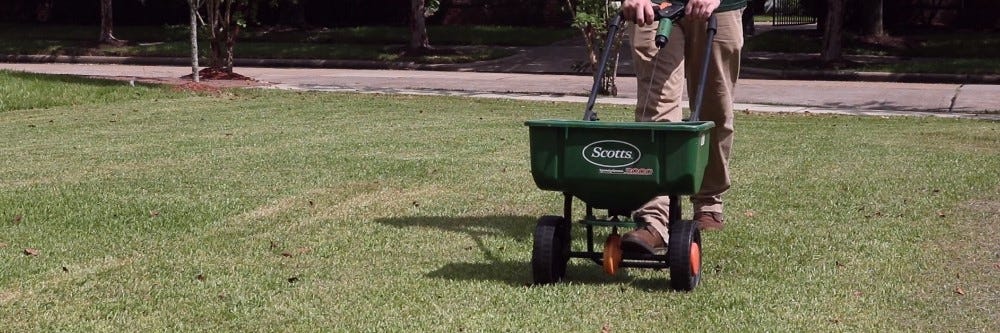
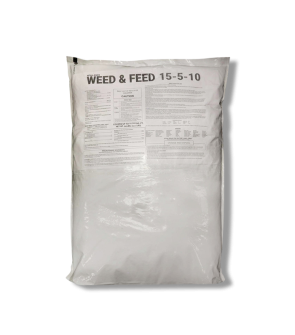
- To prevent curly dock from returning, focus on maintaining dense, healthy turf or vegetation that leaves little bare soil for the weed to establish. One of the ways to do that is to use a slow-release fertilizer like Solutions 15-5-10 Weed & Feed with Trimec. Solutions 15-5-10 Weed & Feed with Trimec is a slow-release fertilizer and post-emergent herbicide blend that kills emerged weeds and releases essential nutrients into turf. Mow the lawn to its normal height one to two days before application. Water the lawn thoroughly at least one day beforehand so the soil retains enough moisture until the next scheduled watering. You will need to apply 3.2 to 4 pounds of Solutions 15-5-10 Weed & Feed with Trimec per 1,000 sq. ft. A push or broadcast spreader will be needed. Apply the product when weeds are young and actively growing, preferably in the morning when dew is still present on the grass. If the grass is dry at the time of application, lightly sprinkle it with water to help the material adhere and to prevent dust drift onto nearby plants. Spread the granules evenly across the treatment area. After applying, avoid washing the product off the weed leaves for one to two days. Once this waiting period has passed, give the lawn a thorough watering.
- Curly dock thrives in compacted, poorly drained, or disturbed soil, so improving soil structure with aeration, reducing compaction, and correcting drainage problems will greatly reduce future infestations.
- Avoid overwatering or allowing water to pool on your property as this can lead to curly dock growth. We suggest watering with no more than 1 inch of irrigation once per week, preferably in the early morning.
- Regular mowing at the proper height for your grass type helps shade the soil surface and limit seed germination. Promptly remove young seedlings before they develop deep taproots by hand or with a garden shovel, as curly dock seeds can remain viable in the soil for many years. Uprooting and chopping the taproots is suggested as this will help the plant from regenerating from leftover plant debris. Using a shovel to cut out the crown about two inches below the soil surface is also effective.
- In agricultural and garden settings, practicing crop rotation further reduces curly dock activity by disrupting the weeds growth cycle and preventing it from becoming established in the same location year after year. Regular rotation also encourages healthier, more competitive crops that naturally suppress curly dock seedlings.