


Gain access to personalized product screening, the best pricing, rewards, and more!
Create An Account, Or Sign In.
Most Effective Products
Creeping Buttercup Control: How to Get Rid of Creeping Buttercup
This page is a general DIY guide for controlling creeping buttercup. Using the products and methods suggested, you will get control of creeping buttercup. Follow this DIY article and use the recommended products; we guarantee 100% control of creeping buttercup.
Creeping buttercup, also known as creeping crowfoot, creeping meadow buttercup, devil's guts, granny threads, ram's claws, sitfast, and tether-toad might look like a harmless splash of sunshine in your property, but don’t be fooled this flower is an invasive weed. It can quickly take over and cause serious problems.
Its fast-growing, spreading nature means it competes aggressively with your grass and plants for water, nutrients, and sunlight, leaving your yard patchy and unhealthy. Beyond being an eyesore, creeping buttercup can reduce pasture quality by pushing out forage that livestock prefer.
If left unchecked, it can be tough to remove and can seriously disrupt the balance of your green spaces. The good news? With a few smart steps, you can keep creeping buttercup in check and protect your lawn’s health and beauty with the products and tips in this DIY guide.
Identification
Before proceeding with a treatment program, you need to be certain that the weed infesting your property is creeping buttercup. Careless identification can lead to using the wrong treatment methods, which can waste time and money. To know what creeping buttercup looks like examine the following characteristics:
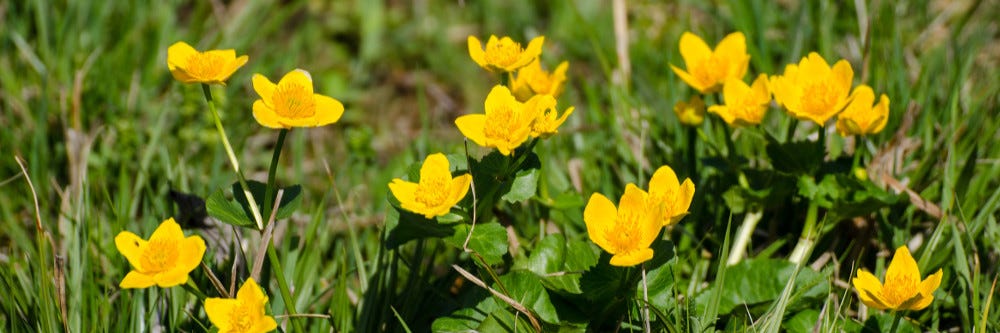
- Creeping buttercup is a low-growing perennial weed that is commonly recognized by its ability to spread horizontally by its above-ground horizontal stems called stolons. Typically, it reaches 2 feet tall. These stolons grow outward from the parent plant and root at various points (called nodes) when they come into contact with soil. Each node can develop into a new plant, allowing the weed to rapidly colonize large areas. Stems are typically hollow, hairy, and sometimes reddish at the base.
- Newly established plants will grow as rosettes. Some stems will grow outwards, horizontally, as stolons. The plant’s leaves grow up to three inches long and 1 and a half inches wide. They have three segments. Each leaflet is deeply lobed with toothed edges. The leaves are dark-green in color and covered in hairs, and they may sometimes have pale spots.
- From March to August, flowering will begin. These yellow flowers are one inch in diameter, and they will grow five to seven petals that are about half an inch long. The flowers have clusters of stamens and pistils in the center. When fruits form, they grow in clusters that create spiky, round heads.
- The plant’s leaves are dark green and divided into three distinct, toothed lobes, often with pale markings near the base. To the touch these leaves are hairy.
- Oxalis, often mistaken for creeping buttercup, has clover-shaped leaves made up of three heart-shaped leaflets that sometimes show a faint purplish “V” pattern. The leaves are soft and thin, without a waxy coating, and typically fold up at night or in low light. Its yellow flowers are smaller and less glossy than creeping buttercups. Unlike creeping buttercup, oxalis grows in small clumps with upright or loosely trailing stems that don’t root at the nodes.
Use the description and image above to help you properly identify creeping buttercup on your property. If unsure, contact us and send a photo of your weed through email or in-person at one of our store locations so we can help you identify the weed and suggest treatment options.
Inspection
Once it is confirmed that you are dealing with creeping buttercup, you can move on to inspection. During this phase, you will locate areas where creeping buttercup thrives and observe the conditions allowing it to succeed. This information will help you in knowing where to focus your herbicide application.
Where to Inspect
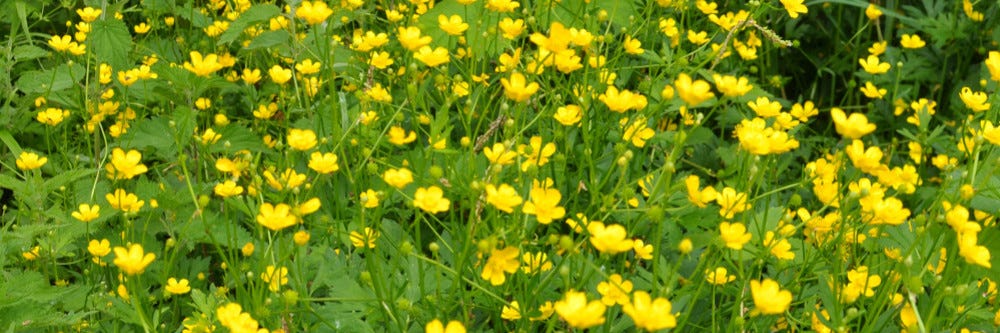
Creeping buttercup grows in a wide variety of environments, primarily favoring cool, moist, and disturbed areas. It tolerates moderate shade, but thrives in full sun if the soil stays damp.
This plant thrives in habitats with heavy, poorly drained soils such as pastures, meadows, lawns, gardens, roadsides, wetlands, and streambanks. It often establishes in disturbed or compacted soils, especially in areas with frequent foot traffic or animal activity.
What to Look For
Many buttercups emerge from the ground in fall, but creeping buttercup plants produce flowers starting in spring. During warmer seasons, be on the lookout for the weed’s bright yellow flowers.
One of the most distinctive features of creeping buttercup is its glossy, bright green leaves, which are typically divided into three lobes resembling a clover. These leaves have a characteristic waxy surface that can appear almost shiny.
The plant produces small, vibrant yellow flowers with five to seven glossy petals that bloom from late spring through early summer.
Additionally, creeping buttercup will creep above ground and create dense mats. In moist or poorly drained soils, these mats tend to be more extensive and can form noticeable patches of uneven texture and color, disrupting the uniform appearance of grass or crops.
Treatment
Before beginning any type of herbicide application, you will need to wear the proper personal protective equipment (PPE).
We recommend using post-emergent herbicides containing the active ingredient MCPA, aminopyralid, metsulfuron, triclopyr, or 2,4-D to kill creeping buttercups.
Step 1: Apply Herbicides
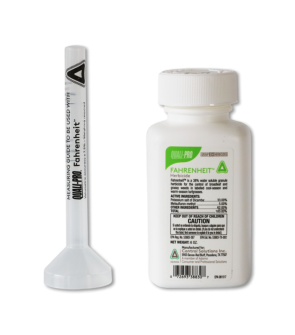
 Fahrenheit herbicide is an effective post-emergent herbicide used to control broadleaf weeds, such as buttercup in warm-seasoned turfgrass.
To make spot treatments with Fahrenheit Herbicide, use 0.2 oz. of product with 1 gallon of water to treat 1,000 sq. ft.
2,4-D Amine Selective Post-Emergent Herbicide is a selective post-emergent herbicide commonly used to control broadleaf weeds in lawns (specifically cool-seasoned turf), pastures, and crops without harming grasses.
To make spot treatments with 2,4-D Amine Selective Post-Emergent Herbicide, mix 1/4 pint of product in 3 gallons of water.
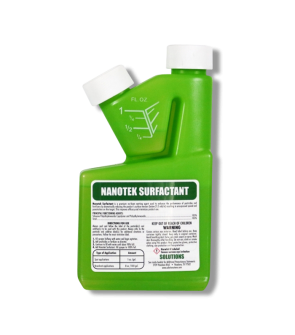
To enhance this product’s efficacy, mix in a surfactant like Nanotek Surfactant.
Nanotek Surfactant is a non-herbicide product designed to improve the adhesion and penetration of pesticides onto treated surfaces.
Just add 1 fluid ounce per 1 gallon of solution.
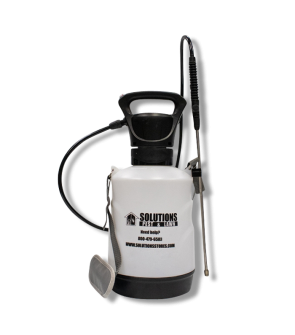
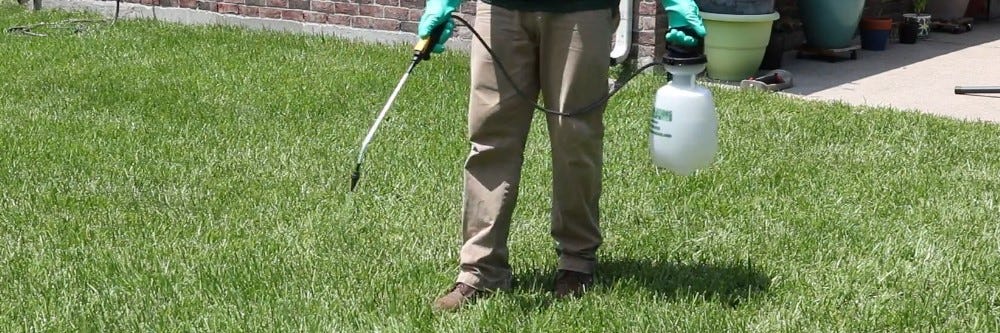
Either of these products would need to be mixed with water in a handheld pump sprayer or backpack sprayer.
Spot-treat any weed you have found during your inspection. Use a fan or cone spray pattern to ensure the leaves are fully coated, and spray the weed to the point of wet but not runoff.
Keep in mind that when making applications over St. Augustinegrass, Bermudagrass, or Zoysiagrass, temporary stunting or chlorosis may occur.
Step 2: Reapply
When applied properly, affected weeds will yellow and begin to die.
Conduct follow-up applications as necessary. Reapplication intervals with 2, 4-D Amine range from 21 to 30 days. Reapplication intervals with Fahrenheit range from 4 to 6 weeks.
Applications are most effective when the plant is young and actively growing, before flower or seed production.
Prevention
Once you have eliminated creeping buttercup from your property, you will want to make sure it does not return. Take on the following preventative measures to prevent creeping buttercup from returning:
- To prevent creeping buttercup from taking hold, focus on maintaining a healthy, dense lawn or pasture by improving soil drainage and avoiding overwatering, since the weed thrives in wet conditions. Best to water with no more than 1 inch of irrigation once per week.
- Regular mowing helps stop it from flowering and setting seed. Minimize soil disturbance to prevent spreading its creeping stems, and overseed bare or thin areas promptly to create a competitive environment that discourages weed establishment. Additionally, inspect new soil, mulch, or compost for contamination to avoid introducing creeping buttercup seeds or runners.
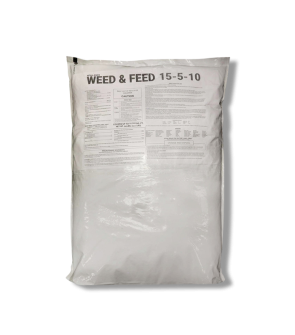
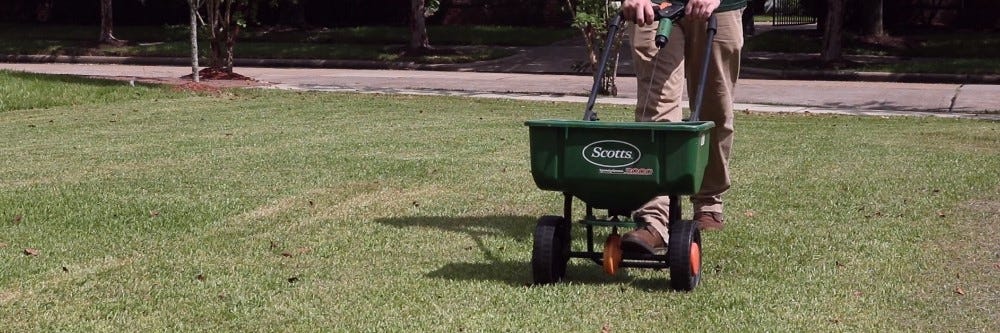
- Using a balanced fertilizer that promotes healthy, vigorous growth of desirable grasses can help prevent creeping buttercup by encouraging dense turf that crowds out weeds. We recommend using Solutions 15-5-10 Weed & Feed Fertilizer with Trimec to supply your lawn with the proper nutrients and eliminate any emerged creeping buttercup weeds. For most applications, apply 3.2 to 4.0 pounds of product per 1,000 square feet of treatment area. Spread the product granules evenly across the treatment area with a push or broadcast spreader. Wait until 1 to 2 days after application, then water the granules in.
Key Takeaways
What is Creeping Buttercup?
- Creeping buttercup is a perennial weed with bright yellow flowers and shiny, three-lobed leaves that spreads aggressively through creeping stems, often invading lawns and pastures.
How to Get Rid of Creeping Buttercup
- To get rid of creeping buttercups, we recommend using Fahrenheit Herbicide or 2,4-D Amine Selective Post-Emergent Herbicide. Add in Nanotek Surfactant to enhance these herbicides control against this weed.
Preventing Creeping Buttercup Reinfestation
- To prevent creeping buttercup, maintain healthy, dense turf by improving soil drainage, mowing regularly, overseeding bare areas, and applying balanced nitrogen-rich fertilizers to encourage vigorous grass growth. Minimizing soil disturbance and promptly removing any young plants can also help stop its spread before it becomes established.