

Gain access to personalized product screening, the best pricing, rewards, and more!
Create An Account, Or Sign In.
Most Effective Products
Poison Oak Control: How To Get Rid of Poison Oak
Poison oak is a widespread deciduous shrub or vine found throughout the country, particularly in the mountains and valleys of California, which are generally below 5,000 feet in elevation. It commonly grows as a climbing vine with aerial roots on the trunks of oaks and sycamores.
Poison oak and poison ivy are two of North America's most unpleasantly irritating plants. Each year, thousands of people are affected by moderate to severe dermatitis from coming into contact with the leaves and stems of these plants. These same plants can also creep onto your lawn, which can be a hazard to you and your children if the skin comes in contact with their leaves, which can cause painful and irritating rashes and blisters.
Poison oak forms dense thickets and readily regenerates after disturbances like fire and land clearing. Because the two species of western poison oak often exhibit a vine growth form, some experts list them as subspecies of eastern poison ivy.
If poison oak is on your property, we can help you get rid of it. Our lawn care experts have compiled a DIY poison oak treatment guide that provides step-by-step directions on eliminating poison oak quickly and affordably using our professional-quality herbicides.
Identification
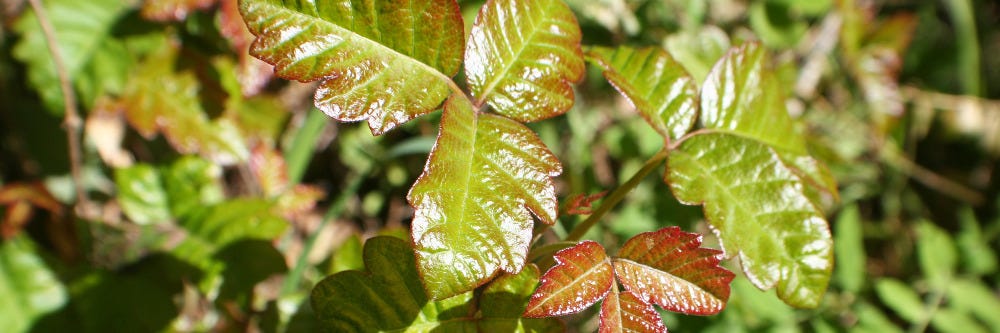
Poison oak looks similar to other harmless plants, so it's important to identify it properly before taking action to remove it. Poison oak grows as a bush or vine, much like poison ivy. It is so similar that some people use their names interchangeably.
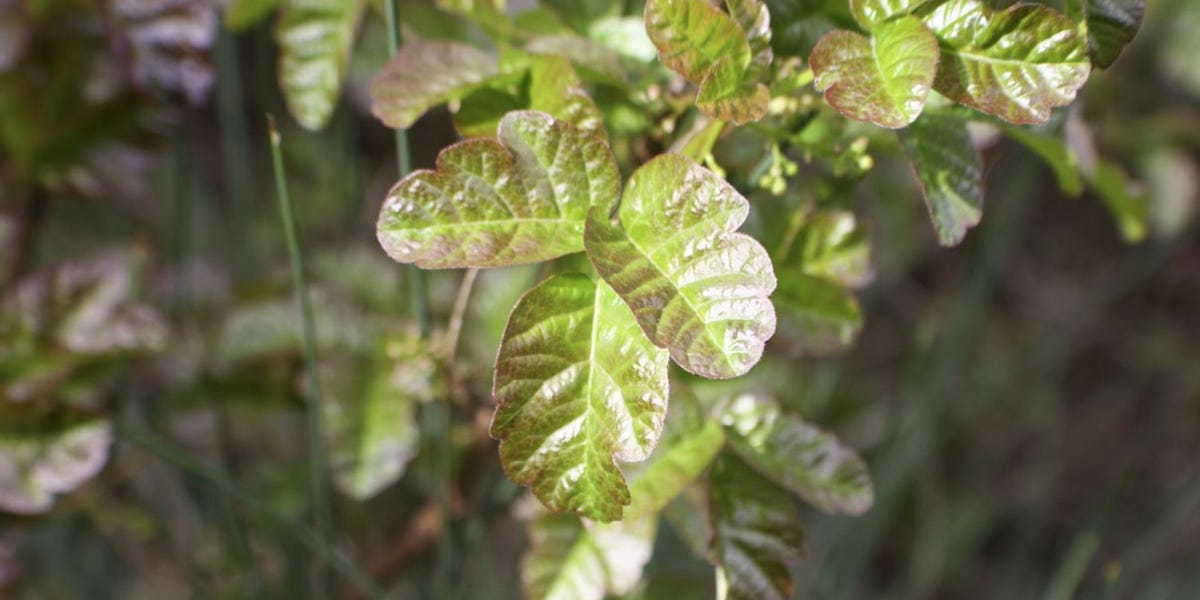
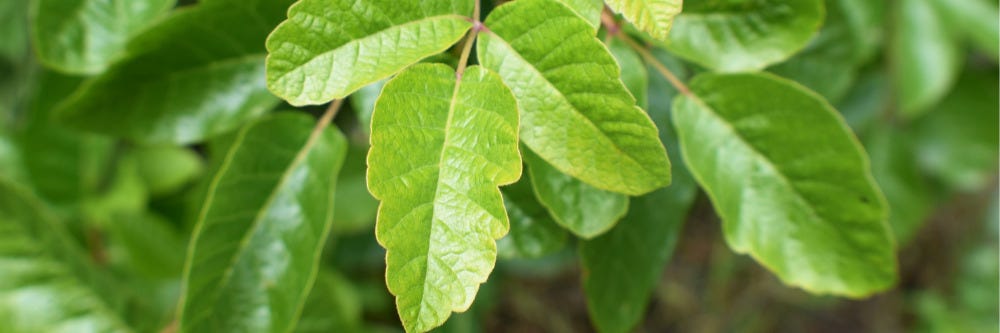
- The way to tell the difference between poison oak and poison ivy is that poison oak leaves are shaped similar to an oak leaf (though it's not a member of the oak family). They have duller-looking green leaflets and are more uniquely lobed or toothed than poison ivy leaves. When mature, the older leaflets are duller green than younger leaves, and finally, unlike poison ivy, the leaflets are hairy on both sides.
Use the description and image above to help you identify poison oak on your property. If you are having trouble, contact us, and our lawn care experts will help you properly ID the plant and offer product recommendations to remove the weed.
Inspection
Where to Inspect
Walk along your property to observe where the poison oak is growing and how large it is. Poison oak, like poison ivy, can grow just about anywhere—on trees, on the ground, and on buildings. When inspecting, make sure that you are properly geared up for the occasion. Wear long pants, long sleeves, gloves, and boots, covering as much skin as possible.
What To Look For
Check for what phase of growth the plant is in. Poison oak changed color throughout the year, in spring, the leaves have a tinge of red. As spring progresses, leaves change to bright green, and loose clusters of small greenish-white flowers are produced. As summer progresses, ivory-white fruits will form. In the fall, the leaves will turn golden, then red, and eventually fall off, leaving just the woody stems throughout winter. Unmarked stems are just as effective as the leaves in exposing you to the urushiol oils.
Treatment
Before proceeding with chemical applications, ensure you are properly prepared for the occasion. We recommend that you wear long pants, long sleeves, gloves, and boots, covering as much skin as possible because you not only do not want poison oak on your skin, you don't want to get chemicals on you accidentally.
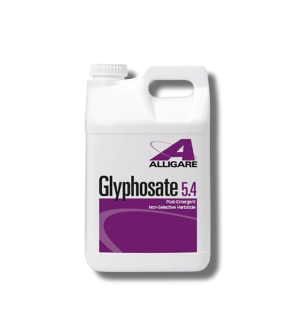
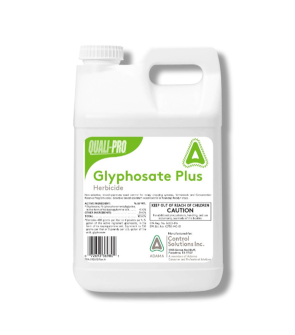
The best strategy for eliminating poison oak is to use chemical herbicides. Use a non-selective herbicide like Glyphosate, which will easily kill this plant. Apply the chemical treatment after the fruit has formed but before the leaves have changed color.
Step 1: Mix and Apply Glyphosate
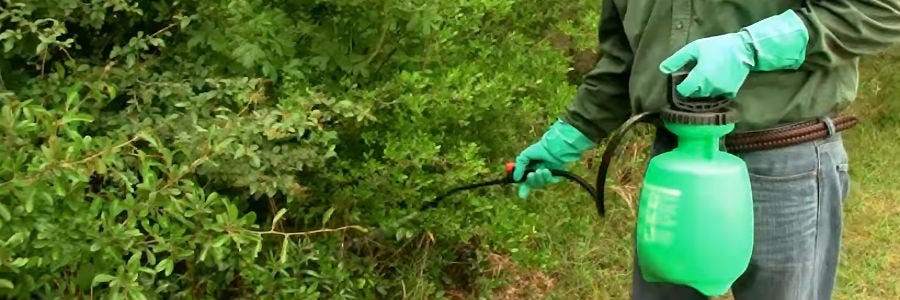
Prepare an herbicide spray mix of Glyphosate for a pump sprayer. According to the label, the application rate for a 2% solution is 4 to 5 quarts of Glyphosate per 3 to 40 gallons of water per acre. Complete control of poison oak will take multiple retreatments every two weeks. Fall treatments must be applied before leaves lose their green color.
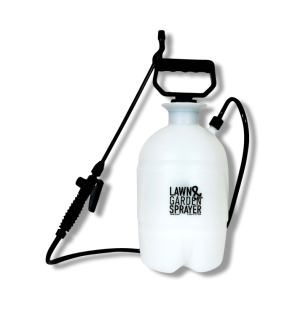
Fill your backpack or pump sprayer halfway with the required amount of water, then add the measured amount of Glyphosate and fill the rest of the way with the remaining half of water. Close the sprayer tank lid and agitate until evenly mixed.
Sprays must contact the leaves to be effective. However, care must be exercised when using Glyphosate since most shrubs, garden plants, and other desired plants that come in contact with the herbicide will be killed. Glyphosate may not eliminate poison oak from a single treatment, so you may need to make follow-up applications until the poison oak has been killed.
Prevention
If you successfully kill the poison oak, you don't want it to come back. Follow the listed preventative measures below to ensure poison oak does return:
- Monitor your yard closely to check if poison oak returns. This should be done especially in the spring and summer when poison oak grows.
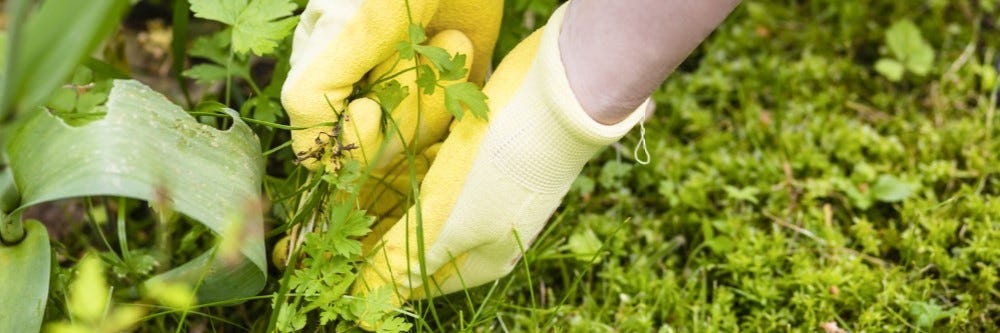
- If patches begin to pop up, spray them with herbicides or yank them. Again, be careful and use gloves when hand-pulling poison oak, and wash the gloves afterward.
Key Takeaways
What Is Poison Oak?
- Along with poison ivy and poison sumac, poison oak is another one of those noxious invasive plants that you may run into while hiking or enjoying the outdoors.
How to Get Rid of Poison Oak
- Our top recommendation to get rid of poison oak is a post-emergent treatment of Glyphosate.
Prevent Poison Oak Reinfestation
- Keep poison oak from returning by monitoring your yard closely and killing or pulling out any young poison oak plants that may be growing.