


Gain access to personalized product screening, the best pricing, rewards, and more!
Create An Account, Or Sign In.
Most Effective Products
Pigweed Control: How to Get Rid of Pigweeds
This page is a general DIY guide for controlling pigweed. Using the products and methods suggested, you will get control of pigweed. Follow this DIY article and use the recommended products; we guarantee 100% control of pigweed.
Pigweed, part of the diverse amaranth genus, represents some of the most adaptable and fast-spreading weeds throughout the United States. This family of plants includes both cultivated grain crops and several species regarded as weeds.
In certain settings, like agriculture, pigweed earns its bad reputation quickly. These summer annuals can race through their life cycle with incredible speed by sprouting, growing, flowering, setting seed, and dying all within a single frost-free season. Their timing alone gives them an edge, but it's their toughness that makes these broadleaf weeds really stand out.
These plants can also easily handle drought, soaking up nutrients whenever they are available, and shoot upward rapidly to avoid being shaded out. In warm-seasoned crops, pigweeds become fierce competitors, and their ability to produce massive amounts of seeds ensures they will be back year after year. Adding to the challenge, many pigweed species have developed resistance to certain herbicides, allowing them to flourish more easily.
And beyond this, pigweed brings even more concerns. Some species are toxic to livestock, making them a risk in pastures, and their pollen is notorious for sparking allergic reactions in people. So while pigweed might have a few edible perks, its impact on crops, animals, and human health gives growers plenty of reasons to keep a close eye on it or simply to eradicate these plants with the products in this article.
Identification
Before proceeding with a treatment program, you need to be certain that the weed infesting your property is pigweed. Careless identification can lead to using the wrong treatment methods, which can waste time and money. To know what pigweed looks like, examine the following characteristics.
Among the pigweed species you’re most likely to come across are prostrate pigweed, redroot pigweed, smooth pigweed, and tumble pigweed. Each of these species has its own distinct features, so accurate identification is key to choosing the most effective herbicide.
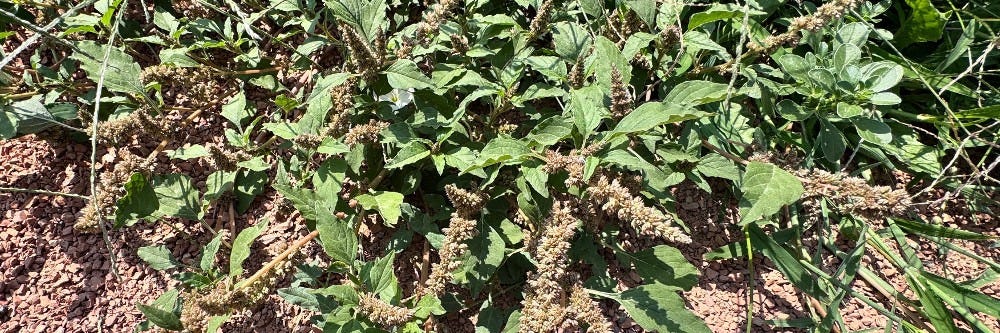
An example of redroot pigweed can be seen above.
- Prostrate pigweed is a low-growing, sprawling plant with smooth, often reddish stems that form circular mats up to 3 feet across. It's small, spoon or spatula-shaped leaves are alternate, smooth, and dull to shiny green, often with a whitish edge and tiny spine-like tip. Male and female flowers occur on the same plant in dense, greenish clusters in the leaf axils rather in terminal spikes, each flower lacking petals and enclosed by small sepals and bracts. The weed produces dry, smooth fruits containing black, round seeds about 1 to 1.7 mm long. It's flattened growth habit, spoon-shaped leaves, and reddish, succulent stems distinguish it from other pigweed species. Also called mat amaranth, spreading amaranth, and tumbleweed amaranth.
- Redroot pigweed is an erect, coarse, and often hairy annual weed that typically grows 3 to 6 feet tall. It's easily recognized by its red taproot and often reddish lower stems. The plant has alternate, oval to lance-shaped leaves with wavy margins and white veins on the underside. Small, greenish flowers are produced in dense terminal spikes, with male and female flowers on the same plant. The fruit is about 1.5 to 2 mm long, each containing a single smooth, shiny black to dark brown seed. Other names for this weed are common amaranth, careless weed, redroot amaranth, rough pigweed, or common tumbleweed.
- Smooth pigweed is an erect summer annual weed that typically grows 3 to 6 feet tall. It's green to red, rounded stems are ribbed and sparsely hairy, with alternate leaves that vary from oval to diamond or egg-shaped with a sharp tip and have wavy margins. The leaves may show V-shaped variegation and are generally smooth and non-hairy underneath. Their petioles are shorter than or equal to the leaf blade size. The plant produces long, branched terminal spikes of small reddish flowers, which are less dense than redroot pigweeds. After flowering, it forms small, bladder-like utricles that release shinny, flattened seeds when dry. It's also known as green amaranth, careless weed, red amaranth, slender pigweed, slim amaranth, or smooth amaranth.
- Tumble pigweed is a low-growing summer annual weed that grows up to 3 to 4 feet tall with pale green to whitish, usually hairless stems that branch to form a low, bushy appearance. It's alternate leaves are light green, ovate to spatulate with wavy margins and notched tips, and are typically no longer than 2 inches. The leaves may appear oblong to spatula-shaped on flowering branches, and petioles are shorter or equal to the leaf blade size. Small greenish flowers grow in dense clusters from the leaf axils, each with three spiny bracts that are two to four times longer than the sepals. Mature plants are more open than most pigweed species and produce small, round, shiny black seeds. Most common names for this weed are white pigweed, common tumbleweed, tumbleweed, pigweed amaranth, white amaranth, or white pigweed.
Use the description and image above to help you properly identify pigweed on your property. If unsure, contact us and send a photo of your weed through email or in-person at one of our store locations so we can help you identify the weed and suggest treatment options.
Inspection
Once it is confirmed that you are dealing with pigweed, you can move on to inspection. During this phase, you will locate areas where pigweed thrives and observe the conditions allowing it to grow. This information will help you in knowing where to focus your herbicide application.

An image of slender pigweed is seen above.
Where to Inspect
Pigweed grows in warm, open, sunny areas with disturbed soil, such as vegetables, row crops, farms, crop fields, vineyards, pastures, ditch banks, orchards, roadsides, landscape areas, lawns, and field nurseries.
What to Look For
As heat-loving summer annuals, pigweeds will germinate when soil temperatures range between 86 to 104 degrees Fahrenheit from May to June.
Pigweed seeds can sprout at different times over several years, increasing their chances of survival, and they can remain viable in the soil for up to two years before emerging, depending on how deeply they are buried.
Flowering begins in June or July, continuing through November, with peak bloom around August, and seeds develop from August to October.
The flowers are small, greenish, and not very noticeable, forming mainly at the tips of stems and branches, though some species may appear at the junctions of leaves and stems (axils) on upper branches.
Treatment
Once you have determined you have pigweed and found where is it present in your yard you can proceed with treatment. Be sure to wear the proper personal protective equipment (PPE) when handling and mixing herbicides.
Pigweeds are best controlled with herbicides containing glyphosate, dicamba, 2,4-D, metolachlor, atrazine, or flumioxazin. Typically, early post-emergent control shows the best results when pigweed is less than 3 inches tall.
Step 1: Apply Herbicide
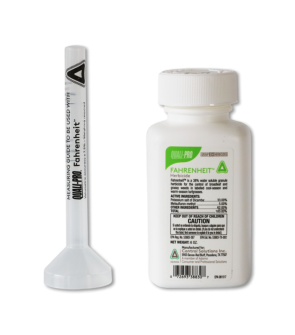
 Fahrenheit Herbicide is a selective, post-emergent water dispersable herbicide that eliminates broadleaf and grassy weeds in warm-seasoned turf.
For spot applications, use 0.2 oz. of Fahrenheit Herbicide per 1 gallon of water per 1,000 sq. ft.
2,4-D Amine Selective Post-Emergent Herbicide is a concentrate herbicide that controls broadleaf weeds, vines, and brush in crops, pastures, ornamental turf, and more.
To make spot treatments in cool-seasoned turf, apply 1/4 pint of 2,4-D Amine Selective Post-Emergent Herbicide in 3 gallons of water.
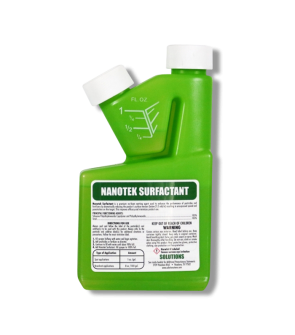
While these herbicides are effective on their own, we recommend adding a non-ionic surfactant such as Nanotek to enhance their performance against weeds.
You will need to mix 1 oz. of Nanotek Surfactant per 1 gallon of spray solution.
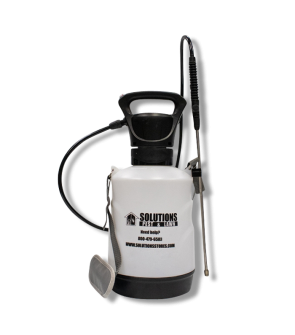
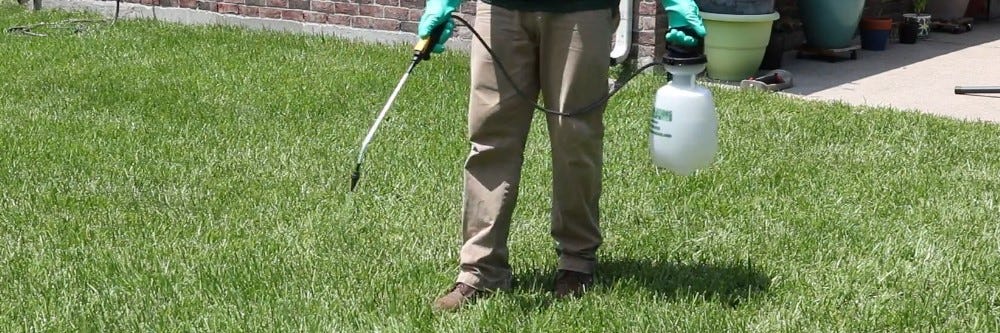
These products will need to be mixed with water in a handheld pump sprayer or backpack sprayer.
Adjust your sprayer nozzle to a fan or cone spray pattern. Next, spray the top and bottom of weed leaves until wet, but not to the point of runoff.
Be sure to spray on calm days when temperatures are not too hot and when wind speeds are low to minimize drift. When using Fahrenheit Herbicide, do not apply if temperatures exceed 85 degrees Fahrenheit.
Do not allow people and pets to return to treated areas with 2,4-D Amine Selective Post-Emergent Herbicide until 48 hours have passed after application.
Keep people and pets away from treated areas with Fahrenheit Herbicide until 24 hours have passed after application.
Step 2: Retreat If Needed
 Following proper application as instructed on the label, you will notice the weeds turning yellow and dying.
If needed, follow up with another application. Fahrenheit Herbicide can be reapplied 4 to 6 weeks after application.
2,4-D Amine Selective Post-Emergent Herbicide can be reapplied in 21 to 30-day intervals after application.
Prevention
Once you have removed pigweed from your property, it’s important to take steps to keep it from coming back. Implement the following preventive measures to help stop pigweed from re-establishing.
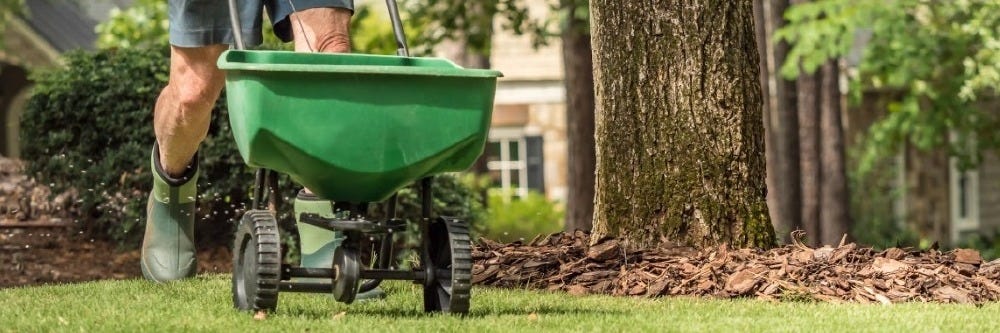
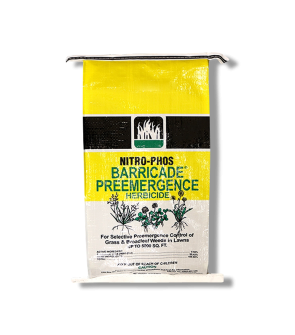
- The most effective way to prevent pigweed is to start with a pre-emergent herbicide application, such as Barricade Pre-Emergent Herbicide to stop seeds from sprouting. Barricade Pre-Emergent Herbicide is an easy-to-use granular pre-emergent that controls broadleaf and grassy weeds during the seedling stage and stops them from emerging in turf and landscape ornamentals. Pre-emergent herbicides like Barricade should be applied in early to mid-spring, before soil temperatures reach 55 to 60 degrees Fahrenheit at a 2-inch depth for several consecutive days. This timing ensures the herbicide barrier is in place before pigweed seeds begin to germinate. Depending on your turf, apply 1.5 to 4 pounds of Barricade Pre-Emergent Herbicide per 1,000 sq. ft. For landscape ornamentals, use 2.5 to 5.94 pounds of product per 1,000 sq. ft. Spread the granules evenly across the treatment area with a push or broadcast spreader. After application, it's important to water in the granules with 1/2 inches of irrigation or rainfall to activate it and move the product into the upper soil layer where pigweed seeds are located.
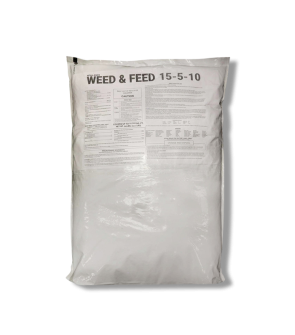
- After the pre-emergent is in place, focus on maintaining dense plant or turf cover to reduce open soil where pigweed could establish. One way to do that is to use a slow-release granule fertilizer like Solutions 15-5-10 Weed & Feed Fertilizer with Trimec. This unique product is a granular fertilizer that slowly releases nutrients into the soil and controls emerged weeds like pigweed at the same time of application. A general application will use 3.2 to 4 pounds of Solutions 15-5-10 Weed & Feed Fertilizer with Trimec per 1,000 sq. ft. Wait until 1 to 2 days have passed after application, then thoroughly irrigate the treated area.
- Rotating between crops with different planting and harvest times or canopy structures disrupts the pigweed life cycle and helps prevent herbicide resistance buildup. Additionally, using crop covers can suppress pigweed emergence by blocking sunlight and reducing soil disturbance.
- Mowing is an important strategy in turfgrass and non-crop areas. Regular mowing helps prevent pigweed from flowering and producing seeds, which can quickly multiply and spread. Keeping grass dense and healthy also shades the soil surface, limiting the light that pigweed seeds need to sprout.
Key Takeaways
What is Pigweed?
- Pigweed is an aggressive, fast-growing, summer annual broadleaf weed that produces a large number of seeds.
How to Get Rid of Pigweed
- To permanently get rid of pigweeds, we suggest using Fahrenheit Herbicide or 2,4-D Amine Selective Post-Emergent Herbicide mixed with a nonionic surfactant like Nanotek.
Preventing Pigweed Reinfestation
- To prevent pigweed, you will want to use Barricade Pre-Emergent Herbicide. Maintaining dense turf cover with Solutions 15-5-10 Weed & Feed Fertilizer with Trimec, practicing crop rotation, using crop covers, and mowing regularly further suppresses pigweed growth and prevents it from spreading.