

Gain access to personalized product screening, the best pricing, rewards, and more!
Create An Account, Or Sign In.
Most Effective Products
Horseweed Control: How to Get Rid of Horseweed
This page is a general DIY guide for controlling horseweed. Using the suggested products and methods, you can control horseweed. Follow this DIY article and use the recommended products, and we guarantee 100% control of horseweed.
Horseweed (Conyza canadensis), often referred to as marestail or Canadian fleabane, is a weed that frequently draws attention for all the wrong reasons. It's remarkable seed-producing capacity and rapid growth allow it to spread aggressively, making it a persistent and difficult-to-manage invader in the fall and spring.
This highly resilient broadleaf weed can act as both a winter and summer annual. Not to mention its aggressive growth allows it to outcompete desirable plants for sunlight, water, and nutrients, often reducing growth and yields. Horseweeds adaptability and rapid life cycle mean that infestations can expand quickly, turning a few scattered plants into a widespread issue in a short period.
Adding to the challenge, horseweed is known for its herbicide resistance, especially to glyphosate, limiting the effectiveness of traditional chemical treatments. With its combination of resilience, prolific seed production, and ability to thrive as both a winter and summer annual, horseweed is a formidable thread to healthy crops, turf, and landscapes.
To effectively prevent and control horseweed, use this DIY guide for proven methods and recommended products for fast and reliable results.
Identification
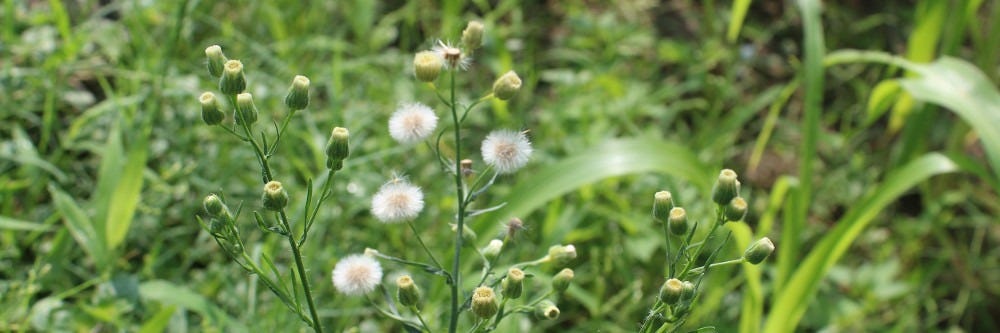
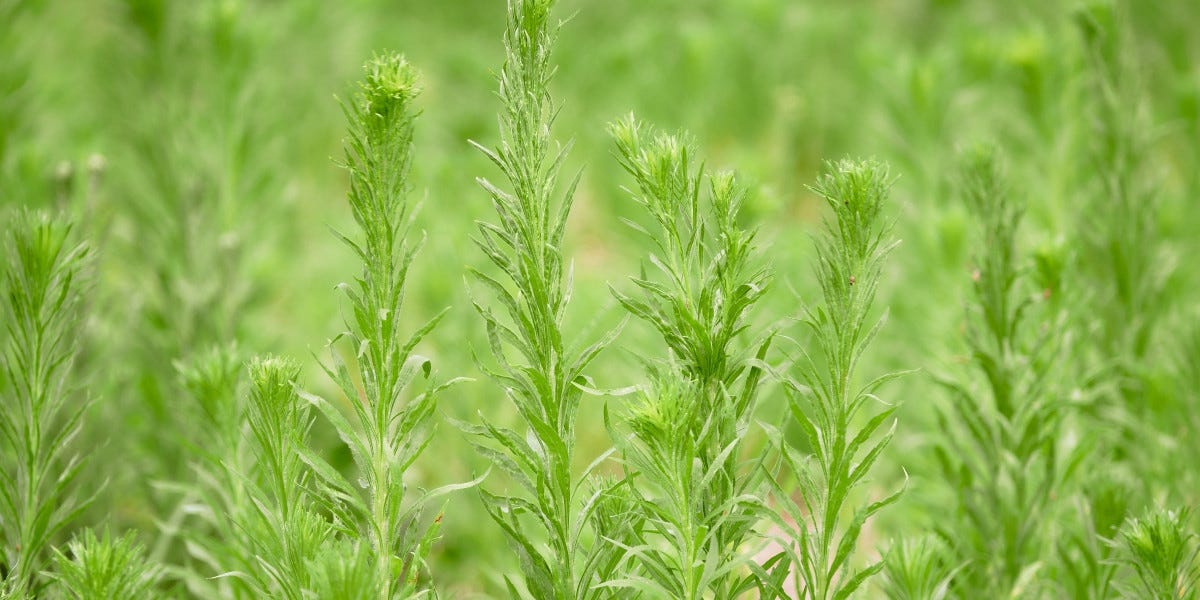
Before you can proceed with a treatment program, you must be sure that your weed is indeed horseweed. Misidentification can lead you to use the wrong treatment products and waste time and money. Below are some characteristics to help you know what horseweed looks like:
- Horseweed is an upright, broadleaf weed that grows 1 to 8 feet tall and has one erect, hairy, slender stalk.
- Seedlings develop as a basal rosette of leaves close to the ground, beginning with cotyledons (which are the first seed leaves that appear after germination) that are about 2 to 3 mm long. These leaves are egg-shaped with toothed margins and gradually become hairy as the plant grows.
- As the plant matures, it produces a single upright stem, and all leaves are sessile, meaning they lack petioles. The mature leaves are alternate, linear, about 4 inches long and 10 mm wide, with entire or more commonly toothed margins. They are hairy, crowded along the stem, and become progressively smaller toward the top.
- At the upper portion of the central stem, many small, inconspicuous flower heads are produced from June to November. Each flower head is about 5 mm in diameter and consists of white to slightly pink daisy-like flowers with a yellow center.
- After flowering, horseweed produces a small fruit (achene) approximately 1 mm long, tapered from base to tip, with numerous small white bristles.
- Horseweed and horsetail are very different plants, even though their name sounds similar. Horseweed is an annual flowering weed with narrow, hairy leaves on a single upright stem and small daisy-like flowers that produce fluffy, wind-dispersed seeds. Horsetail, in contrast, is a non-flowering perennial with hollow, jointed stems and scale-like leaves, reproducing by spores rather than seeds. Despite similar names, horseweed is a broadleaf plant, while horsetail is a fern-like plant with a stiff, brushy appearance.
Use the description above and the images to help you identify horseweed on your property. If you are having trouble, contact us, and we will assist you in properly identifying your weed and offer suggestions.
Inspection
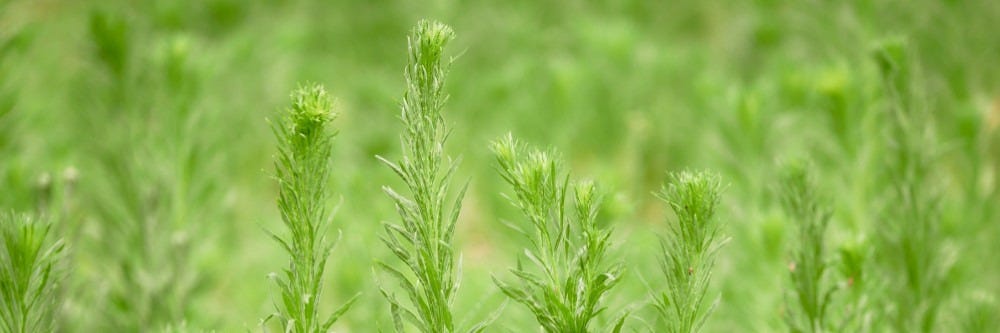
Once you have confirmed that you are dealing with horseweed, you can proceed to inspection. During this phase, you will pinpoint the areas where the horseweed is growing and observe the conducive conditions helping the weed to thrive. This will help you in determining where to focus your treatment applications.
Where to Inspect
Horseweed thrives in disturbed soils, especially where the soil is bare or not heavily shaded. It grows well in full sun and can tolerate poor or compacted soils.
It is commonly found in crop fields, roadsides, highway edges, ornamental landscapes, lawns, vacant lots, construction sites, field edges, fence lines, pastures, ditches, orchards, wetland sites, vineyards, hay fields, grasslands, and between the cracks of pavement areas such as sidewalks.
What to Look For
Horseweed can germinate across a wide window, primarily in the fall and spring, allowing it to act as both a winter and summer annual.
In its winter annual form, seeds that germinate in the fall develop into a basal rosette that survives through the winter. In spring, the plant bolts, producing a single upright stem, and by mid-to-late summer it forms small, daisy-like flowers that later produce wind-dispersed seeds.
Spring-germinating plants grow rapidly and complete their life cycle in a single season.
Treatment
Before mixing and applying pesticides, be sure you are wearing the proper personal protective equipment (PPE).
Horseweed is easier to manage when the plants are still very young, typically less than 2 inches. Control efforts are most effective in late fall and early spring, targeting these plants young plants before they grow larger and become more difficult to eliminate.
We recommend using post-emergent herbicides containing glyphosate, 2,4-D, dicamba, glufosinate, clopyralid, or fluroxypyr for best results against horseweed. In some cases, it can become resistant to glyphosate, as well as some ALS-inhibiting herbicides such as chlorimuron and other sulfonylureas.
Step 1: Mix and Apply Herbicides
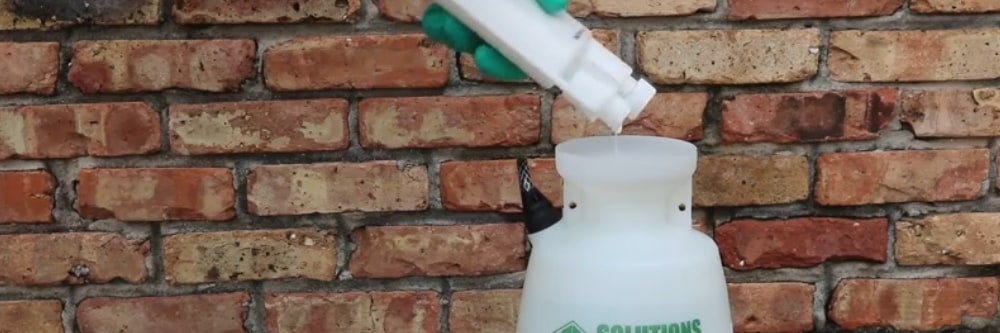
Determine how much herbicide to use by measuring the square footage of the treatment area. Find the square footage by measuring the treatment area's length and width in feet, then multiplying them together (length X width = square footage).
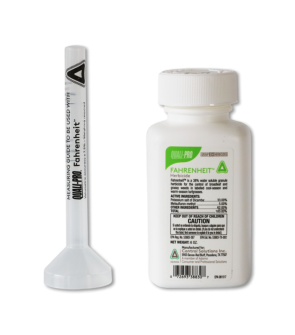
Fahrenheit Herbicide is a water-dispersible granule herbicide containing dicamba and and metsulfuron‑methyl that is used to selectively control broadleaf weeds and certain grassy weeds in established warm‑season turfgrass.
To get rid of horseweed in warm-seasoned turf, use 0.2 oz. of Fahrenheit Herbicide per 1 gallon of water per 1,000 sq. ft.
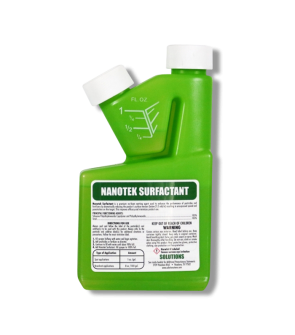
To enhance this product’s efficacy, mix in a surfactant like Nanotek. Nanotek is a non-herbicide product designed to improve the adhesion and penetration of pesticides onto treated surfaces.
Just add 1 fluid ounce per 1 gallon of solution.
2,4‑D Amine Selective Post‑Emergent Herbicide is a selective, post‑emergent herbicide containing 2,4‑D that is used to kill many broadleaf weeds and brush without harming most grasses once they’ve emerged and started growing.
To get rid of horsetail in cool-seasoned turf, mix 1/4 pint of 2,4-D Amine Selective Post-Emergent Herbicide in 3 gallons of water.
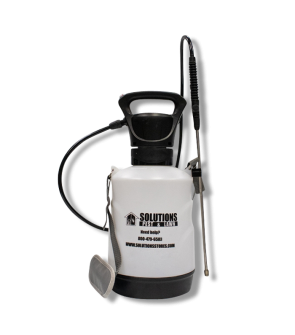
To use either of these products, you will need to mix with water in a handheld pump sprayer or backpack sprayer.
Fill the sprayer with half the amount of water, add the proper amount of herbicide, and pour in the remaining half of the water. Add the surfactant to the spray tank last. Close the tank lid and shake until well-mixed.
Spray the top and bottom of the weed leaves until wet, but not to the point of runoff.
When using 2,4-D Amine Selective Post-Emergent Herbicide avoid applications when temperatures are above 90 degrees Fahrenheit.
For Fahrenheit Herbicide, be aware that spot treatments during temperatures above 85 degrees Fahrenheit may cause temporary growth reduction of St. Augustinegrass.
Step 2: Retreat
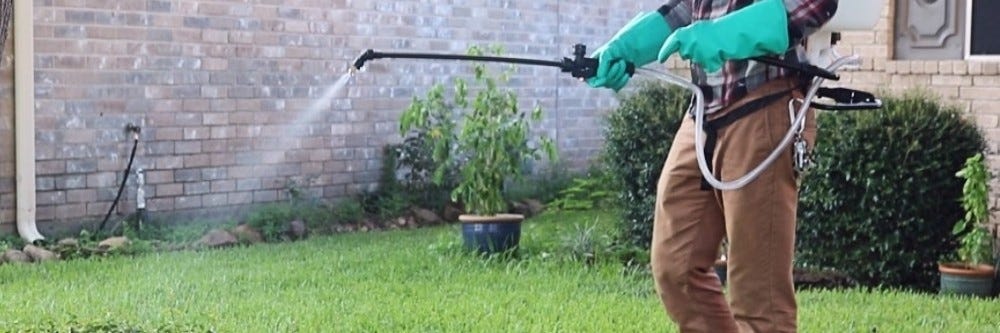
When applied correctly, the targeted weeds will turn yellow and start to die, and additional applications should be made as needed to ensure complete control.
Fahrenheit Herbicide can be reapplied after 4 to 6 weeks following the initial treatment, whereas 2,4‑D Amine Selective Post‑Emergent Herbicide can be reapplied once 30 days have passed since the previous application.
Prevention
 Once horseweed has been removed, taking steps to prevent regrowth is important. The following practices can help stop it from returning.
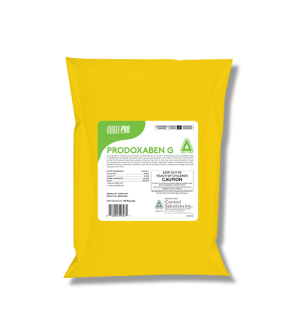
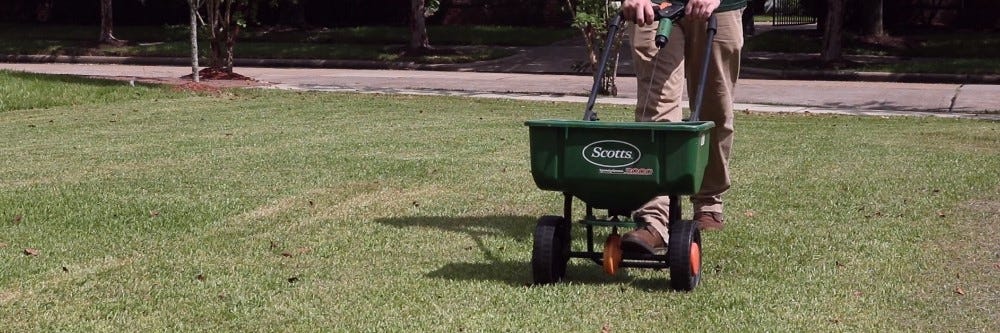
- To stop horseweed from appearing in your yard, apply a pre-emergent herbicide before weed seeds germinate, typically in late summer to early fall for winter annuals, or in early spring for summer annuals. Prodoxaben G Pre-Emergent Herbicide is a selective pre-emergent herbicide that prevents 150 types of grassy and broadleaf weeds from germinating before they grow in established turf, landscape areas, and non-crop sites. Depending on the turf, apply 1.7 to 8.4 pounds of Prodoxaben G Pre-Emergent Herbicide per 1,000 sq. ft. A push or broadcast spreader will be needed. Set the spreader to the recommended rate, walk at a steady pace, and overlap slightly on each pass to ensure full coverage. After spreading, lightly water the area with 0.5 inches of rainfall or irrigation, so the granules move into the soil, creating a protective barrier to prevent weed seeds from germinating.
- Maintaining a dense crop cover or turf reduces bare soil where horseweed seeds can germinate, while crop rotation helps break the weed’s life cycle.
- Tillage is effective because horseweed seeds are very small and require light to germinate, so even lightly burying them in soil greatly reduces germination.
- When controlling horseweed with mowing, the goal is to cut the plants before they produce flowers and seeds. For most situations, this means mowing when plants are still less than 6 to 12 inches tall, depending on how quickly they are growing. The exact height can vary, but the key is to remove the top portion of the plant where flower buds are forming to prevent seed production and reduce the weed population for the next season.
Key Takeaways
What is Horseweed
- Horseweed is a fast-growing, broadleaf weed that produces a basal rosette, a single erect stem, and small daisy-like flowers.
How to Get Rid of Horseweed
- Fahrenheit Herbicide or 2,4-D Amine Selective Post-Emergent Herbicide are excellent for killing horseweed. We also suggest using a non-ionic surfactant like Nanotek Surfactant to aid in your selected herbicide control.
Preventing Horseweed Reinfestation
- To prevent horseweed, apply Prodoxaben G Pre-Emergent Herbicide before seeds germinate, which is typically in late summer to early fall or early spring. Cultural practices such as maintaining dense turf or crop cover, crop rotation, and tillage help reduce germination, while mowing plants under 6 to 12 inches tall before they flower prevents seed production and lowers future weed populations. Combining these methods provides the most effective overall control.