

Gain access to personalized product screening, the best pricing, rewards, and more!
Create An Account, Or Sign In.
Most Effective Products
Casemaking Clothes Moth Control: How To Get Rid of Casemaking Clothes Moths
This page is a general casemaking clothes moth control guide. Using the products and methods suggested, you will get control of casemaking clothes moths. Follow this guide and use the recommended products and we guarantee 100% control of casemaking clothes moth.
Casemaking clothes moths are fabric-destroying infestations similar to the hide and carpet beetle. This pest is very tiny, ranging between 3/8- to 1/2 an inch long from wing tip to wing tip, yet the amount of damage it can create in households and commercial clothing manufacturers can be huge.
Casemaking clothes moths are most commonly found in closets, basements, and attics, wherever clothes and fabrics are, their primary food source. They are very rarely found in the kitchen. In these areas, they look for protein contained in fabric materials called keratin, their primary energy source.
Casemaking clothes moths can become a massive problem for manufacturers and households by destroying clothes and fabrics. They do the most damage to fabrics during the larval stage.
If you have an infestation of casemaking clothes moths in your home or business, you must act quickly before they do a large amount of damage. Follow our guide below to learn more about this pest and the best way to eliminate the casemaking clothes moth by using expert techniques and professional-grade products.
Identification
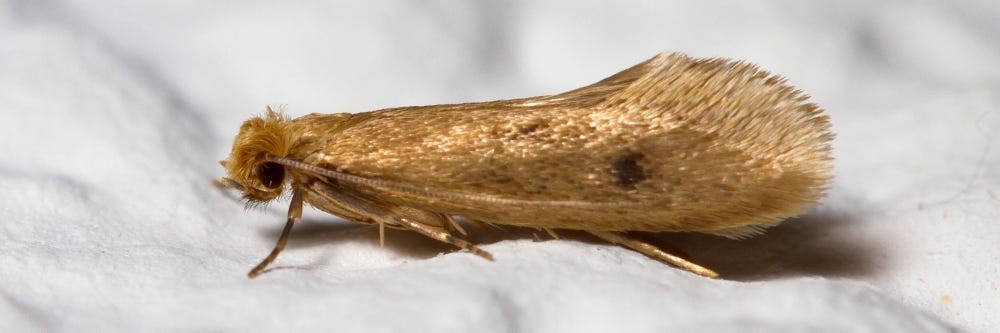
Before proceeding with an active treatment approach, you need to make sure that you’re dealing with a casemaking clothes moth infestation. They might be confused for other pantry pests, but unlike pantry pests, they aren’t found in the kitchen but wherever fabrics and clothes are stored.
- Casemaking clothes moths undergo a complete metamorphosis, which means they have an egg, larvae, pupa, and adult stage similar to that of a butterfly. When they reach adulthood, they do not feed on fabrics and have a short life span. The casemaking clothes moths do the most damage during the larval stage when they are small cream-colored grubs with brown heads.
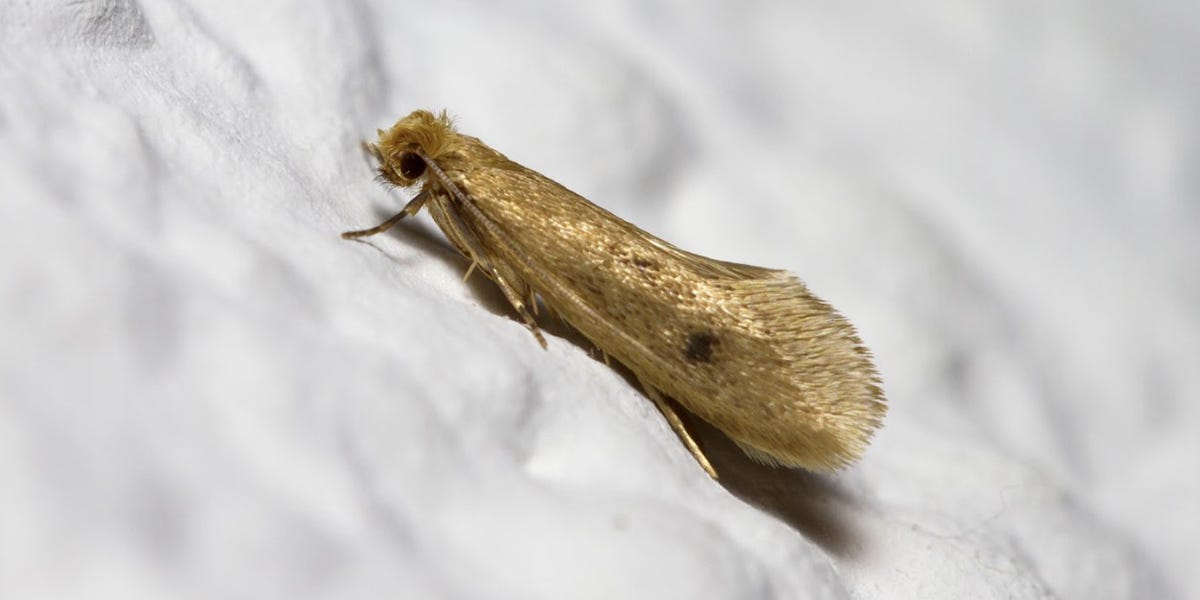
- During the adult stage, they are tan or straw-colored and have narrow wings with fringed hairs at the end. The wings of young adult moths may have dark spots. Their heads are coppery or reddish-gold with tufts of hair on top.
Use the image and description above to correctly identify a casemaking clothes moth in your structure. If you are unsure, contact us (preferably with a high-quality closeup image of the pest), and we will try to help you identify it.
Inspection

Before you can treat, you need to know where the casemaking clothes moths are and the items or places they infest. During the inspection, you will search these areas for casemaking clothes moth activity.
Where To Inspect
Search in storage areas such as closets, basements, attics, and wherever there may be clothes and fabrics, their main food source. Also, search in undisturbed areas of the home where there is little light, since these Moths like dark and secluded areas.
What To Look For
You’re looking for adult casemaking clothes moths, their larvae, and signs of their presence. A clothes moth infestation is often detected in damaged fabrics by the presence of silken webs spun by the larvae, sometimes producing only scattered patches of silk. Damage is accompanied by copious webbing tubes or sheets, which frequently include large amounts of frass (their pellet-like feces).
Excessive shedding of fur clothes is also a sign of a casemaking clothes moth infestation. Once you have determined the infestation, it is time to begin treatment.
Treatment
Once you have confirmed the activity of casemaking clothes moths, it is time to begin treatment. Remember to read all product labels, follow the application instructions on these labels, and stay safe by wearing personal protective equipment (PPE).
We recommend a combination of products, including Pro-Pest Clothes Moth Trap, Supreme IT Insecticide, and Pyrid Aerosol.
Step 1: Preliminary Cleanup
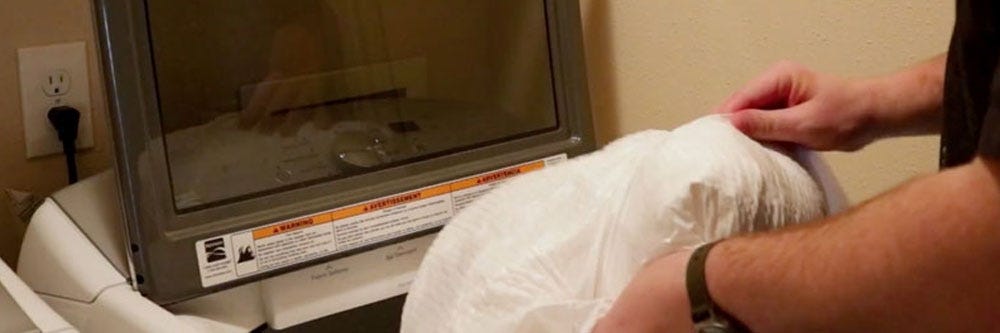
Vacuum your home well and regularly when you have an infestation. You should also clean garments to set the stage for control and make the environment unfriendly to these moths.
Things like reducing humidity and moisture will go a long way in reducing their population. Dry cleaning your clothes or washing and drying in high heat is a good method of killing moths that may be hiding inside of clothing and necessary for treatment for fabrics and clothes that are infested.
Step 2: Apply Pro-Pest Clothes Moth Traps
Pro-Pest Clothes Moth Traps are glue traps that use pheromones to attract and trap male Moths, reducing their population.
To use this product simply remove the release paper to expose the glue and fold into a tent. The trap already has pheromones inside all you need to do is placed it in places of high moth activity. Place 1 to 2 traps in the infested rooms. You can also use a string and tie it from wall to wall and place the trap in a string to place it high up in the room.
The traps remain effective for 3 months and should be monitored closely during the treatment process. Replace with a fresh trap as needed every 12 weeks until there is no further activity.
Step 3: Spray Pyrid Aerosol
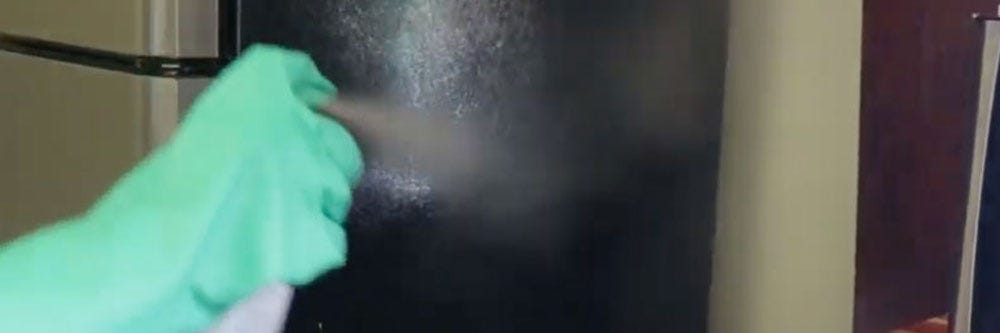
Pyrid is another powerful insecticide that can be used as a space spray to kill casemaking clothes moths in storage places. Pyrid comes in a ready to use aerosol spray.
To use, simply apply in cracks and crevices focusing on the rooms or storage places where the infestation took place.
Then you will do a space treatment by spraying the infested room at the rate of 5-10 seconds per 1,000 cubic feet.
Step 4: Apply Supreme IT Insecticide
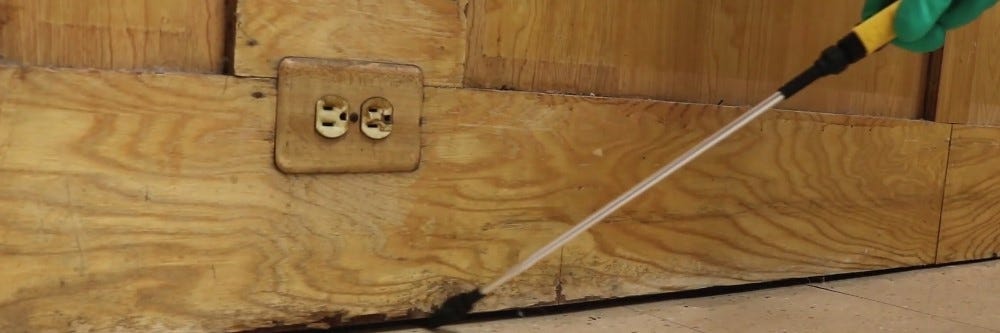
Supreme IT is an effective insecticide that kills, repels, and prevents Casemaking Clothes Moth infestations.
The product can stay effective for up to 90 days where applied. Mix 1 ounce of Supreme IT with a gallon of water inside a pump sprayer to cover an area of 1,000 sq. ft.
Apply as a crack and crevice treatment or spot treatment indoors. Spray along baseboards, corners, storage areas, and behind and under furniture, especially where the infestation took place.
Do not let people or pets enter areas sprayed until the spray has dried.
Prevention
After you have treated for Casemaking Clothes Moths and stopped the infestation, you will need to enact preventative measures to prevent future potential infestations.
- Start by properly storing fabrics and clothes in tight-fitting plastic containers.
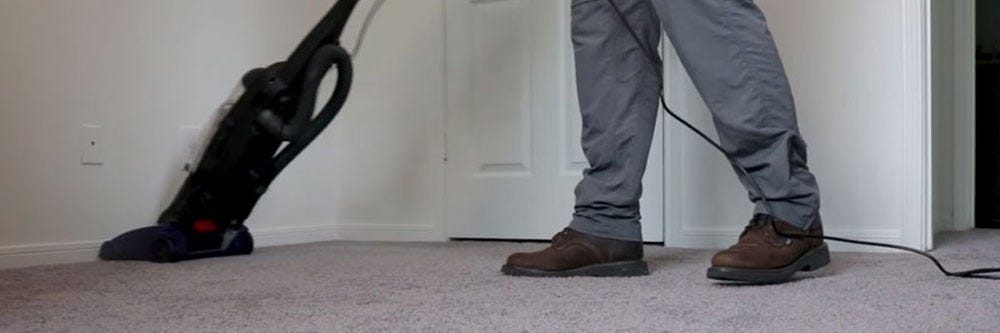
- Remember to have your furniture and rugs professionally cleaned regularly. Also, remember to regularly clean up your home and vacuum to remove pet hair, dust, and debris. And finally, set up Pro-Pest Clothes Moth Traps around your home in areas prone to infestation to monitor Casemaking Clothes Moths activity.
Key Takeaways
What are Casemaking Clothes Moth
- Casemaking clothes moths are pests that can significantly damage fabrics in closets and other areas where clothing is stored.
How to Get Rid of Casemaking Clothes Moth
- Our recommended products for eliminating a casemaking clothes moth infestation is a combination of Pro-Pest Clothes Moth Traps, Pyrid Aerosol, and Supreme It Insecticide.
Prevent Casemaking Clothes Moth Reinfestation
- Prevent future infestations by keeping your home neat and clutter-free and storing fabrics in tight-fitting containers. Also, set up traps during and after the infestation to monitor casemaking clothes moths' activity.