



Gain access to personalized product screening, the best pricing, rewards, and more!
Create An Account, Or Sign In.


Your Product Analysis:
Home
Grass
Property
Kids or Pets
You Need:
$5.00
For your -- home1
Your Cost:
Your Cost:
$5.00
Price per
application2
application2
GOWAN
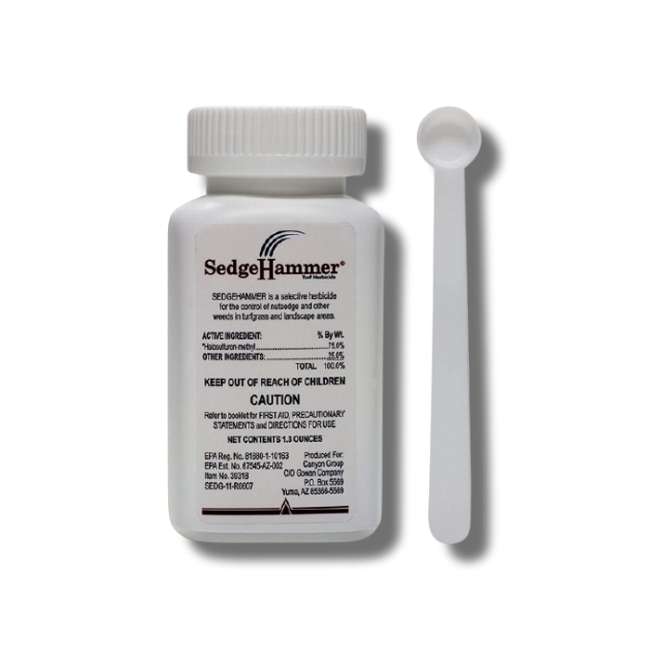
Sedgehammer Herbicide
Sedgehammer Herbicide is an effective selective, post-emergent herbicide that targets and eliminates difficult-to-control weeds and sedges, like nusedge, in turfgrass and landscape areas.
As low as
$59.25
Only %1 left
SKU
Sedgehammer Herbicide Product Page
Min : 59.25 - Max : 59.25


Price as of
10/20/26
10/20/26
Price Transparency
See how our pricing compares to other online retailers for this item.
Sedgehammer Herbicide, manufactured by Gowan, is a specially designed post-emergent herbicide that controls numerous nutsedge and broadleaf weeds in residential and commercial turf, non-crop sites, and other landscaped areas.
This herbicide contains Halosulfuron-methyl 75.0%, an active ingredient that inhibits weed growth and kills them down to the root system. Due to its selective formulation, Sedgehammer controls tough weeds like sedges, kochia, and common groundsel without injury to turf and woody ornamentals.
Sedgehammer Herbicide is a long-lasting systemic herbicide that offers a reliable yet economic solution against weeds, especially sedges in lawns, ornamental turfgrass, and landscaped areas. This product ensures a safe solution for homeowners, landscapers, and groundskeepers suffering from persistent sedge and weed issues. Not to be confused with Sedgehammer Plus Nutsedge Killer, which comes as a single-use packet and contains a surfactant.
Tools Needed
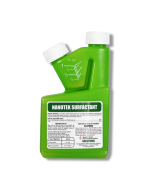
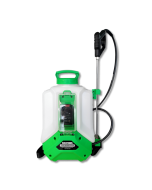
It may be applied with a handheld pump sprayer, backpack sprayer, or spray rig. A nonionic surfactant must also be used with this product. This will need to be purchased separately.
A measuring scoop is provided.
How to Use
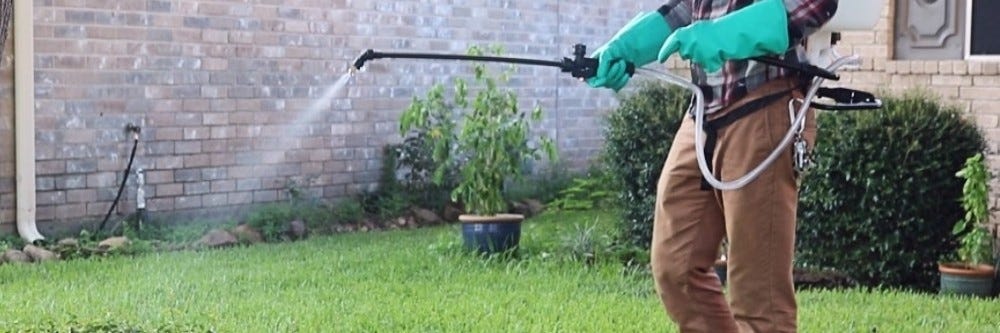
- Step 1: For best results, do not mow turf for 2 days before or 2 days after application. Determine how much Sedgehammer to use by measuring the square footage of the treatment area. Find the square footage by measuring the treatment area length and width in feet, then multiply them together (length X width = square footage). For acreage, take the square footage and divide it by one acre (square footage / 43,560 sq. ft. = acres). A general spot treatment will use 0.9 grams in 1 to 2 gallons of water per 1,000 sq. ft. Add 2 teaspoons (0.3 fl. oz.) of nonionic surfactant per gallon of water. Refer to the product label for specific application instructions. No more than 4 applications can be made per year.
- Step 2: To mix, fill your selected sprayer with half the amount of water and pour in the measured amount of product. At this point, add your nonionic surfactant into the tank as well. Pour in the remaining half of water into the tank. Mix or shake thoroughly for at least two minutes to ensure that the water-soluble bag and ingredients are completely dispersed.
- Step 3: Spray the target weeds thoroughly and wet the entire leaf surface of the undesirable plants. Avoid excessive overlap of the spray. A second treatment can be applied 6-10 weeks after the initial treatment.
Where to Use
Sedgehammer Herbicide can be used on weeds in established lawns, ornamental turfgrass, and landscaped areas. It may also be applied to commercial and residential turf and on other non-crop sites including airports, campgrounds, cemeteries, fairgrounds, fence rows, fallow areas, fuel storage areas, golf courses, landscaped areas, established woody ornamentals in landscape areas, lumberyards, public recreation areas, race tracks, residential property, rights-of-way, roadsides, school grounds, sod or turf seed farms, sports fields, tank farms, and tennis courts.
When to Use
Apply when weeds are present in established turf and other listed foliage. Avoid applications when rainfall is forecasted to occur within 4 hours after application.
This product can be used on seeded, sodded, or sprigged well-established turfgrass. Before application, allow the turf to develop a good root system and uniform stand.
Avoid applying Sedgehammer when turfgrass or nutsedge is under stress, as this may result in turf injury and poor nutsedge control.
Safety Information
Sedgehammer Herbicide is safe to use around children and pets when applied according to the product label instructions. Always wear the proper personal protective equipment (PPE) when mixing and applying this product.
Keep people and pets away from treated areas until the spray solution has dried.
Special Information
Do not apply as an over-the-top spray to desirable flowers, ornamentals, vegetables, shrubs, or trees.
| Restricted Use | No |
|---|---|
| Shipping Restrictions | AK, IL, VA |
| Availability | Online |
| Signal Word | CAUTION |
| Keith's Pro Tip | "The best way to ensure weeds and sedges do not return is to follow regular lawn care such as mowing, pruning overgrown foliage, raking fallen plant debris, and adjusting watering practices to best suit your turf and ornamental needs." |
| Time to Kill | Sedgehammer Herbicide will control weeds within 2 weeks. |
| Chemical Type | Herbicide |
| Formulation | Water Dispersible Granule (WDG) |
| Application Methods | Broadcast Spray, Spot Treatment |
| Product Drawbacks | When turfgrass or nutsedge is under stress there is the change of turf injury and poor nutsedge control. |
| Active Ingredient | Halosulfuron-methyl 75.0% |
| Application Equipment | Backpack Sprayer, Pump Sprayer, Spray Rig |
| Mix Rate | A general spot treatment will use 0.9 g of Sedgehammer Herbicide in 1 to 2 gallons of water per 1,000 sq. ft. Add 2 tsp (1/3 fl oz) of nonionic surfactant per gallon of water. |
| Use Sites | Outdoors |
| Yield | One full bottle (1.33 oz.) makes approximately 40 gallons of finished solution. |
| EPA Registration No. | 81880-1-10163 |
| Shelf Life | Sedgehammer Herbicide will last for 3 years when stored in a cool, dry location away from moisture. |
| Comparable Products | Sedgemaster, Halo 75WDG Select, |
| Children or pets? | No |
| Property Characteristics | None |
| Availability | Online |
| Restricted Use | No |
| Brand | GOWAN |
| Keith's Pro Tips | "The best way to ensure weeds and sedges do not return is to follow regular lawn care such as mowing, pruning overgrown foliage, raking fallen plant debris, and adjusting watering practices to best suit your turf and ornamental needs." |
| Product Drawbacks | When turfgrass or nutsedge is under stress there is the change of turf injury and poor nutsedge control. |
| Target Pests | Annual Kyllinga, Burcucumber, Common Cocklebur, Common Lambsquarter, Common Milkweed, Common Sunflower, Corn Spurry, Rice Flatsedge, Philadelphia Fleabane, Galinsoga, Common Groundsel, Common Pokeweed, Common Ragweed, Giant Ragweed, Honeyvine Milkweed, Jimsonweed, Green Kyllinga, Kochia, Ladysthumb, Venice Mallow, Tall Morningglory, Ivyleaf Morningglory, Wild Mustard, Redroot Pigweed, Smooth Pigweed, Purslane, Wild Radish, Shepherds Purse, Pennsylvania Smartweed, Sedge, Purple Nutsedge, Yellow Nutsedge, and Velvetleaf. |
| Application Equipment | Backpack Sprayer, Pump Sprayer, Spray Rig |
| Application Methods | Broadcast Spray, Spot Treatment |
| Active Ingredient | Halosulfuron-methyl 75.0% |
| Product Type | Herbicide |
| Formulation | Water Dispersible Granule (WDG) |
| Application Rate | A general spot treatment will use 0.9 g of Sedgehammer Herbicide in 1 to 2 gallons of water per 1,000 sq. ft. Add 2 tsp (1/3 fl oz) of nonionic surfactant per gallon of water. |
| Shelf Life | Sedgehammer Herbicide will last for 3 years when stored in a cool, dry location away from moisture. |
| Yield | One full bottle (1.33 oz.) makes approximately 40 gallons of finished solution. |
| Use Sites | Outdoors |
| Time to Kill | Sedgehammer Herbicide will control weeds within 2 weeks. |
| Comparable Products | Sedgemaster, Halo 75WDG Select, |
| EPA Registration # | 81880-1-10163 |

*Price does not include freight. We guarantee our rate plus shipping will be less than anyone else's price.