

Gain access to personalized product screening, the best pricing, rewards, and more!
Create An Account, Or Sign In.
Most Effective Products
Palmer Amaranth Control: How to Get Rid of Palmer Amaranth
This page is a general Palmer amaranth control guide. The suggested products and methods can control Palmer amaranth in your property. Follow this guide and use the recommended products, and you will have 100% control over Palmer amaranth.
Palmer amaranth, also known as Palmer pigweed, carelessweed, or dioecious amaranth, is a fast-growing and aggressive broadleaf weed that poses a serious threat to farmers and homeowners alike. This invasive weed spreads rapidly and develops resistance to many common herbicides, making it one of the toughest weeds to control in agricultural fields and yards.
Originally native to the southwestern United States, Palmer amaranth has expanded its range to the southern, eastern, and central regions of the country. Thanks to its adaptability to various environments, it has become a widespread problem, especially in crop fields, pastures, and even residential areas.
One of the biggest challenges with Palmer amaranth is its prolific seed production and rapid growth rate, which can lead to significant crop yield losses and costly weed management efforts. Because it spreads so aggressively, even a small infestation can quickly become unmanageable.
Despite these challenges, effective Palmer amaranth control is possible. With proper timing, targeted herbicides, and integrated weed management strategies, homeowners can reduce the impact of this resilient weed. In this DIY guide, we’ll walk you through proven methods to identify, control, and prevent Palmer amaranth from taking over your land.
Identification
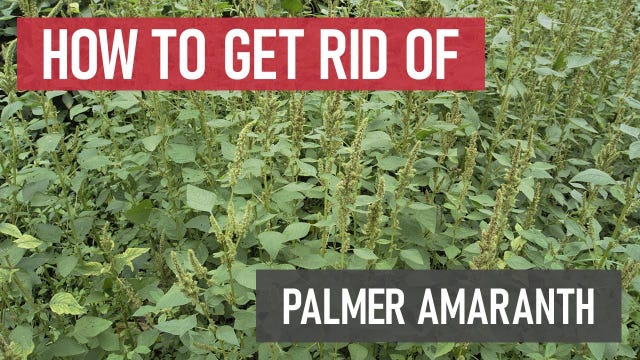
Before you can proceed with a treatment program, you must be sure that your weed is indeed palmer amaranth. Misidentification can lead you to use the wrong treatment products and waste time and money. Below are some characteristics of palmer amaranth to aid in identification:
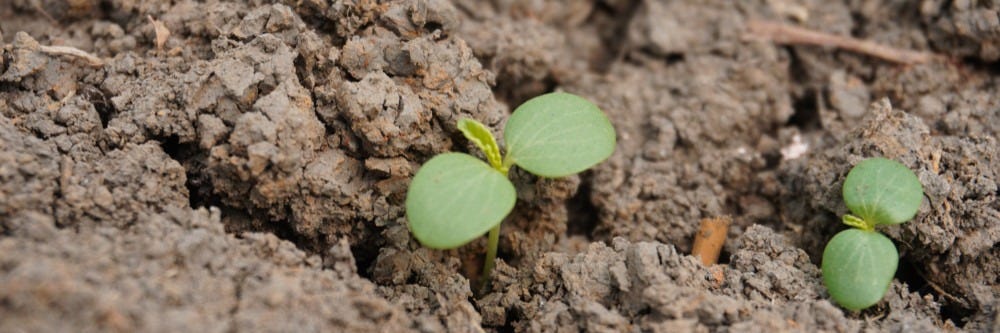
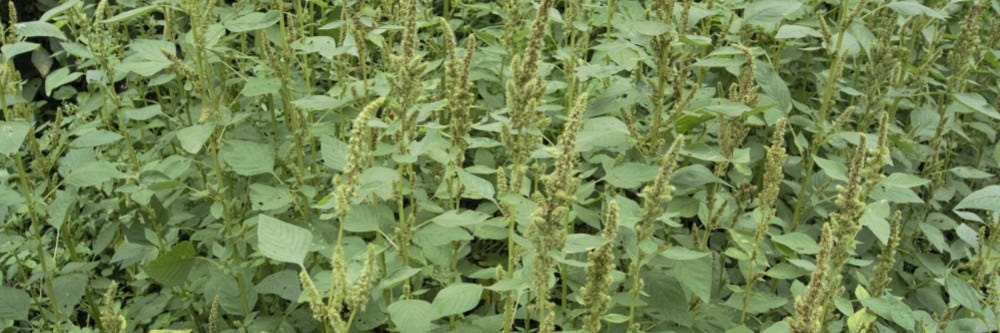
- Palmer amaranth is an annual broadleaf weed that grows up to 6 to 8 feet tall, and even higher at 10 feet or more occasionally. The plant has smooth, hairless stems that are green to reddish in color, and its leaves are arranged alternately along the stem.
- The leaves are ovate to diamond-shaped with long petioles often longer than the leaf blade itself. At the tip of each leaf, there is a small, sharp point. Occasionally, the leaves exhibit a distinct white or purple V-shaped variegation near the base, though this is not always present.
- Palmer amaranth seedlings have long, narrow, lance-shaped cotyledons that often display reddish undersides and are smooth and hairless. As the plant grows, the first true leaves develop, which are smooth-edged, oval to lance-shaped, slightly longer than the cotyledons, and may show a subtle reddish or purplish tint along the veins or stems. The seedling stems are slender and hairless.
- From July to November, it produces male and female flowers on separate plants. The inflorescences consist of long, terminal flower spikes that can reach 2 to 3 feet or more in length. Male flower spikes are generally softer to the touch and contain small, yellow anthers that release pollen. In contrast, female flower spikes are much rougher, with sharp, spiny bracts associated with each flower, making them noticeably prickly when handled.
- It produces tiny, round seeds that are glossy and smooth, typically measuring about 1 millimeter in diameter. The seeds are dark reddish-brown to nearly black in color.
- Palmer amaranth typically has a stick taproot that is often shallow, with the upper portion of the root displaying a pinkish to deep red coloration.
Use the description above and the images to help you identify Palmer amaranth on your property. If you are having trouble, contact us, and we will assist you in properly identifying your weed and offer suggestions.
Inspection
Once you have confirmed that you are dealing with Palmer amaranth, you can proceed to inspection. During this phase, you will pinpoint the areas where the Palmer amaranth is growing and observe the conducive conditions helping the weed to thrive. This will help you in determining where to focus your treatment applications.
Where to Inspect
Palmer amaranth prefers to grow in hot, sunny environments or disturbed areas.
Common sites for this weed to be found in are lawns, agricultural fields, roadsides, irrigation ditches, railways, construction sites, crop fields, vacant lots, orchards, vineyards, grasslands, and rangelands.
What to Look For
When inspecting your property for Palmer amaranth, look for seedlings from late April/May through September as they emerge. Palmer amaranth germinates from April to September.
Flowers typically appear from July to November, with separate male and female plants producing long terminal flower spikes. Male spikes are soft with yellow pollen, while female spikes are rough and spiny.
Treatment
Before handling any chemicals, ensure you have the right personal protective equipment for safety during mixing and application.
Getting rid of Palmer amaranth is challenging because it’s highly resistant to many common herbicides, but herbicides containing glyphosate, 2,4-D, dicamba, mesotrione, s-metolachlor, glufosinate, pyrithiobac, or atrazine have shown the best results.
Step 1: Apply Celsius WG Herbicide
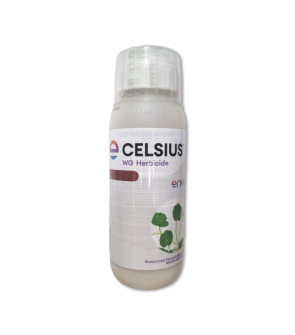
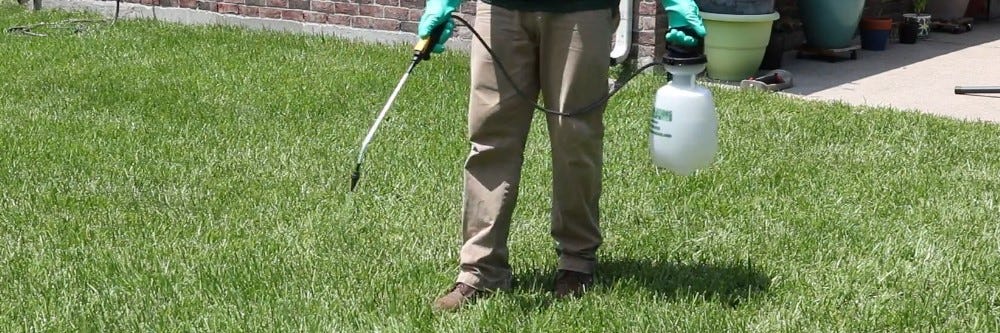 Celsius WG Herbicide is an effective water-dispersable granule herbicide that provides post-emergent control with multiple modes of action, making it effective against broadleaf and grassy weeds, including populations that are resistant to other herbicides.
This product may be used on listed warm-seasoned residential and commercial turf.
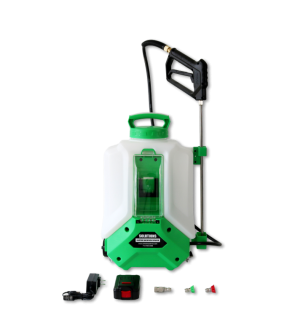
You will need to mix this product with water in a backpack sprayer.
Determine how much Celsius WG Herbicide to use by measuring the square footage of the treatment area. Find the square footage by measuring the treatment area's length and width in feet, then multiply them together (length X width = square footage).
To make spot treatments, mix 0.057 to 0.113 oz. of Celsius WG Herbicide per 1 gallon of water per 1,000 sq. ft.
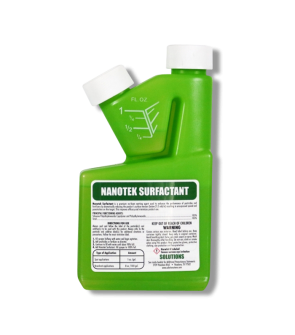
In areas where weed pressure is high and thorough coverage is essential, adding a non-ionic surfactant to Celsius WG Herbicide is recommended to improve leaf penetration and overall herbicide effectiveness, especially against tough weeds like Palmer amaranth. We recommend using Nanotek Surfactant, which is a non-ionic surfactant.
Simply add 1 oz. of Nanotek per 1 gallon of spray solution.
DO NOT use a spray adjuvant when temperatures are above 90 degrees Fahrenheit.
To mix, fill the sprayer with half the amount of water, add the proper amount of product, and pour in the remaining half of the water. Add the surfactant in last. Close the tank lid and shake until well-mixed.
Adjust the sprayer nozzle to a fine, coarse spray pattern. Spray the top and bottom of weed leaves until wet, but not to the point of runoff.
Do not use this product on bahiagrass, seashore paspalum or cool-season turf types, including tall fescue, fine fescue, Kentucky bluegrass, perennial ryegrass, or creeping bentgrass.
Keep people and pets out of the treated area until the spray has fully dried.
If weeds are showing signs of recovery, make a second application 2 to 4 weeks after the first treatment.
Prevention
Once the palmer amaranth has been removed, take some preventative measures to ensure this weed does not return.
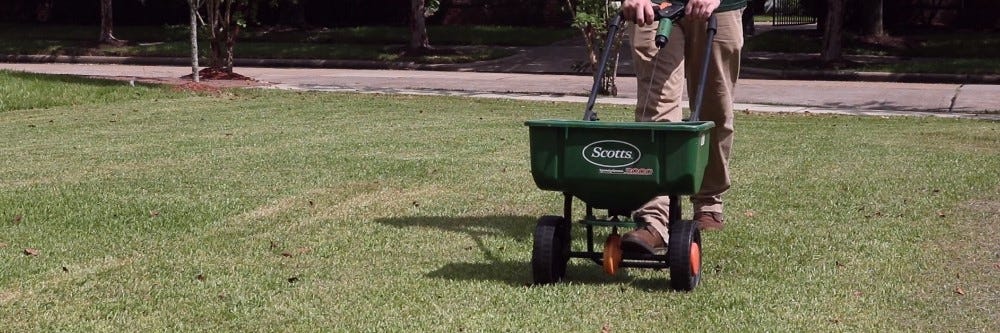
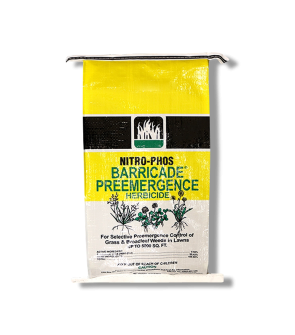
- To help prevent Palmer amaranth before it emerges, Barricade Pre-Emergent Herbicide is a strong option. Barricade Pre-Emergent Herbicide is a granular pre-emergent herbicide that prevents broadleaf and grassy weeds from appearing in turf and landscapes. Keep in mind that Palmer amaranth is not explicity labeled, but pigweed is which is what this weed is considered. Depending on your turf species, apply 1.5 to 4 pounds of Barricade Pre-Emergent Herbicide per 1,000 sq. ft. For landscape ornamentals, the application rate will be between 2.5 and 5.94 lbs. of product per 1,000 sq. feet. You will need a push spreader, broadcast spreader, or a handheld spreader for smaller treatment areas. Spread the granules evenly across the soil surface to ensure consistent coverage. You may need to make two perpendicular passes with a spreader one in each direction to achieve uniform application.
- One of the most important steps is to keep fields, equipment, and seeds clean to avoid introducing the weed to new areas. Rotating crops and planting cover crops can help by making it harder for Palmer amaranth to grow and compete with crops.
- Tilling can help prevent Palmer amaranth by destroying seedlings and burying seeds too deep for them to germinate.
Key Takeaways
What is Palmer Amaranth
- Palmer amaranth is a fast-growing, highly invasive broadleaf weed known for its resistance to herbicides and its ability to quickly spread and outcompete foliage.
How to Get Rid of Palmer Amaranth
- It's best to use Celsius WG Herbicide as soon as Palmer amaranth is present in your property for proper elimination.
Preventing Palmer Amaranth Reinfestation
- To prevent Palmer amaranth, using a pre-emergent herbicide like Barricade Pre-Emergent Herbicide can effectively stop weed growth before it emerges. Additionally, keeping fields and equipment clean, rotating crops, planting cover crops, and occasional tilling can help reduce its spread and establishment.