



Gain access to personalized product screening, the best pricing, rewards, and more!
Create An Account, Or Sign In.


BASF
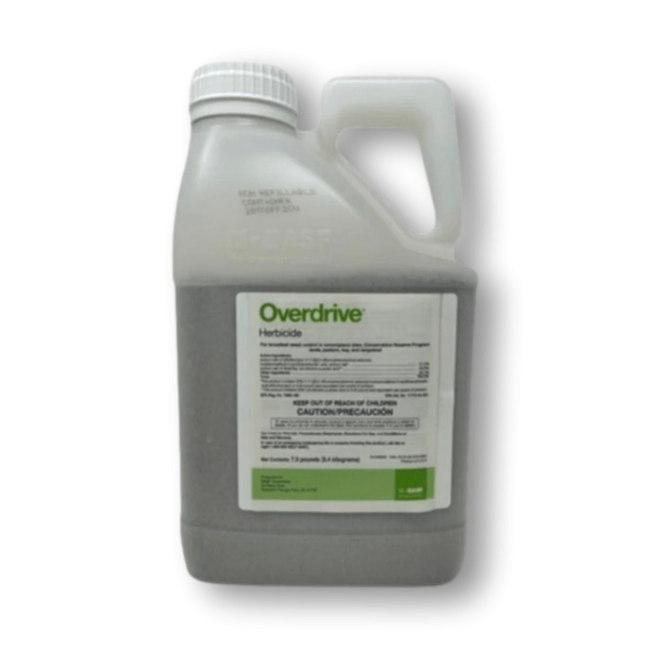
Overdrive Herbicide
Overdrive Herbicide is a distinctive, low-application herbicide that delivers effective postemergent control of a wide range of annual, perennial, and biennial broadleaf weeds in non-croplands, pastures, and rangelands.
As low as
$426.29
Only %1 left
SKU
Overdrive Herbicide Product Page
Min : 426.29 - Max : 426.29
Price as of
10/09/26
10/09/26
Price Transparency
See how our pricing compares to other online retailers for this item.
Overdrive Herbicide, manufactured by BASF, is a fast-acting post-emergent solution that delivers long-lasting control of tough broadleaf weeds in pastures, rangeland, and non-crop areas, even against the most resistant invasive species.
This selective herbicide contains dicamba and diflufenzopyr, working synergistically. Dicamba disrupts plant growth hormones, while diflufenzopyr enhances uptake and translocation of dicamba throughout the weed. This combo helps beat even herbicide-resistant populations. Overdrive takes out over 90 species of broadleaf weeds, including the usual suspects like Canada thistle, pigweed, kochia, lambsquarters, marestail, and ragweed even those that other herbicides tend to miss.
Overdrive Herbicide is a powerful, reliable, and flexible herbicide thats backed by strong chemistry and proven performance within hay, pastures, and more. Known for its fast-acting and long-lasting results, this product stands out for its effectiveness against even the most resistant invasive species.
Tools Needed
It can be applied with a spray rig or aircraft.
How to Use
- Step 1: Determine how much Overdrive Herbicide to use by measuring the square footage of the treatment area. Find the square footage by measuring the treatment area's length and width in feet, then multiply them together (length X width = square footage). For acreage, take the square footage and divide it by one acre (square footage / 43,560 sq. ft. = acres). A general application will use 4 to 8 ounces of Overdrive Herbicide per 3 gallons of water per acre. You may also use 1 quart of nonionic surfactant per 100 gallons of water. Refer to the product label for specific application rates and restrictions.
- Step 2: Fill the spray tank with half the amount of water, add the proper amount of product, and pour in the remaining half of the water. Close the tank lid and shake until the solution is well-mixed.
- Step 3: Spray the top and bottom of weed leaves until wet, but not to the point of runoff.
Where to Use
Overdrive Herbicide can be used in noncropland sites, Conservation Reserve Program lands, pasture, hay, and rangeland.
When to Use
Apply when weeds are present on days when rainfall is not expected to occur at least 4 hours after application.
Do not plant any crops within 30 days after the last application of this product.
Safety Information
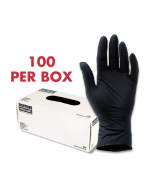
Overdrive Herbicide is safe for people and pets when applied according to the product label instructions. Always wear the proper personal protective equipment (PPE) when mixing and applying this product.
Pasture and rangeland grass treated with this product can be grazed or harvested for livestock feed immediately after application.
Keep people and pets out of the treated area for at least 24 hours after application.
Special Considerations
Overdrive may injure bentgrass, carpetgrass, buffalograss, St. Augustinegrass, and velvetgrass. Overdrive will severely injure alfalfa, clovers, lespedeza, wild winter peas, vetch, and other legumes.
| Restricted Use | No |
|---|---|
| Shipping Restrictions | AK, CA, DC, ME |
| Availability | Online |
| Signal Word | CAUTION |
| Keith's Pro Tip | "Avoid overgrazing; rotate livestock to allow regrowth to better prevent weeds." |
| Time to Kill | Weeds treated with Overdrive will typically display symptoms within several hours and be controlled in 3 to 7 days. Control of larger annual, biennial, or perennial weeds may require additional time |
| Chemical Type | Herbicide |
| Formulation | Water Dispersible Granule (WDG) |
| Application Methods | Broadcast Spray, Spot Treatment |
| Product Drawbacks | It may cause injury to desirable broadleaf trees and plants, particularly beans, cotton, flowers, fruit trees, grapes, ornamentals, peas, potatoes, soybeans, sunflowers, tobacco, and other broadleaf plants when contacting their roots, stems, or foliage. |
| Active Ingredient | sodium salt of diflufenzopyr 21.3% sodium salt of dicamba 55.0% |
| Application Equipment | Aerial Application Equipment, Spray Rig |
| Mix Rate | A general application will use 4 to 8 ounces of Overdrive Herbicide per 3 gallons of water per acre. You may also use 1 quart of nonionic surfactant per 100 gallons of water. |
| Use Sites | Outdoors |
| Yield | 7.5 pounds of Overdrive Herbicide will cover between 15 and 30 acres. |
| EPA Registration No. | 7969-150 |
| Shelf Life | Overdrive Herbicide will last for 3 years when stored in a dry, clean area. |
| Comparable Products | Grassmaster Herbicide, Endrun Turf Herbicide (2, 4-D Mecoprop Dicamba), Drexel Dicamba DGA Herbicide |
| Children or pets? | No |
| Property Characteristics | None |
| Availability | Online |
| Restricted Use | No |
| Brand | BASF |
| Keith's Pro Tips | "Avoid overgrazing; rotate livestock to allow regrowth to better prevent weeds." |
| Product Drawbacks | It may cause injury to desirable broadleaf trees and plants, particularly beans, cotton, flowers, fruit trees, grapes, ornamentals, peas, potatoes, soybeans, sunflowers, tobacco, and other broadleaf plants when contacting their roots, stems, or foliage. |
| Target Pests | Alfalfa, Annual Broadleaf Weeds, Annual Clover, Annual Fleabane, Annual Grasses, Annual Sowthistle, Barnyardgrass, Bitter Sneezeweed, Black Nightshade, Bracted Plantain, Broadleaf Dock, Broadleaf Plantain, Broadleaf Signalgrass, Broadleaf Weeds, Buckhorn Plantain, Bulbous Buttercup, Bull Thistle, Burcucumber, Canada Goldenrod, Canada Thistle, Carelessweed, Carolina Geranium, Carolina Horsenettle, Carpetweed, Catchweed Bedstraw, Catsclaw, Climbing Milkweed, Common Broomweed, Common Cocklebur, Common Dandelion, Common Eveningprimrose, Common Lambsquarters, Common Milkweed, Common Morningglory, Common Purslane, Common Ragweed, Common Sunflower, Common Waterhemp, Common Yarrow, Corn Buttercup, Corn Chamomile, Creeping Buttercup, Curly Dock, Cutleaf Eveningprimrose, Cypressweed, Devil'S Claw, Diffuse Knapweed, Dogfennel, Dwarf Mallow, Eastern Black Nightshade, English Daisy, Entireleaf Morningglory, Fall Panicum, Field Bindweed, Field Madder, Flixweed, Florida Beggarweed, Florida Pusley, Giant Foxtail, Giant Ragweed, Goldenrod, Green Foxtail, Gromwell, Hairy Buttercup, Hairy Fleabane, Hairy Nightshade, Hairy Vetch, Hedge Bindweed, Hemp Dogbane, Hemp Sesbania, Honeyvine Milkweed, Hop Clover, Horseweed, Ivyleaf Morningglory, Jimsonweed, Johnsongrass (Seedling), Knotweed, Kochia, Ladysthumb, Large Hop Clover, Leafy Spurge, Marestail, Missouri Goldenrod, Nightflowering Catchfly, Oxeye Daisy, Palmer Amaranth, Pennsylvania Smartweed, Perennial Broadleaf Weeds, Perennial Sowthistle, Pineappleweed, Pitted Morningglory, Plumeless Thistle, Poison Hemlock, Pokeweed, Poorjoe, Potato (Volunteer), Prickly Sida, Prostrate Knotweed, Prostrate Pigweed, Prostrate Spurge, Puncturevine, Redroot Pigweed, Rough Pigweed, Roughseed Buttercup, Rush Skeletonweed, Russian Thistle, Scotch Thistle, Servicea Lespediza, Shattercane, Shepherdspurse, Sicklepod, Silverleaf Nightshade, Slender Aster, Small White Morningglory, Smallflower Morningglory, Smell Melon, Smooth Pigweed, Spiny Amaranth, Spiny Pigweed, Spiny Sowthistle, Spotted Knapweed, Sunflower (Volunteer), Swamp Smartweed, Sweetclover, Tall Waterhemp, Tansy Ragwort, Tansymustard, Teasel, Teaweed, Tropic Croton, Tumble Pigweed, Velvetleaf, Venice Mallow, Western Field Wireworm, Western Ragweed, White Clover, White Cockle, Wild Buckwheat, Wild Carrot, Wild Mustard, Wild Parsnip, Wild Radish, Wild Sunflower, Winged Waterprimrose, Woolly Croton, Wormwood, Yankeeweed, Yellow Foxtail, Yellow Starthistle, and Yellowtop. |
| Application Equipment | Aerial Application Equipment, Spray Rig |
| Application Methods | Broadcast Spray, Spot Treatment |
| Active Ingredient | sodium salt of diflufenzopyr 21.3% sodium salt of dicamba 55.0% |
| Product Type | Herbicide |
| Formulation | Water Dispersible Granule (WDG) |
| Application Rate | A general application will use 4 to 8 ounces of Overdrive Herbicide per 3 gallons of water per acre. You may also use 1 quart of nonionic surfactant per 100 gallons of water. |
| Shelf Life | Overdrive Herbicide will last for 3 years when stored in a dry, clean area. |
| Yield | 7.5 pounds of Overdrive Herbicide will cover between 15 and 30 acres. |
| Use Sites | Outdoors |
| Time to Kill | Weeds treated with Overdrive will typically display symptoms within several hours and be controlled in 3 to 7 days. Control of larger annual, biennial, or perennial weeds may require additional time |
| Comparable Products | Grassmaster Herbicide, Endrun Turf Herbicide (2, 4-D Mecoprop Dicamba), Drexel Dicamba DGA Herbicide |
| Use Caution With | Centipedegrass, St Augustine |
| EPA Registration # | 7969-150 |

*Price does not include freight. We guarantee our rate plus shipping will be less than anyone else's price.