

Gain access to personalized product screening, the best pricing, rewards, and more!
Create An Account, Or Sign In.
Most Effective Products
Purple Deadnettle Control: How to Get Rid of Purple Deadnettle
This page is a general DIY guide for controlling purple deadnettle. Using the suggested products and methods, you can control purple deadnettle. Follow this DIY article and use the recommended products, and we guarantee 100% control of purple deadnettle.
Purple deadnettle, also known as red deadnettle, or purple archangel is a fast-growing winter annual (sometimes summer annual) weed that can cause significant problems in lawns, gardens, and more. Unlike true nettles like stinging nettles, purple deadnettle does not have stinging hairs hence the term dead in its name, indicating it is harmless to touch.
It's leaves are soft to the touch, slightly fuzzy, and may feel velvety, but they won't cause stinging, burning, or irritation on the skin. Needless to say, this broadleaf weed is still a problem since it competes aggressively with desirable plants for nutrients, space, and water.
Purple deadnettle germinates in late winter or early spring, often emerging before desirable plants are actively growing, giving it a competitive advantage. Because it spreads exclusively by seed, even small infestations can rapidly expand if left unchecked, reducing the health, density, and aesthetic of turf and garden beds.
For detailed recommendations on products and practical tips for preventing and controlling purple deadnettle, check out our DIY guide.
Identification
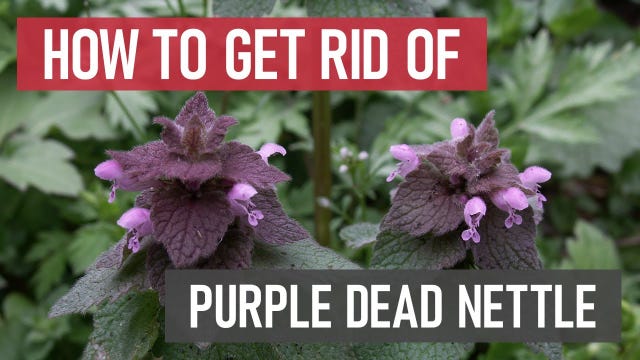
Before you can proceed with a treatment program, you must be sure that your weed is indeed purple deadnettle. Misidentification can lead you to use the wrong treatment products and waste time and money. Below are some characteristics of dead nettle to aid in identification:
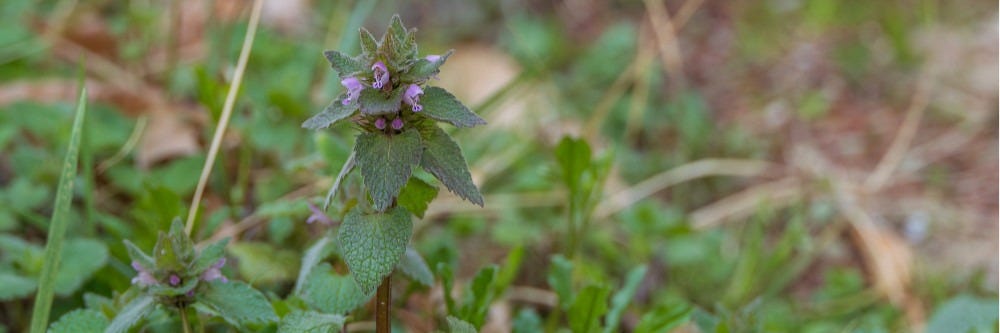
- Purple deadnettle is a winter annual broadleaf weed that grows low to the ground yet sends up erect flowering shoots reaching about 6 to 20 inches tall.
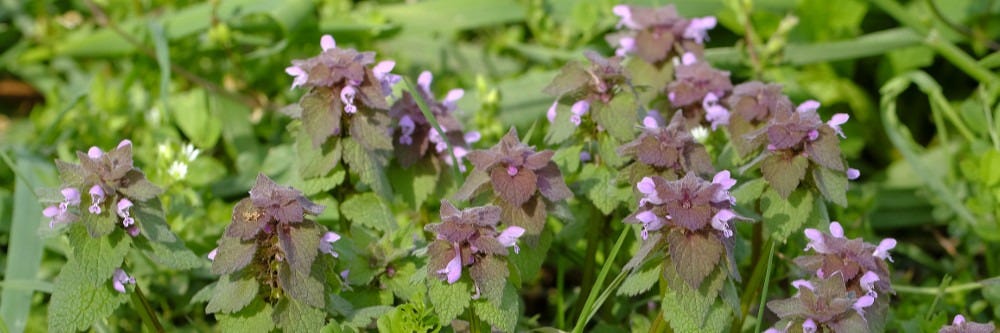
- The stems are square and four-sided. The leaves grow in opposite pairs, with each being triangular to ovate in shape, scalloped along the edges, and covered in soft hairs, giving it a fuzzy appearance. Each leaf sits on a small stalk and often droops so that the tip leans downward. Leaves near the base have noticeably longer stalks, while those higher on the plant sit on much shorter ones. The leaves may also take on a purplish-green or bronzy tint.
- Flowers occur in whorls above the leaf axils and at the stem tips, forming clusters above the canopy of the foliage. These flowers are tubular, about half an inch long, and range from purple to pink, with lip-like appendages and two rounded lobes on the lower lip: a rare white form also exists.
- Henbit and purple deadnettle are often mistaken for each other, but they differ in several ways. Purple deadnettle can be distinguished by its triangular, stalked leaves that often form a tiered, purplish upper canopy, while henbit has rounder leaves that attach directly to the stem near the top and give the plant a more open, less layered appearance.
Use the description above and the images to help you identify purple deadnettle on your property. If you are having trouble, contact us, and we will assist you in properly identifying your weed and offer suggestions.
Inspection
Once you have confirmed that you are dealing with purple deadnettle, you can proceed to inspection. During this phase, you will pinpoint the areas where the purple deadnettle is growing and observe the conducive conditions helping the weed to thrive. This will help you in determining where to focus your treatment applications.
Where to Inspect
Purple deadnettle commonly grows in sites with full sun to light shade, and prefers moist, fertile soils. However, it can tolerate various soil types, including sandy or clay soils.
Some common sites for this weed to be found in are lawns, ornamental landscapes, roadsides, fields, waste areas, underneath trees and shrubs, forest edges, open fields, nursery plots, drainage canals, meadows, railroads, and other areas with disturbed soil.
What to Look For
Purple deadnettle thrives during the cool weather of spring, developing quickly as temperatures rise, which allows it to take advantage of open, lightly disturbed areas before other plants fully emerge. However, purple deadnettle will perish during the hot summer months.
It typically flowers from spring to fall, producing clusters of small, tubular blossoms that last about 6 weeks.
Plants that sprout in the fall or winter often begin flowering in late winter or early spring, whereas those that germinate later in the year may continue to bloom into the autumn in regions with milder climates.
Young deadnettle plants usually emerge from seeds in the fall, survive the winter as seedlings, and then grow quickly and reach maturity by early spring.
Treatment
Before handling any herbicides and other chemicals, be sure to wear the proper personal protective equipment (PPE).
Successful purple deadnettle control relies on treating these plants when they are actively growing, but before they set seed. Herbicides containing glyphosate, 2,4-D, dicamba, or MCPA (mecoprop) have shown significant results against these weeds.
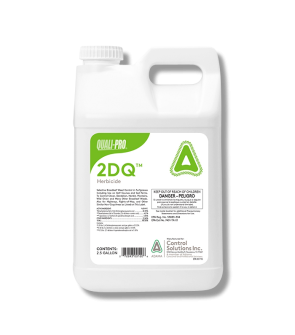
Step 1: Apply 2DQ Herbicide
 2DQ Herbicide is an effective selective post-emergent herbicide that controls numerous broadleaf weeds in warm-seasoned and cool-seasoned lawns and non-cropland areas.
Determine how much 2DQ Herbicide to use by measuring the square footage of the treatment area. Find the square footage by measuring the treatment area's length and width in feet, then multiply them together (length X width = square footage).
To treat weeds in cool-seasoned turf, use 0.75 to 1.1 fl. oz. of 2DQ Herbicide per 1 to 4 gallons of water per 1,000 sq. ft.
For weeds in warm-seasoned turf, apply 0.37 to 0.9 fl. oz. of product per 1 to 4 gallons of water per 1,000 sq. ft.
For properties with a mix of cool-seasoned and warm-seasoned turf, use .037 to 0.55 fl. oz. of product per 1 gallon of water per 1,000 sq. ft.
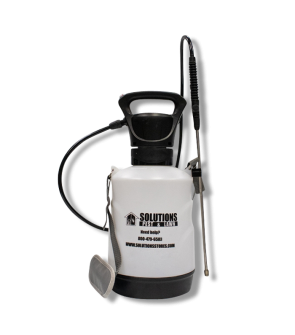
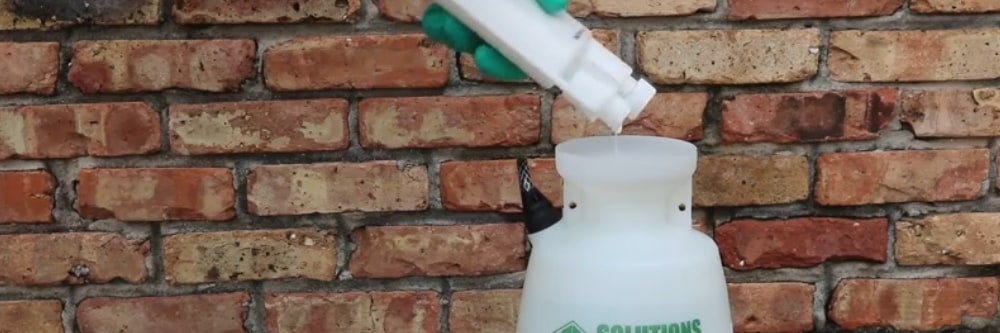
You will need to mix 2DQ Herbicide with water in a handheld pump sprayer or backpack sprayer.
Fill your sprayer with half the amount of water, add the proper amount of product, and then pour in the remaining half of the water. Close the tank lid and shake until the solution is well-mixed.
Perform a spot treatment for the weeds you have found throughout your property. Spray the top and bottom of the weeds until wet, but not to the point of runoff.
Do not allow the product to contact vegetables, flowers, ornamentals, shrubs, trees, and other desirable plants. Also, do not pour the spray solutions near these plants.
Avoid broadcast and small spot treatment applications when temperatures exceed 90 degrees Fahrenheit, as turf injury may occur.
For optimum results, turf should not be mowed for 1 to 2 days before and after application, do not apply if rain is expected within 4 hours after the application, and delay the irrigation cycle for 24 hours.
Step 2: Retreatment if Needed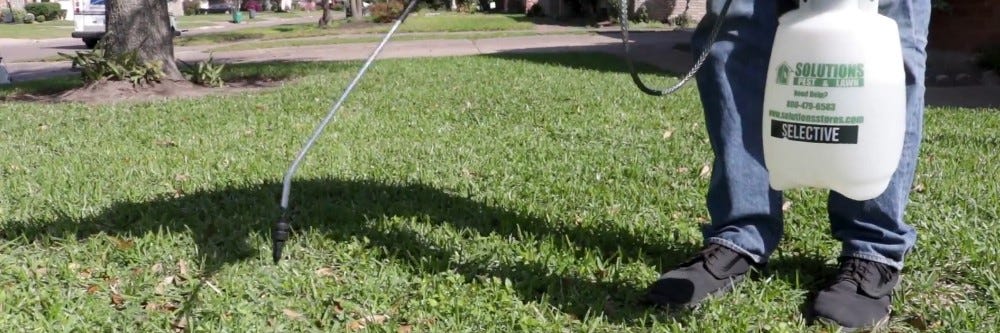
Heavy, dense stands of weeds may require a second treatment.
If needed, a second application of 2DQ Herbicide can be made when 30 days have passed from the first application.
Do not make more than two applications per year.
Prevention
Once the purple deadnettle has been removed, you will want to ensure it does not return. To prevent dead nettle, check out the following preventative measures:
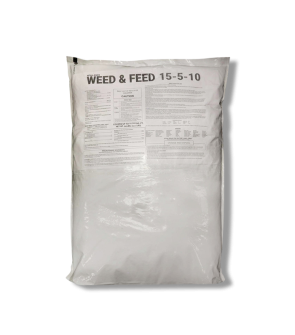
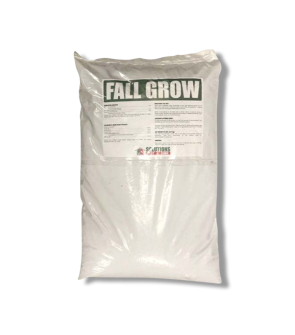
- Preventing purple deadnettle starts with maintaining healthy, dense turf to reduce open soil where seeds can germinate. Applying a balanced fertilizer in the fall, such as Solutions 8-12-16 Fall Grow Fertilizer helps strengthen the grass to compete with emerging seedlings during the winter, while a spring fertilizer like Solutions 15-5-10 Weed & Feed Fertilizer with Trimec promotes vigorous growth and controls existing weeds, which further reduces future outbreaks. For either of these fertilizers, you will need a push or broadcast spreader. We recommend using Solutions 8-12-16 Fall Grow two to three weeks before the first frost in your area. Depending on your region, applications by mid-October would be best. Apply 5 pounds of Solutions 8-12-16 Fall Grow per 1,000 sq. ft. of turf. We recommend using Solutions 15-5-10 Weed & Feed when your turf is actively growing from late winter to early spring. For most applications, you will need to apply 3.2 to 4 pounds of Solutions 15-5-10 Weed & Feed per 1,000 square feet of treatment area. A second or follow-up application may be required for dense infestations of weeds or for adverse seasonal conditions. The second application should be used 30 days after the first application. Adjust your spreader to the proper settings, then load the proper amount of granules. Spread the granules evenly across the treatment area. After 24 hours, thoroughly irrigate the sites treated with these fertilizers to activate the granules.
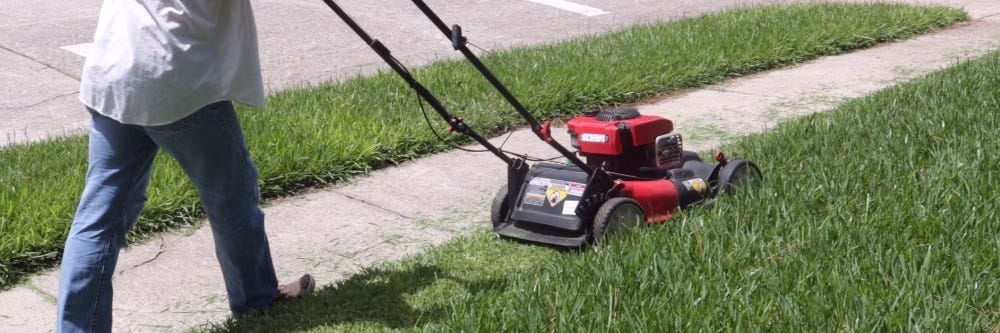
- Another way to help promote thick, healthy turf is to keep up with mowing. We recommend mowing no more than 1/3 of the turf. By mowing at this height, you will ensure the grass develops deeper roots and fuller foliage.
- Maintaining regular irrigation helps prevent thin turf, which weakened or thin areas can provide ideal sites for purple deadnettle to take hold. It's best to irrigation turf with 1 inch of water once per week in the early morning. Irrigation in the early morning gives the turf enough time to absorb the water.
- Aerification of compacted areas will improve soil structure, enhance root development, and increase the penetration of water and nutrients, further strengthening the turf's ability to compete with weeds.
- If purple deadnettle reappears, apply post-emergent herbicides such as 2DQ Herbicide as a spot treatment. Be sure to follow all product labels to ensure the herbicide is being applied properly and does not exceed the maximum application limit.
Key Takeaways
What is Purple Deadnettle
- Purple deadnettle is a winter annual broadleaf weed that appears in the fall and flowers, and produces seeds by early spring.
How to Get Rid of Purple Deadnettles
- To get rid of purple deadnettles, you will need to use 2DQ Herbicide.
Preventing Purple Deadnettle Reinfestation
- Preventing purple deadnettle involves maintaining healthy, dense turf through proper fertilization, mowing, irrigation, and aerification to reduce open or weakened areas where weeds can establish. Fall and spring fertilizers strengthen grass and support weed control such as Solutions 8-12-16 Fall Grow and Solutions 15-5-10 Weed & Feed Fertilizer with Trimec.