



Gain access to personalized product screening, the best pricing, rewards, and more!
Create An Account, Or Sign In.


GARDENTECH
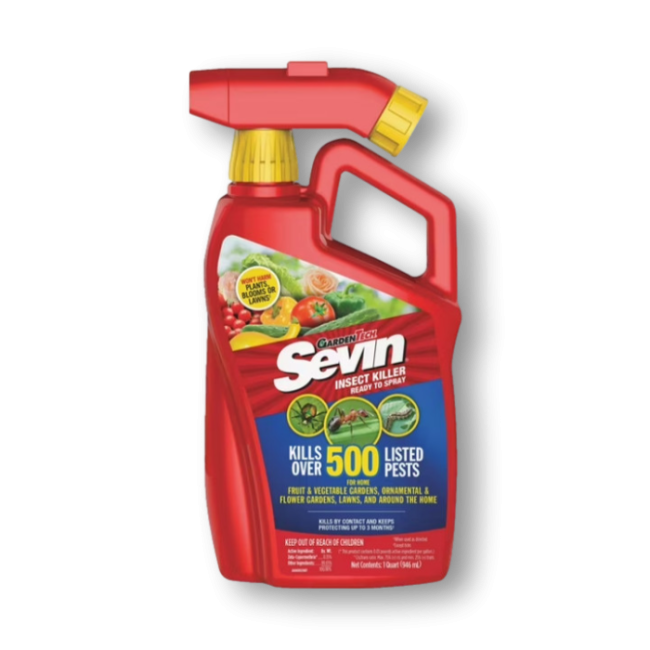
Sevin Insect Killer Ready to Spray
Sevin Insect Killer Ready to Spray is a hassle-free, hose-end insecticide that kills over 500 pests on residential fruit, vegetable, and flower gardens, lawns, and more for up to 3 months.
As low as
$23.11
Only %1 left
SKU
Sevin Insect Killer Ready to Spray Product Page
Min : 23.11 - Max : 23.11
+

Price as of
10/20/26
10/20/26
Price Transparency
See how our pricing compares to other online retailers for this item.
Sevin Insect Killer Ready to Spray, manufactured by GardenTech, is a simple, stress-free hose-end insecticide spray that perfectively kills a broad-spectrum of pests on contact and for up to 3 months on residential crops, ornamentals, lawns, and the exterior of homes.
Most insecticides only tackle a small list of bugs. Sevin Insect Killer Ready to Spray goes after 500 and more listed pests everything from aphids, flea beetles, caterpillars, and leafhoppers to ants, ticks, and flies. If you’ve ever struggled to identify exactly which insect is damaging your plants, this product's broad-spectrum coverage means you don’t have to play the guessing game.
Sevin Insect Killer Ready to Spray is a powerful, no-mix insecticide concentrate that attaches directly to a garden hose, killing over 500 listed insects on contact and providing fast, effective protection for lawns, vegetables, fruits, flowers, trees, shrubs, and more. The formula is tough on insects but gentle on your garden. When applied correctly, it won’t harm 250 plant types.
Tools Needed
You will need a garden hose.
How to Use
- Step 1: Determine how much Sevin Insect Killer Ready to Spray to use by measuring the square footage of the treatment area. Find the square footage by measuring the treatment area's length and width in feet, then multiply them together (length X width = square footage). One 32 oz. container will treat 2,000 sq. ft. of lawn.
- Step 2: Make sure the control lever is turned in the off position. Attach to hose. Turn on the water. Extend hose to the furthest place in lawn or garden, so you can work backwards. Turn the control lever to on to begin spraying.
- Step 3: Begin spraying at the farthest point of the treatment area and work backward to avoid contact with wet treated surfaces. Turn the faucet to off when finished.
Where to Use
Sevin Insect Killer Ready to Spray can be used on Fruit and Vegetable Gardens, Ornamental Plants and Shrubs, Flowers and Ground Covers, Around Structures, and Lawns.
When to Use
Apply during or before active infestations on days when rainfall is not expected within the next 24 hours of application.
Safety Information
Sevin Insect Killer Ready to Spray is safe for people and pets when applied according to the product label instructions. Always wear the proper personal protective equipment (PPE) when handling and applying this product.
Do not allow adults, children, or pets to enter the treated area until sprays have dried.
Special Considerations
Do not apply to trees taller than 10 feet.
| Restricted Use | No |
|---|---|
| Shipping Restrictions | AR, HI, TX, WI |
| Availability | Online |
| Keith's Pro Tip | "Check your plants frequently for early signs of pest activity such as discolored leaves, webbing, or holes. Early detection prevents infestations from spreading." |
| Time to Kill | Sevin Insect Killer Ready to Spray will control pests within 7-30 days. |
| Chemical Type | Insecticide |
| Formulation | Ready-To-Use |
| Application Methods | Broadcast Spray, Spot Treatment |
| Product Drawbacks | This product is highly toxic to bees exposed to direct treatment or residues on blooming crops or weeds. |
| Active Ingredient | Zeta-Cypermethrin 0.35% |
| Application Equipment | Gloves |
| Mix Rate | One 32 oz. container will treat 2,000 sq. ft. of lawn. |
| Use Sites | Outdoors |
| Yield | Treats 2,000 sq. ft. of lawn. |
| EPA Registration No. | 279-3347-71004 |
| Shelf Life | Sevin Insect Killer Ready to Spray will last for 3 years when stored in a dry, clean area. |
| Comparable Products | Sevin Insect Killer Concentrate |
| Children or pets? | No |
| Property Characteristics | Food-Bearing Plants |
| Availability | Online |
| Restricted Use | No |
| Brand | GARDENTECH |
| Keith's Pro Tips | "Check your plants frequently for early signs of pest activity such as discolored leaves, webbing, or holes. Early detection prevents infestations from spreading." |
| Product Drawbacks | This product is highly toxic to bees exposed to direct treatment or residues on blooming crops or weeds. |
| Target Pests | Caterpillars, Butterflies, Moths, Tent forming caterpillars, cocoon forming caterpillars, chrysalis forming caterpillars. Leaf feeding caterpillars (including leaves of flowering plants, bushes and other ornamentals, vegetables and trees), azalea leafminers, green cloverworm, fruit eating caterpillars, legume feeding caterpillars, vegetable feeding caterpillars, stem and trunk boring caterpillars, and leafrolling caterpillars. Caterpillars of the Yucca Moth family such as Fairy moths and Yucca moths; Clothes moth family; bagworm moth family, Gelechiid moth family such as Potato tuber moths; Ermine Moth family such as Ailanthus Webworm moth; Clear Winged moth family such as Manroot borer, Squash Vine borer, Doll's Clearwing moth, California Sycamore borer; Tortricid Moth family (millers) such as Fruit Tree Leafroller moth, Orange Tortrix, and Codling moth; Skippers such as Least Skipper, Silver-spotted Skipper, and Long-tail Skipper; Swallowtails such as Green swallowtail, Zebra Swallowtail, Giant Swallowtail (Orange Tail, Orange Puppy), Pale Swallowtail, Eastern Tiger Swallowtail, Eastern Black Swallowtail, Spicebush Swallowtail, and Phoebus; Whites, Sulphurs and Orange Tips family such as Sara Orange Tip, Great Southern White, and European Cabbage Butterfly; Gossamer-Winged Butterflies Family such as Great Purple Hairstreak, Spring Azure, Early Hairstreak, Eastern Tailed blue, Harvester, Silvery Blue, Brown Elfin, Marine Blue, American Copper, and Gray Hairstreak; Metalmark family such as Northern Metalmark; Snout Butterflies family such as Common Snout Butterfly; Brush-Footed Butterfly family such as Gulf Fritillary, White Peacock, Harris‘ Checkerspot, Painted Lady (Thistle butterfly), American Painted Lady (Painted Beauty), Baltimore, Zebra (Yellow-barred Heliconian), Viceroy, White Admiral (Banded Purple), Mourning Cloak, Milbert's Tortoise Shell, Pearl Crescent, Question Mark, Buckeye, Great Spangled Fritillary, and Red Admiral; Hackberry and Goatweed Butterfly family such as Hackberry butterfly; Satyrs, Nymphs and Arctics family such as Wood Nymph (American Grayling), White Wood Satyr, Eyed Brown (Grass Nymph), Pearly Eye, and Chryxus Arctic; Milkweed Butterfly family such as Queen, and Monarch; Smoky Moth family such as Grape Leaf Skeletonizer; Slug Caterpillar Moth family such as Saddleback Caterpillar Moth; Pyralid Moths family such as Mediterranean Flour Moth Sod Webworm Moth, Indian Meal Moth, Meal Moth; Plume Moth family such as Artichoke Plume Moth; Measuringworm Moth family such as Tulip Tree Beauty, California Cankerworm Moth, and Large California Spanworm Moth; Tent Caterpillar Moth family such as Western Tent Caterpillar Moth; Giant Silkworm Moth family such as Luna Moth, Polyphemus moth, lo Moth, Promethea Moth (Spicebush Silkmoth), Regal Moth (Royal Walnut Moth), Rosy Maple Moth, Imperial Moth, Sheep Moth, Cecropia Moth, and Cynthia Moth; Sphinx moth family such as Virginia-creeper Sphinx, Pandora Sphinx, Hummingbird Moth (Common Clearwing), White-lined Sphinx, Tomato Hornworm Moth, Tobacco Hornworm Moth, Big Poplar Sphinx, Cerisy’s Sphinx, and Wild-cherry Sphinx; Prominents family such as Tentacled Prominenets (Puss Moths), and Red-humped Appleworm Moth; Tiger Moth family such as Ornate Tiger Moth, Yellow Woolly Bear Moth, Acraea Moth, Milkweed Tiger Moth, Spotted Tiger Moth, Colona, Woolly Bear Caterpillar Moth (Banded Woolly Bear), Lichen Moth, and Rattlebox Moth; Ctenuchid Moth family such as Virginia Ctenuchid moth; Tussok moth family such as Gypsy Moth, White-marked Tussok Moth; Owlet Moth family such as Eight-spotted Forester, Black Witch, Alfalfa Looper, Sweetheart Underwing, Locust Underwing, Hebrew, Common Bristletails, Silverfish, Firebrat, Springtails, Cockroaches, Oriental Cockroach (Asiatic Cockroach, Shad Cockroach), American Cockroach (Waterbug), Blattellid Cockroaches, German Cockroach (Croton Bug), Termites, Subterranean termite, Earwigs, Ring-legged Earwig, Riparian Earwig, European Earwig, Grasshoppers, Crickets, Aztec Pygmy Grasshopper; Short-Horned Grasshopper family such as Creosote Bush Grasshopper, Lubber Grasshopper, Painted Grasshopper, Carolina Locust, Dragon Lubber Grasshopper (Gray Dragon), Three-banded Grasshopper (Banded Range Grasshopper), Differential Grasshopper, Red-legged Locust, Spur-throated Grasshopper, Two-stripped Grasshopper, Panther-spotted grasshopper, Southeastern Lubber Grasshopper, Alutacea Bird Grasshopper, American Bird Grasshopper, Green Valley Grasshopper, Toothpick Grasshopper, Horse Lubber Grasshopper, Pallid-winged Grasshopper, and Great Crested Grasshopper (Dinosaur Grasshopper); Long-horned grasshoppers and Katydids family such as Oblong-winged Katydid, Mormon Cricket, Short-legged Shield back Katydid, California Katydid, Angular-winged Katydid, Keeled Shield-back Katydid, Nebraska Cone-head, Gladiator Katydid, Mescalero Shield-back Katydid, True Katydid (Northern Katydid), and Fork-tailed Bush Katydid; Camel Crickets family such as Spotted Camel Cricket, Secret Cove Cricket, Jerusalem Cricket; True Crickets family such as House Cricket (Cricket on the Hearth), Field Cricket, California Tree Cricket, Snowy Tree Cricket, and Black-horned Tree Cricket; Mole Cricket family such as Northern Mole Cricket and European Mole Cricket, True Bugs, Adelphocoris Plant Bugs, Scarlet Plant bugs, Tarnished Plant Bugs, and Four-lined Plant Bug; Assassin bug family such as Bee Assassins, Wheel Bug; Ambush Bug family such as Jagged Ambush Bug; Lace Bug family such as Oak Lace Bug; Seed Bug family such as Small Eastern Milkweed Bug; Long-necked Seed Bug, and Large Milkweed Bug; Stilt Bug family such as Stilt Bugs; Leaf-footed Bug family such as Florida Leaf-footed Bug, and Squash Bug; Scentless Plant Bug family such as Eastern Boxelder Bug and Western Boxelder Bug; Stink Bug family such as Green Stink Bug, Brochymenas, Two-spotted Stink Bug (Conspicuous Stink Bug), Harlequin Cabbage Bug (Calico Bug, Fire Bug), and Spined Soldier Bug, Cicadas, Kin, Periodical Cicadas, Dogday Harvestfly, Grand Western Cicada, Treehoppers, Leafhoppers, Thrips, Beetles, Beautiful Tiger Beetle, Dainty Tiger Beetle, Six-Spotted Green Tiger Beetle, and Dejean’s Flightless Tiger Beetle; Ground Beetle family such as Bombardier Beetle, Fiery Searcher (Caterpillar hunter), European Ground Beetle, Green Pubescent Ground Beetle, Common Black Ground Beetle, and Boat-backed Ground Beetle; Predacious Diving Beetle family such as Small Flat Diving Beetle, Large Diving Beetle, and Marbled Diving Beetle; Whirligig Beetle family such as Large Whirligig Beetle, and Small Whirligig Beetle; Hister Beetle family such as Hister beetles; Rove Beetle family such as Gold-and-brown Rove Beetle and Pictured Rove Beetle; Carrion Beetle family such as Margined Burying Beetle, Tomentose Burying Beetle (Gold-necked Carrion Beetle), American Carrion Beetle, and Northern Carrion Beetle; Stag Beetle family such as Elephant Stag Beetle, Agassiz’s Flat-horned Stag Beetle, Reddish-brown Stag Beetle, and Rugose Stag Beetle; Bessbugs family such as Patent-leather Beetle (Horned Passalus); Scarab Beetle family such as Tumblebugs, Goldsmith Beetle, Green Jumping Beetle, Brown Fruit Chafer, Glossy Pillbug, Grapevine Beetle, May Beetles (June Beetles), Ten-lined June Beetles, and Japanese Beetle; Metallic Wood-Boring Beetles such as Golden Buprestid, Western Pine Borer (Sculptured Pine Borer), and Divergent Metallic Wood Borer (Flatheaded Cherry Tree Borer); Click Beetle family such as Eastern Eyed Click Beetle (Big-eyed Click Beetle), and Fire Beetles; Fireflies (Lightning Bugs) family such as Pyralis Firefly, and Pennsylvania Firefly; Soldier Beetle family such as Pennsylvania Leather-wing, and Downy Leather-wing, Net-winged Beetle family such as Banded Net-wing, and Golden Net-wing; Spider Beetle family such as Spider Beetles, and Texan Spider Beetle; Branch and Twig Borer family such as Apple Twig Borer; Checkered Beetle family such as California Checkered Beetle, Elegant Checkered Beetle, Slender Checkered Beetle, and Red-blue Checkered Beetle; Flat Bark Beetle family such as Red Flat Bark Beetle; Pleasing Fungus Beetle such as Rough Fungus Beetle; Ladybug Beetles such as Two-spotted Ladybug Beetle, Nine-spotted Ladybug Beetle, Spotless “Nine-spotted” Ladybug, Convergent Ladybug Beetle, and Ash Gray Ladybug Beetle; Darkling Beetles such as Horned Fungus Beetle, Broad-necked Darkling Beetle, Plicate Beetle, Yellow Mealworm Beetle, and Ironclad Beetle; Fire-colored Beetles family such as Fire Beetles; Blister Beetles family such as Striped Blister Beetle, Arizona Blister Beetle, Short-winged Blister Beetle (Oil Beetle); Long-horned Beetle family such as Black-horned Pine Borer, Yellow Douglass Fir Borer, Long-jawed Longhorn, Elder Borer (Cloaked Knotty-horn), Twig Pruners, Pine Sawyer (Spined-neck Longhorn), Golden-haired Flower Longhorn, Locust Borer, Black Pine Sawyer (White Spotted Sawyer), Cylindrical Hardwood Borer, Cottonwood Twig Borer, Cottonwood Borer, Giant Root Borers, Ribbed Pine Borer, California Laurel Borer (Banded Alder Borer), lvory marked Beetle, Red Milkweed Beetle (Eastern Milkweed Longhorn), Notch-tipped Flower Longhorn, and Willow Borer; Seed Borer family such as Bean Weevil; Leaf Beetle family such as Dogwood Calligrapha, Milkweed Tortoise Beetle (Argus Tortoise Beetle), Dogbane Leaf Beetle, Milkweed Leaf Beetle, Willow Leaf Beetle, Spotted Asparagus Beetle, Clavate Tortoise Beetle, Spotted Cucumber Beetle, Waterlily Leaf Beetle, Swamp Milkweed Leaf Beetle, Three-lined Potato Beetle (Old-fashioned Potato Bug), Colorado Potato Beetle, and Girdled Leaf Beetle; Primitive Weevil family such as Oak Timberworm Beetle (Primitive Weevil); Snout Beetles and Weevil family such as Boll Weevil, Black Oak Acorn Weevil, Lesser Cloverleaf Weevil, Alfalfa Weevil, Pine Weevils, Rose Weevils, Agrave Billbug, and Stored-grain Billbug (Granary Weevil, Elephant Bug); Bark and Ambrosia Beetle family such as Red Turpentine Beetle, Pine and Spruce Engraver Beetles, Bark Beetles, Bees, Ants, Wasps, Sawflies, Rusty Willow Sawfly; Common Sawfly family such as Northeastern sawfly; Horntail family such as Pigeon Horntail, and Smokey Horntails; Stem Sawflies family such as Raspberry Horntail; Braconids family such as Braconid Wasps; Ichneumons family such as Giant Ichneumons, Short-tailed Ichneumons and Red-tailed Ichneumon; Torymid Wasp family such as California Torymus; Chalcid family such as Golden-yellow Chalcid; Gall Wasp family such as California Oak Gall Wasps and Live Oak Gall Wasp; Pelecinid family such as American Pelicini; Tiphiid Wasp family such as Five-banded Tiphiid Wasp; Velvet-Ants such as Thistledown Velvet-ant, Red Velvet-ant, and Cow Killer; Scoliid Wasp family such as Scarab-hunter Wasp, and Digger Wasp; Ant family such as Spine-waisted ants, Leafcutter ants, Texas Carpenter ants, Black Carpenter ants, Crater-nest ants, Crazy Ants, Tawny Crazy Ants, Texas Shed-builder ant (Acrobat Ant), Red Ant, Legionary Ant, Little Black Ant, Arid Lands Honey Ant, Big-headed Ant, Honey Ant, and Fire Ant; Vespid Wasp family such as Potter Wasp, Paper Wasps, Yellow Jackets, and Sandhills Hornet; Spider Wasps such as Blue-black Spider Wasps, and Tarantula Hawk; Sphecid Wasp family such as Thread-waisted Wasps, Eastern Sand Wasp, Steel-blue Cricket Hunter, Purplish-blue Cricket Hunter, Florida Hunting Wasp, Black and Yellow Mud Dauber, Cicada Killer, and Great Golden Digger Wasp; Bee families such as Plasterer Bee, Yellow-faced Bees, Virescent Green Metallic Bees, Augochlora Green Metallic Bees, Alkali Bee, Mining Bee, Willow Mining Bee, Nevada Mining Bee, Clarkia Bee, Faithful Leafcutting Bee, Western Leafcutting Bee, Mason Bees, California Leafcutting Bee, Digger Bees, Western Cuckoo Bee, California Carpenter Bee, Flies, Crane fly family such as Wood-boring Tupulid, Giant Western Crane Fly, and Crane Flies; Phantom Crane Flies such as Phantom Crane Fly; Net-winged Midges such as Comstock’s Net-winged Midge; Phantom Midges; Black Flies such as Black flies; March Flies family such as March Flies; Fungus Gnats family such as Fungus Gnats; Snipe Fly family such as Gold-backed Snipe Fly; Stiletto Fly family such as Stiletto Flies; Flower-loving Fly family such as Flower-loving Fly; Mydas Fly family such as Mydas fly; Robber Fly family such as Bearded Robber Fly, Sacken’s Bee Hunter, Giant Robber Fly, Bee Killer (Giant Robber Fly), and Robber Flies; Bee Flies such as Bee Fly, Large Bee Flies, and Progressive bee Flies; Dance Flies such As Dance Flies; Long-Legged Flies such as Condylostylid Long-legged Flies, and Texan Long-legged Fly; Hover Fly family such as Woollty Bear Hover Flies, Elongate Aphid Flies, Drone Flies, Bulb Flies, American Hover Flies, and Toxomerus Hover Fly; Thick Headed Fly family such as Thick headed fly; Pyrgotid Fly family such as Pyrgotid Flies; Fruit Fly family such as Walnut Husk Fly, and Apple Maggot Fly; Seaweed Fly family such as California Seaweed Fly; Marsh Fly family such as Marsh flies; Shore fly family such as Yellowstone Brine Fly; Pomace fly family such as Vinegar Fly; Anthomyiid Fly family such as Dung Fly; Muscid Fly family such as House Fly, and Biting Stable Fly; Louse Fly family, Blow Fly family such as Blue Bottle Fly, Screw-worm Fly, and Green Bottle Fly; Flesh Fly family such as Flesh flies; Tachinid Fly family such as Beelike Tachinid Fly, Early Tachinid Fly, Repetitive Tachinid Fly, Tachina Fly, Fringe-legged Tachinid Fly, Spiders, Turret spider; Tarantula family such as Desert Tarantula; Trapdoor Spider family such as California Trapdoor spider; Dictynid spider family such as Branch-yip spiders; Spitting spider family such as Spitting spiders; Violin Spider family such as Desert Loxosceles, and Violin Spider; Comb-footed Spider family such as American House Spider, and Black Widow Spider, Sheet-web Weaver family such as Hammock Spider; Orb Weaver family such as Orb weavers, barn spider, Garden spider (cross spider), Marbled orb Weaver, Shamrock Spider, Six-spotted Orb-weaver, Silver Argiope, Black-and-Yellow Argiope, Crablike Spiny Orb Weaver, Bola Spider, Arrow-shaped Micrathena, and Golden-silk spider (calico spider); Large-jawed Orb Weaver family such as Mabel Orchard Spider, Venusta Orchard Spider, Elongate Long-jawed Orb Weaver, and Long-jawed Orb Weaver; Funnel Web Weaver family such as Grass Spiders; Nursery Web Spider family such as Brownish-grey Fishing Spider, Six-spotted Fishing spider, and Nursery Web Spider; Wolf Spider family such as Burrowing Wolf Spiders, Carolina Wolf spider, Forest Wolf spider, rabid wolf spider, and Thin-legged Wolf spider; Lynx Spider family such as Jumping Lynx spider, and green lynx spider, Sac Spider family such as Ant-mimic spiders; Wandering spider family such as Wandering spiders; Giant Crab spider family such as Huntsman spider, and Golden Huntsman spider; Selenopid Crab Spider family such as Selenopid Crab Spider; Crab Spider family such as Goldenrod spider (flower spider, red-spotted Crab Spider), Elegant Crab Spider, Thrice-banded Crab Spider; Philodromid family such as inconspicuous Crab Spiders; Jumping Spiders such as Green Lyssomanes, Dimorphic Jumping Spider, Metaphid Jumping Spider, Ant-mimic Jumping spider, and Daring Jumping spider Daddy-long-legs family such as Eastern Daddy-long-legs, Brown Daddy-long-legs, Ticks, Psyllid, Whiteflies, Aphids, Mealybugs, Scale Insects, American Alder Psyllid; Whitefly family such as Greenhouse Whitefly; Aphid family such as Green Apple Aphid, Rosy Apple Aphid, Rose, Pea and Potato Aphid, Root Aphid, Coudy-winged Cottonwood Aphid, and Giant Willow Aphid; Woolly and Gall-Making Aphid family such as Woolly Apple Aphid; Giant Scale Insects family such as Cottony Cushion Scale; Armored Scale Insects family such as Oyster Shell Scale; Mealybug family such as Long-tailed mealybug, Cochineal bug, Millipedes, Corn Earworm, Cucumber Beetles, Cutworms, Diamondback Moth, Flea Beetles, Imported Cabbageworm, Leafhoppers, Saltmarsh Caterpillar, Tobacco Budworm, Armyworms, Loopers, Lygus Bugs, Onion Thrips, Stink Bugs, Wireworm , Armyworm, Southern Armyworm, True Armyworm, Yellow-striped Celery Leaf Tier, Colorado Potato Beetle, Corn Borer, European, Corn Borer, Southwestern Corn Earworm, Cucumber Beetle, Cutworm, Flea Beetle, Garden Webworm, Green Stink Bug, Hornworms, Leafminers (adults), Leafhoppers, Meadow Spittlebug, Pepper Maggot (adults), Pepper Weevil, Plant Bugs, Tobacco Budworm, Tomato Fruitworm, Tomato Pinworm, Aphids, Armyworm, Beet Armyworm, Fall Cabbage Looper, Grasshoppers, Lygus Bugs, Brown Stink Bug, Tomato Psyllid, Thrips, Whiteflies, Corn Earworm, Cucumber Beetles, Cutworm, Diamondback Moth, Flea Beetles, Imported Cabbageworm, Leafhoppers, Saltmarsh Caterpillar, Southern Cabbageworm, Tobacco Budworm, Alfalfa Looper, Armyworms, Cabbage Looper, Cabbage Webworm, Ground Beetles, Leafminers (adults), Lygus Bugs, Onion Thrips, Stinkbugs, Wireworm (adults), Aphids, and Whiteflies, Cutworms, Cabbage Looper, Cucumber Beetle, European Corn Borer, Flea beetles, Leafhoppers, Southern Corn Rootworm (adult), Vegetable Weevil, Whitefringed Beetle (adult), Armyworm, Beet Armyworm, Yellowstriped Cabbage Maggot, Colorado Potato Beetle, Grasshoppers, Imported Cabbageworm, Potato Leafhopper, Potato Psyllid, Potato Tuberworm, Tarnished Plant Bug Cutworms, Cabbage Looper, Cucumber Beetles. (adult), Leafhoppers, Melonworm, Pickleworm, Rindworm, Squash Bug, Squash Vine Borer, Corn Earworm, Plant Bugs, Stinkbugs, Armyworms, Cutworms, Leafminers (adults), Onion Maggot Adults, Stink Bugs, Aphids, Onion Thrips , White Grub, Chinch Bug, Corn Rootworm (Adult), Corn Silkfly, Cutworms, Flea Beetle, Leafhoppers, Japanese Beetle (Adult), Sap Beetle (adults), Tarnished Plant Bug, Armyworms, Corn Borers, Corn Earworm, Grasshoppers, Aphids, Cutworms, Painted Lady (Thistle) Caterpillar, Saltmarsh Caterpillar, Silverspotted Skipp, Alfalfa Caterpillar, Armyworm, Southern Armyworm, True Armyworm, Yellow-Striped Bean Leaf Beetle, Blister Beetles, Colorado Potato Beetle, European Corn Borer, Corn Borer, Southwestern Corn Earworm, Corn Rootworm Beetle (adult), Cowpea Curculio, Cucumber Beetle, Flea Beetle, Green Cloverworm, Ground Beetles, Imported Cabbageworm, Japanese Beetle, Leaf Skeletonizers, Leafhoppers, Leafminers (adults), Mexican Bean Beetle, Pea Weevil, Pea Leaf Weevil, Plant Bugs, Potato Leafhopper, Seedcorn Beetle, Seedcorn Maggot (adult), Spittlebug, Three-Cornered Alfalfa, Hopper, Tobacco Budworm, Velvetbean Caterpillar, Webworms, Woolly Bear Caterpillar, Leafrollers, Orange Tortrix, Root Weevils, American Plum Borer, Black Cherry Aphid, Cherry Fruit Fly, Green Fruitworm, Leafrollers, Leafhoppers, Lesser Peach Tree Borer, Peach Tree Borer, Peach Twig Borer, Plum Curculio, Oriental Fruit Moth, Rose Chafer, Stink Bugs, Tarnished Plant Bug, Tufted Apple Budmoth, Western Cherry Fruit Fly , Apple Maggot, Codling Moth, European Apple Sawfly, Green Fruitworm, Japanese Beetle, Lesser Appleworm, Oblique Banded Leafroller, Oriental Fruit Moth, Pandemis Leafroller, Pear Psylla, Plum Curculio, Potato Leafhopper, Redbanded Leafroller, Rosy Apple Aphid, Spirea Aphid, Spotted Tentiform Leafminer, Stink Bugs, Tarnished Plant Bug, Tufted Apple Bud Moth, Variegated Leafroller, White Apple Leafhopper, Eastern Grape Leafhopper, Variegated Leafhopper, Western Grape Leafhopper, Cutworm spp., Green Cloverworm, Velvetbean Caterpillar, Red-necked Peanut Worm, Bean Leaf Beetle, Leafhopper spp., Southern Corn Rootworm (adult), Vegetable Weevil, Whitefringed Beetle (adult), Aphid spp., Armyworm, Beet, Fall Armyworm, Corn Earworm, Grasshopper spp., Lesser Cornstalk Borer, Soybean Looper, Stink Bug spp., Tobacco Thrips, Black Pecan Aphid, Codling Moth, Filbert Worm, Hickory Shuckworm, Leaffooted Bugs, Navel Orangeworm, Oblique-banded Leafroller, Peach Twig Borer, Pecan Leaf Casebearer, Pecan Nut Casebearer, Pecan Phylloxera, Pecan Weevil, Plant Bugs, Stink Bugs, Walnut Aphid, Walnut Husk Fly, Yellow Pecan Aphid, Avocado Lace Bug, Avocado Leafhopper, Avocado Leafroller, Avocado Loopers, Avocado Tree Girdler, Avocado Whitefly, Brown Soft Scale, Caterpillars, Mirids, Omnivorous Loopers, Orange Tortrix, Scale Crawlers, Spanworm, Thrips, and Twig Borers. |
| Application Equipment | Gloves |
| Application Methods | Broadcast Spray, Spot Treatment |
| Active Ingredient | Zeta-Cypermethrin 0.35% |
| Product Type | Insecticide |
| Formulation | Ready-To-Use |
| Application Rate | One 32 oz. container will treat 2,000 sq. ft. of lawn. |
| Shelf Life | Sevin Insect Killer Ready to Spray will last for 3 years when stored in a dry, clean area. |
| Yield | Treats 2,000 sq. ft. of lawn. |
| Use Sites | Outdoors |
| Time to Kill | Sevin Insect Killer Ready to Spray will control pests within 7-30 days. |
| Comparable Products | Sevin Insect Killer Concentrate |
| EPA Registration # | 279-3347-71004 |

*Price does not include freight. We guarantee our rate plus shipping will be less than anyone else's price.