

Gain access to personalized product screening, the best pricing, rewards, and more!
Create An Account, Or Sign In.
Most Effective Products
Common Aquatic Weeds in Drainage Ditches
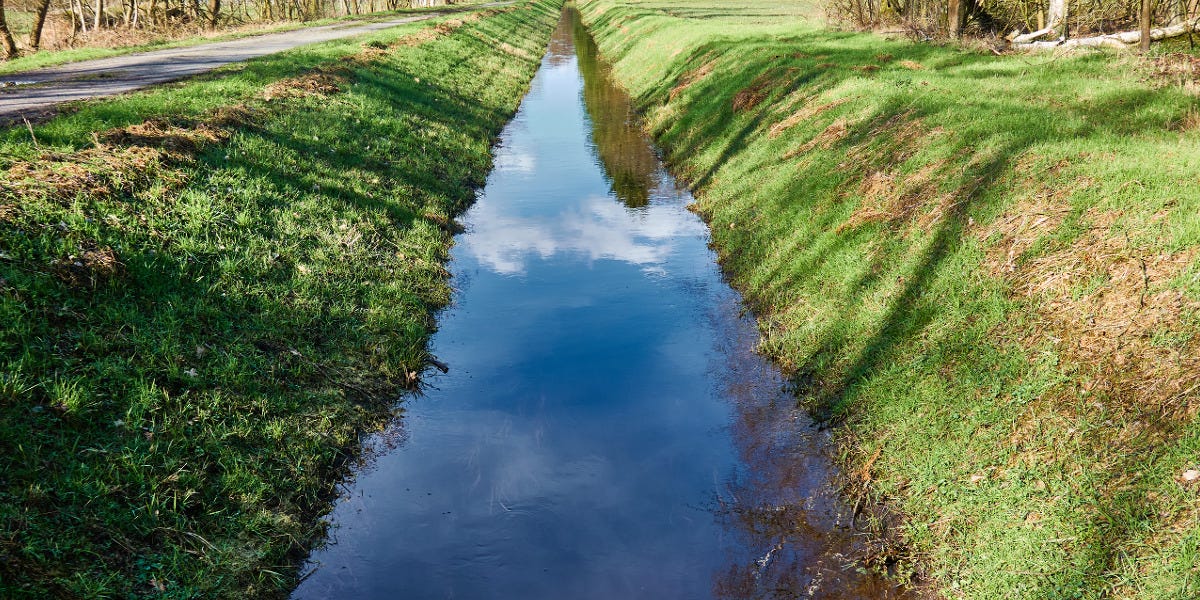
Property owners often ignore the clumps of weeds on a ditch bank or within the water of these sites. Yet, these aquatic plants can do so much damage simply by blocking waterways, which can also inhibit the appearance of your property.
Common aquatic weeds in ditches such as duckweed, pondweed, water hyacinth, water lettuce, and water milfoil are often the most prevalent. These unwanted aquatic vegetation can cause nearby roads to become less stable with overflow of water, cause debris and other pollutants to remain in front of your property.
If you are not seeing a aquatic weed listed here, then contact our customer service team by phone, email, or in-person for professional recommendations.
Obtain all necessary approval and/or permits before application if required. Consult the responsible State Agencies (i.e., Fish and Game Agencies, State Water Conservation authorities, or Department of Natural Resources.
Duckweed
Duckweed is actually beneficial to water sites since it helps produce food for local aquatic wildlife and release oxygen into the water.
It is when this weed completely covers the water in a ditch that it becomes a problem. If this happens, then desired aquatic plants cannot recieve sunlight.
Identification
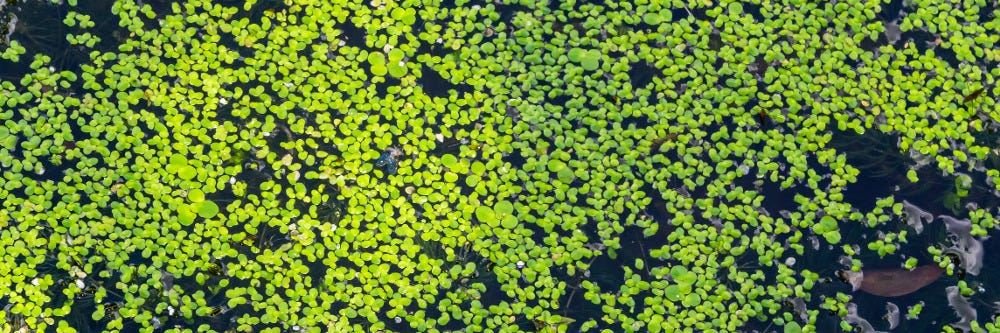
Duckweed is a small perennial aquatic weed that forms a thick light-green blanket across the surface of waters. Leaves appear clover-like except each plant consist of one, rounded leaf that are less than 0.5 inches in size.
Inspection
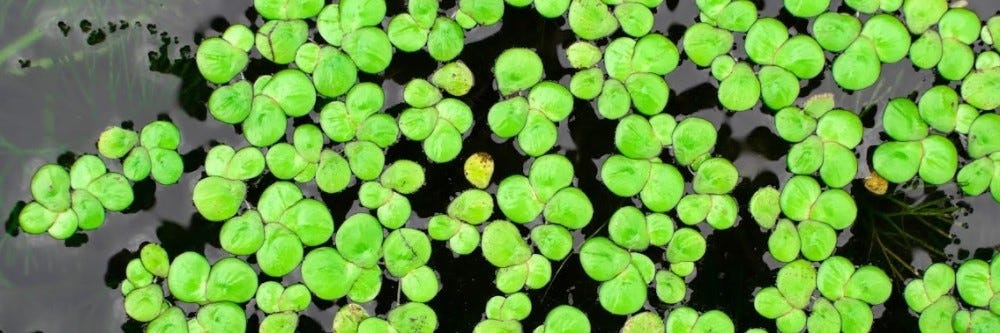
Duckweeds will float on the surface of shallow and stangant ditches.
Treatment
Step 1: Apply Ecomazapyr 2 SL Herbicide
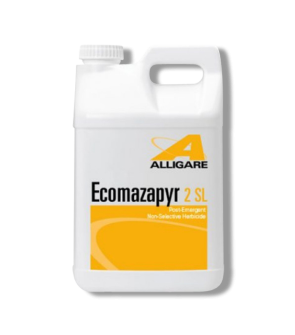
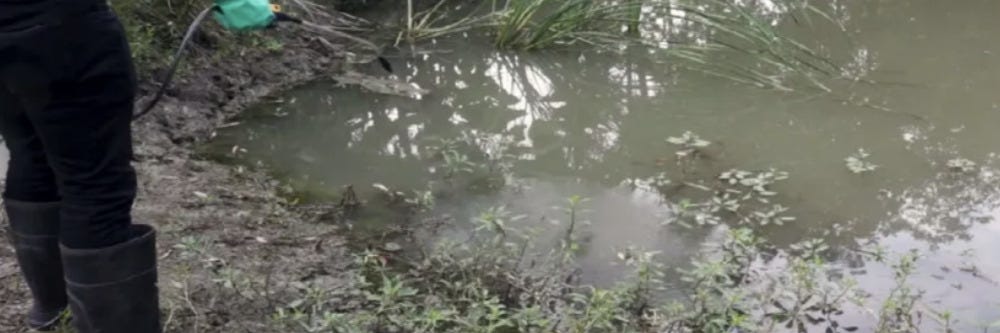 Ecomazapyr 2 SL Herbicide is a non-selective herbicide that will control weeds on both land and aquatic areas such as non-irrigation ditchbanks.
Determine how much Ecomazapyr 2 SL Herbicide to use by measuring the square footage of the treatment area. To do this, measure the length and width of the treatment area in feet then multiply them together. For acreage, take the square footage and divide it by one acre.
Apply 2 to 3 pints of Ecomazapyr 2 SL Herbicide per 100 gallons of water per acre.
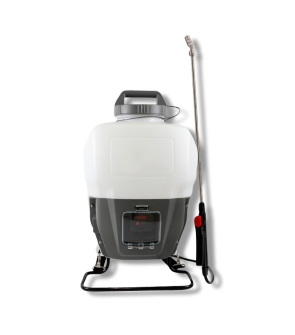
We recommend using a backpack sprayer or spray rig to mix and apply this product with.
Adjust the sprayer to a fan nozzle setting then spray the top of weeds.
Only the edge of drainage ditches can be treated for drainage ditches that contain water.
Do not apply this product to irrigation ditches unless the 120-day restriction on irrigation water usage can be observed or product residue levels are determined by laboratory analysis, or other appropriate means of analysis, to be 1.0 ppb or less.
Do not apply this product to dry ditches.
Pondweed
As ditches matures and more water passes through them the more they acculmate nutrients, which causes pondweeds to grow. Pondweeds are capable of forming dense mats which often restricts water in ditches.
Identification
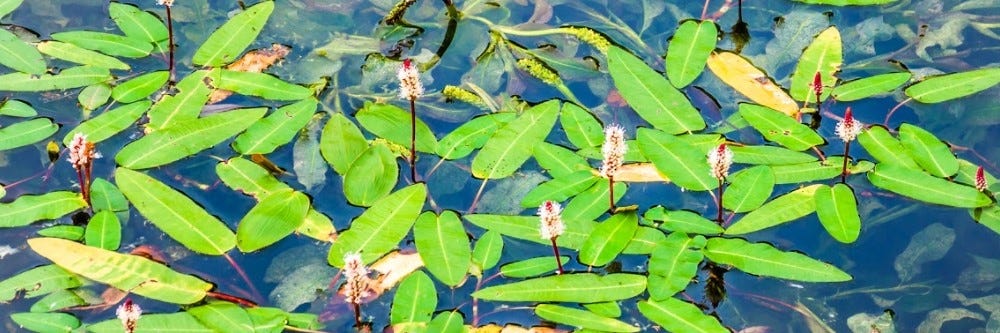
Pondweed has many different species, but there are a few general characteristics to easily identify them. Leaves may be linear, ovate, or lance-shaped and have small flower clusters on spikes.
Inspection
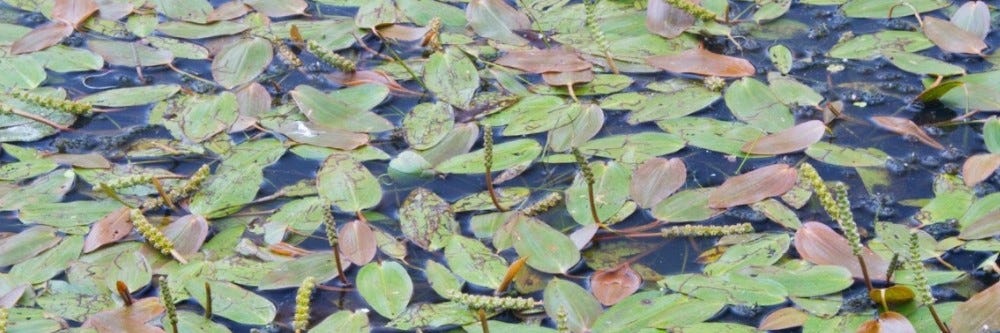
Pondweeds can be found in freshwater or brackish water of ditches along the sides and middle. Often they will grow where the water is shallow or drops off.
Treatment
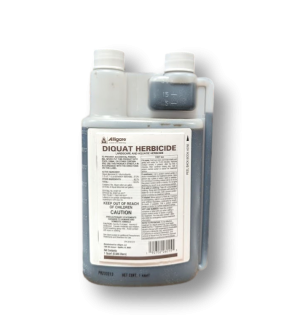
Step 1: Apply Alligare Diquat Herbicide
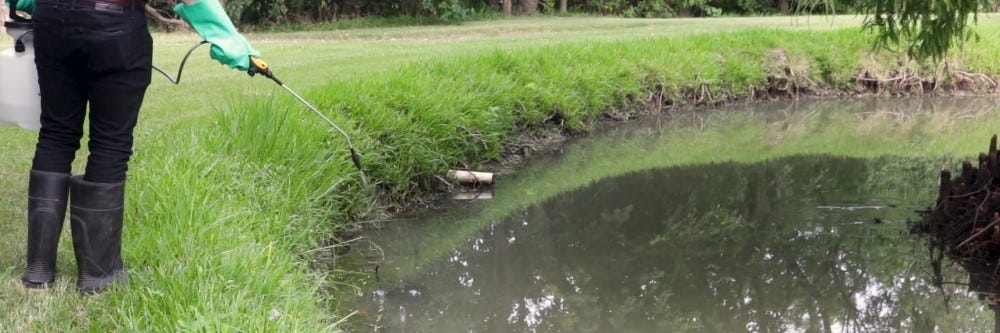 Alligare Diquat Herbicide is a fast-acting non-selective herbicide that controls weeds in a variety of land and aquatic sites like drainage ditches.
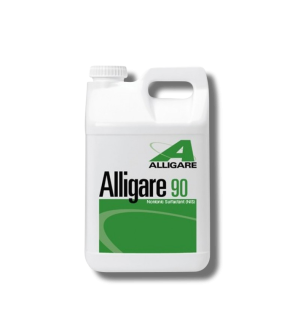
This product must be mixed with a non-ionic surfactant labeled for aquatic and land use such as Alligare 90 Surfactant.
Determine how much Alligare Diquat Herbicide to use by measuring the square footage of the treatment area. To do this, measure the length and width of the treatment area in feet then multiply them together. For acreage, take the square footage and divide it by one acre (square footage / 43,560 sq. ft. = acre).
Perform a spot treatment, by mixing 0.75 oz. of Alligare Diquat Herbicide with 1 oz. of Alligare 90 Surfactant per 1 gallon of water.
Mix and apply this product with a handheld pump sprayer or backpack sprayer.
Fill the sprayer with half the amount of water, add in both measured amounts of products, then pour in the remaining half of water. Close the tank lid and shake until well-mixed.
Spray the pondweeds around the edges of ditches until wet, but not to the point of runoff.
For water bodies containing dense weeds, apply Alligare Diquat Herbicide to only 1/3 to 1/2 of the water body area at one time. If a repeat application is required, wait for 14 days.
Water Hyacinth
Water hyacinth is a submerged aquatic weed that lessens the water quality in ditches and affects the aquatic life in these sites by blocking out the sun for these desired plants to grow.
Identification
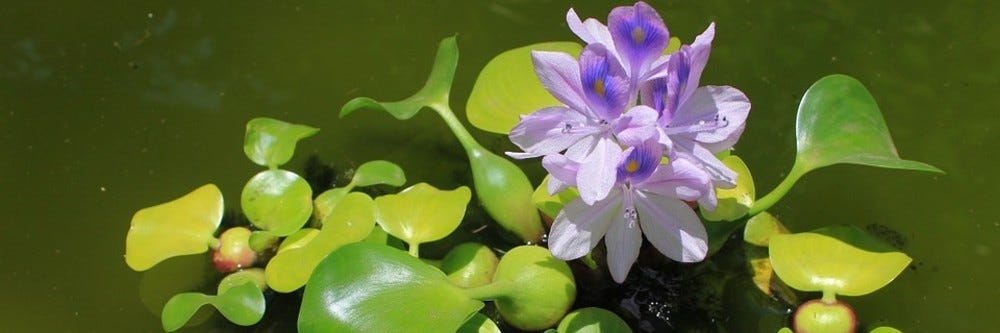 Water hyacinth is a flowering, free-floating aquatic plant that has lavender flowers. Each plant has thick, green broad leaves that form dense mats in water. This plant grows up to 3 feet tall.
Inspection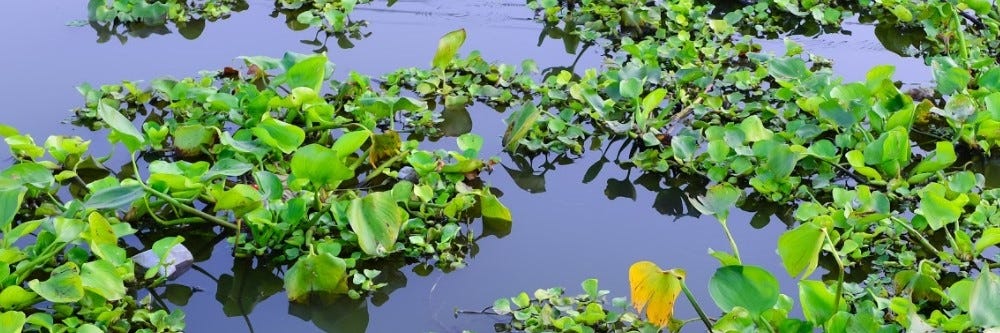
Water hyacinth grows in all types of freshwater types within ditches. When they do appear, they will form at the top of the water.
Treatment
Step 1: Apply Ecomazapyr 2 SL Herbicide
We recommend using Ecomazapyr 2 SL Herbicide to get rid of water hyacinth in ditches. However, only the edges of drainage ditches can be treated if they contain water.
Applications may be made to private waters that are still, such as drainage ditches where there is minimal or no outflow to public waters.
Determine how much Ecomazapyr 2 SL Herbicide to use by measuring the square footage of the treatment area. To do this, measure the length and width of the treatment area in feet then multiply them together. For acreage, take the square footage and divide it by one acre.
Apply 1 to 2 pints of Ecomazapyr 2 SL Herbicide per 100 gallons of water per acre.
Mix and apply this product with a backpack sprayer or spray rig.
Once mixed, spray the top of water hyacinths along the edges of ditches.
Do not apply this product to ditches unless the 120-day restriction on irrigation water usage can be observed or product residue levels are determined by laboratory analysis, or other appropriate means of analysis, to be 1.0 ppb or less.
Do not apply this product to dry ditches.
Water Lettuce
Water lettuce is a aquatic plant that will form dense mats that block sunlight and prevent the growth of desired aquatic vegetation if left untreated. As a result, oxygen will deplete in water and waste will accumulate in ditches.
Identification
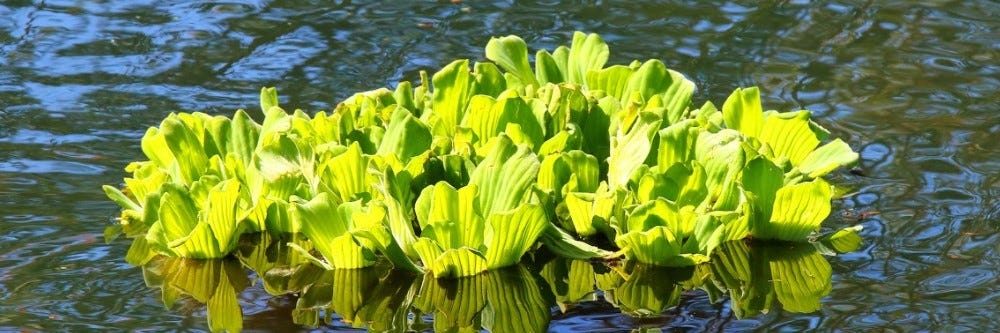 Water lettuce is a floating aquatic weed not to be confused with edible lettuce. This aquatic weed will form fuzzy rosettes of leaves that resemble an open head of lettuce.
When mature, this plant will reach up to 6 inches tall and 10 inches wide.
Inspection
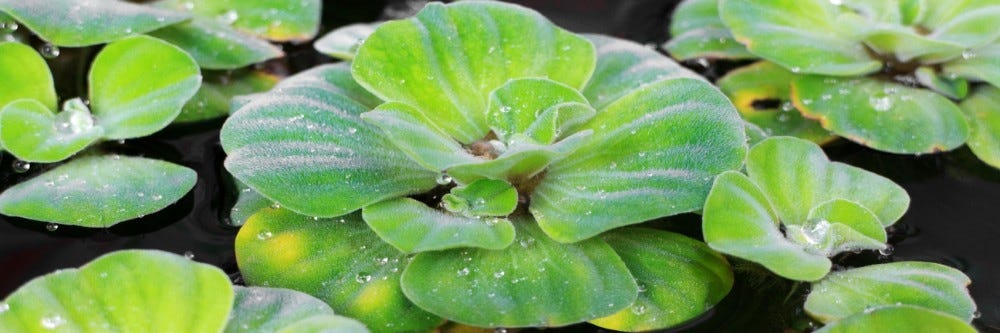
Water lettuces are commonly found in ditches with slow-moving waters.
Treatment
Step 1: Apply Ecomazapyr 2 SL Herbicide
To get rid of water lettuces in ditches, we recommend using Ecomazapyr 2 SL Herbicide. Keep in mind that only the edges of drainage ditches can be treated if they contain water.
Applications may be made to private waters that are still, such as drainage ditches where there is minimal or no outflow to public waters.
Determine how much Ecomazapyr 2 SL Herbicide to use by measuring the square footage of the treatment area. To do this, measure the length and width of the treatment area in feet then multiply them together. For acreage, take the square footage and divide it by one acre.
Apply 1 to 2 pints of Ecomazapyr 2 SL Herbicide per 100 gallons of water per acre.
Mix and apply this product with a backpack sprayer or spray rig.
Once mixed, spray the top of weeds along the edges of ditches.
Do not apply this product to ditches unless the 120-day restriction on irrigation water usage can be observed or product residue levels are determined by laboratory analysis, or other appropriate means of analysis, to be 1.0 ppb or less.
Do not apply this product to dry ditches.
Water Milfoil
Water milfoil is an aquatic weed with an aggressive growth habit, resulting in other plants being choked out of nutrients.
Identification
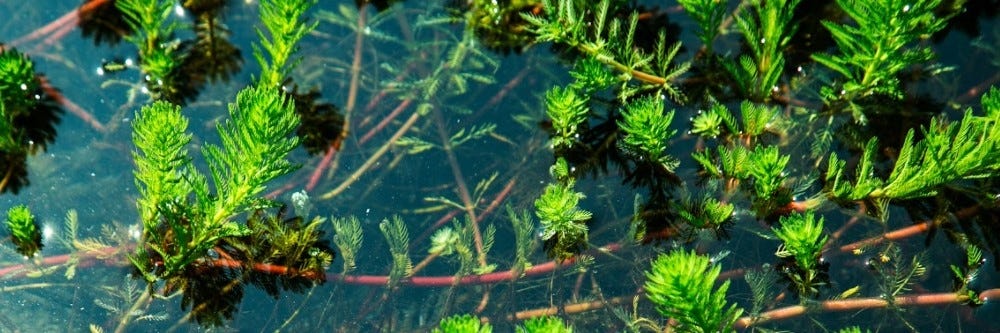 Water milfoils are submerged aquatic weeds with feather-like leaves that are arranged in a whorl around the stem. Each leaves are grouped in fours with dark to bright green colored foliage.
Inspection
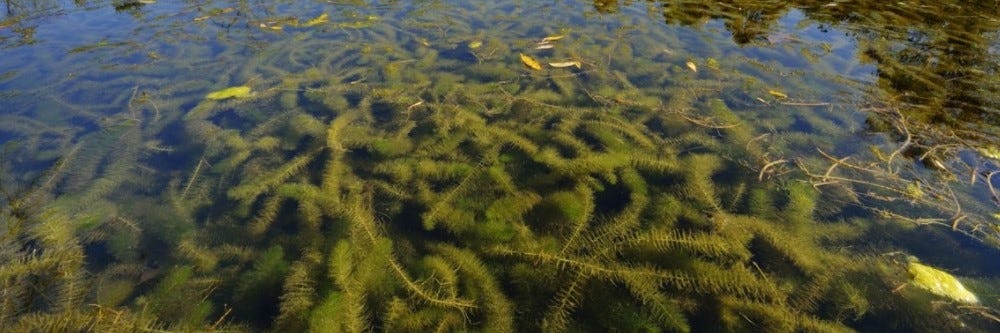
Water milfoils are found in parts of the ditches with shallow or relatively deep waters.
Treatment
Step 1: Apply 2,4-D Amine Selective Post-Emergent Herbicide
2,4-D Amine Selective Post-Emergent Herbicide is a easy to use post-emergent herbicide that will control weeds both in land and aquatic sites like drainage ditches.
Determine how much 2,4-D Amine Selective Post-Emergent Herbicide to use by measuring the square footage of the treatment area. To do this, measure the length and width of the treatment area in feet then multiply them together (length X width = square footage). For acreage, take the square footage and divide it by one acre (square footage / 43,560 sq. ft. = acres).
Apply 2.84 gallons of 2,4-D Amine Selective Post-Emergent Herbicide per 1 surface acre with a depth of 1 feet.
Apply this product undiluted directly to the water through a boat mounted distribution system.
Shoreline areas should be treated by subsurface injection application by boat to avoid aerial drift.
If treatments must be applied later in the season when the weed mass is dense and repeat treatments are needed, apply product in lanes, leaving buffer strips which can then be treated when vegetation in treated lanes has disintegrated.
During the growing season, weeds decompose in a 2 to 3 week period following treatment.
Key Takeaways
What Aquatic Weeds Are In Ditches
- Common weeds to see in the waters of ditches are duckweed, water hyacinth, pondweed, water milfoil, and water lettuce.
How to Get Rid of Aquatic Weeds in Drainage Ditches
- To get rid of weeds in ditches, we recommend using either 2,4-D Amine Selective Post-Emergent Herbicide, Ecomazapyr 2 SL Herbicide, or Alligare Diquat Herbicide.
Why Do Aquatic Weeds Grow in Drainage Ditches
- Aquatic weeds will grow in ditches like most weeds with the exception of weed seeds being carried from moving waters, wind, or contaminated equipment.